White Lion

White Lion Artistfacts

  • 1983-1992
    Mike TrampVocals, guitar
    Vito BrattaGuitar
    James LoMenzoBass
    Greg D'AngeloDrums
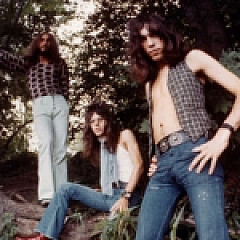
  • One of the big three "white" hair metal bands of the '80s (along with Whitesnake and Great White), White Lion was known for their hit ballads "Wait" and "When The Children Cry." They were led by frontman Mike Tramp and guitarist Vito Bratta, who teamed up to write the songs. The group was acclaimed as one of the more musically adept hair metal bands, with Bratta earning raves for his distinctive style that incorporated some finger-tapping technique popularized by Eddie Van Halen.
  • Tramp went out of his way to avoid lyrical clichés like parties and girls. This led to songs like "Little Fighter," about a Greenpeace fishing trawler that was sunk by the French government when it was sent to protest nuclear testing.
  • Mike Tramp is from Denmark but moved to New York City in the early '80s, where he met Vito Bratta, a native of Staten Island. They formed White Lion but went through a revolving door of bass players and drummers before James LoMenzo and Greg D'Angelo settled in for their major-label debut, Pride, released in 1987 on Atlantic Records. The album earned a 5-star review from Kerrang! and sold over 2 million copies, but when their follow-up, Big Game, was issued in 1989, that same magazine gave it one star and it sold poorly. The band released another album, Mane Attraction, in 1991, but by that time grunge had taken hold and there was little interest in the band. They broke up soon after.
  • Unlike their contemporaries (we're talking about you, Mötley Crüe), White Lion were pretty well behaved, which created an image problem of sorts: no debauched antics to get them in the news. At one point, their record company asked them to stage a stunt for publicity purposes, but they refused.
  • Eddie Trunk, who later became a top rock music journalist, was a disc jockey at WDHA in New Jersey when White Lion emerged and was the first to play their songs in America. Vito Bratta, who was out of the public eye since the band's split in 1992, spoke with Trunk in 2007 to tell his story. Bratta left the industry to care for his parents, and in 1997 suffered a wrist injury that hampered his playing.
  • After White Lion broke up, Tramp formed a band called Freak Of Nature and released some solo albums. He used the White Lion name on various projects, which didn't sit well with Bratta, who took him to court. They later settled their differences, but weren't able to reunite. "If we do something, it would probably be more like when Jimmy Page and Robert Plant got together," Tramp told Songfacts in 2023. "They didn't call it Led Zeppelin, but they went to Morocco and they did versions of the old songs and did something sideways so that it is not a continuation. Because you can't continue that old band."

Comments

Be the first to comment...

Editor's Picks

Who's Johnny, And Why Does He Show Up In So Many Songs

Who's Johnny, And Why Does He Show Up In So Many SongsSong Writing

For songwriters, Johnny represents the American man. He has been angry, cool, magic, a rebel and, of course, marching home.

Zakk Wylde

Zakk WyldeSongwriter Interviews

When he was playing Ozzfest with Black Label Society, a kid told Zakk he was the best Ozzy guitarist - Zakk had to correct him.

Art Alexakis of Everclear

Art Alexakis of EverclearSongwriter Interviews

The lead singer of Everclear, Art is also their primary songwriter.

John Lee Hooker

John Lee HookerSongwriter Interviews

Into the vaults for Bruce Pollock's 1984 conversation with the esteemed bluesman. Hooker talks about transforming a Tony Bennett classic and why you don't have to be sad and lonely to write the blues.

Tim McIlrath of Rise Against

Tim McIlrath of Rise AgainstSongwriter Interviews

Rise Against frontman Tim McIlrath explains the meanings behind some of their biggest songs and names the sci-fi books that have influenced him.

80s Video Director Jay Dubin

80s Video Director Jay DubinSong Writing

Billy Joel and Hall & Oates hated making videos, so they chose a director with similar contempt for the medium. That was Jay Dubin, and he has a lot to say on the subject.