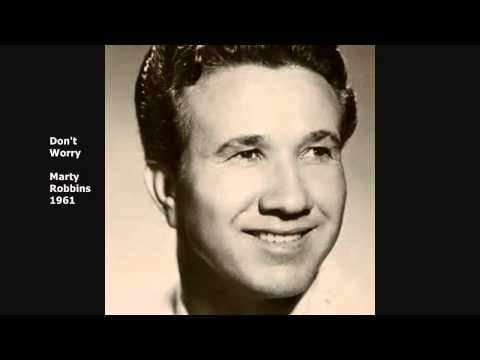
Don't Worry

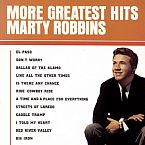
Album: More Greatest Hits (1961)
Charted: 3
Play Video
  • Lyrics currently unavailable Writer/s: Marty Robbins
    Publisher: Wixen Music Publishing

Comments: 5

  • Dennis Rader from Nashville TnThe channel strip on the console had a component which blew, remember the instrument was a six string bass playing a simple tik tak part to match the upright bass. That is a muffled type of sound, not strong at all. Then Grady Martin hits the break much stronger than the tik tak happens cuz it’s a SOLO. A piece in THE STRIP blew.
    They removed and kept the strip then rever engineered the first ever Fuzz Pedal for guitar.
    When it happened they all kept playing because that’s what you do in a session. They jumped a bit, looked around, but kept playing.
    Finish the chart, let it ring out and when the recorder is stopped, only then do you talk.
    If a producer or engineer stops the track he has a reason to do so. True story.
  • Ann Montgomery from Seymour, TnI don't care whether it was planned, an accident or a figment of my imagination, it absolutely made a great song even more stunning. And a huge attention getter as well! A fantastic arrangement all because of this "distortion!!
  • Dantheman from Versailles, KentuckyThis comment about the "accidental" guitar distortion doesn't make any sense. Why would the distortion "accidentally" begin at precisely the time the guitar began playing a lead line in the instrumental break, then disappear again until the very end of the song, when it accidentally happens again just as it is supposed to play the very last line? Nope. Both those guitar leads were a planned part of the song, and the distortion - however it was created - was also pre-planned.
  • Barry from Sauquoit, NyPer: http://www.legacy.com/ {05-27-2018}...
    Murfreesboro, Tennessee (AP) — A recording engineer whose invention of a pedal that allowed guitarists to create a fuzzy, distorted sound most famously used by Keith Richards in the Rolling Stones' hit "(I Can't Get No) Satisfaction" has died...
    Glenn Snoddy was 96. His daughter Dianne Mayo said Saturday that Snoddy died Monday, May 21st, 2018, of congestive heart failure at his Murfreesboro, Tennessee, home...
    Snoddy was helping record country artist Marty Robbins' song "Don't Worry" in 1961 when a malfunction caused the distortion in a guitar solo. When other musicians sought the same effect, Snoddy couldn't recreate it in the studio but invented a pedal where a guitarist could switch into the sound with a tap of the foot...
    Richards' "Satisfaction" riff with the fuzz tone is one of the most recognizable ones in rock history...
    May Mr. Snoddy R.I.P.
  • Barry from Sauquoit, NyOn January 24th 1961, "Don't Worry" by Marty Robbins entered Billboard's Hot Top 100 chart; and on March 20th, 1961 it peaked at #3 (for 1 week) and spent 15 weeks on the Top 100 (and 7 of those 15 weeks were on the Top 10)...
    And on February 21st, 1961 it reached #1 on Billboard's Hot Country/Western Sides chart, and as stated above it remained in the top spot for 10 weeks (the record that finally pushed it out of the #1 was the Willie Nelson composed song, "Hello Walls", sung by Faron Young)......
    R.I.P. Mr. Robbins, born Martin David Robinson, (1925 - 1982).
see more comments

Editor's Picks

David Gray

David GraySongwriter Interviews

David Gray explains the significance of the word "Babylon," and talks about how songs are a form of active imagination, with lyrics that reveal what's inside us.
Chris Frantz - "Genius of Love"

Chris Frantz - "Genius of Love"They're Playing My Song

Chris and his wife Tina were the rhythm section for Talking Heads when they formed The Tom Tom Club. "Genius of Love" was their blockbuster, but David Byrne only mentioned it once.

Mick Jones of Foreigner

Mick Jones of ForeignerSongwriter Interviews

Foreigner's songwriter/guitarist tells the stories behind the songs "Juke Box Hero," "I Want To Know What Love Is," and many more.

Michael Schenker

Michael SchenkerSongwriter Interviews

The Scorpions and UFO guitarist is also a very prolific songwriter - he explains how he writes with his various groups, and why he was so keen to get out of Germany and into England.

Joe Ely

Joe ElySongwriter Interviews

The renown Texas songwriter has been at it for 40 years, with tales to tell about The Flatlanders and The Clash - that's Joe's Tex-Mex on "Should I Stay or Should I Go?"

JJ Burnel of The Stranglers

JJ Burnel of The StranglersSongwriter Interviews

JJ talks about The Stranglers' signature sound - keyboard and bass - which isn't your typical strain of punk rock.