
Blame It On The Tetons

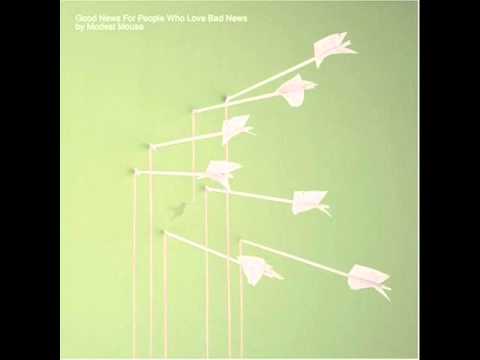
Album: Good News For People Who Love Bad News (2004)
Play Video
  • Lyrics currently unavailable Writer/s: DANN GALLUCCI, ERIC JUDY, ISAAC BROCK, TOM PELOSO
    Publisher: Wixen Music Publishing

Comments: 9

  • Zachary From NowhereApril from Florida....I really like what you said about the combination of passion and emotion....the cloud that breathes more easily....elequently said.....life can be very chaotic at times.....some days it feels like passion has dissapaited and emotion just runs wild.....other days I wake up and realize just how grateful I am :)
  • April from FloridaAlso, the Teton Indians (Sioux) used to run entire herds of buffalo off of cliffs so they could capture a few. That's not exactly a sustainable practice.
  • April from FloridaThe song is about artistic creativity itself. Everyone is a building burning (passion) and an ocean drowning (emotion). Combine the two and we become that cloud that breathes more easily in the sky. But we continuously separate ourselves from this process by separating the meaning from the music. That's a criticism of industries that turn art into a product. Someone else writes the song or the script that is then performed by another. Thus, the passion is separated from the emotion and meaning is lost in translation (thus language being the liquid we are all dissolved in that both creates and solves our problems). It's about finding your voice only to have it taken again. It's about finding yourself and not giving a damn what anyone thinks about it. The Tetons are an abstract idea that probably does relate to the mountain range in Wyoming (a home of natural artistry, but also one with a history. Rockefeller actually donated much of the land so that it could be turned into a national park. So, one of the wealthiest and most bastardly men in American history actually preserved the Tetons. Meaning they have a root in the same exact mentality that now undermines true artistry by packaging it.) At the same time, the Tetons are a scapegoat, which points to our own culpability by our willingness to participate in a system that dismantles everything we care most about. It lays that blame back on our own shoulders, and by the end of the song we are given the key to moving beyond it (become a cloud and rise above the bulls--t, don't sell your soul for a dime, and understand that even the most morally questionable among us can lay the groundwork for great things. Because, after all, EVERYONE is a building burning and an ocean drowning.
  • Megan D from Idaho FallsRisking a too literal analysis, it is extremely likely that the Tetons refer directly to the mountains. (E.g. I'm casting my vote with Sal.) These mountains and the resorts/towns (Jackson, WY; Driggs, ID; Victor, ID) that surround them are a common destination for musicians and artists, particularly those who are already drawn to themes of the natural. The Tetons actually look very much like a pair of human breasts, jagged as they might be, making them particularly vulnerable to personification. The land here is the perfect character for scapegoat as these mountains themselves are domineering and alienating. But, if you wanted to go there, you could also make a pretty sweet argument about the mountains as a surrogate for femininity and the song being a misogynistic shout-out to Eve's original sin, which would actually be a pretty good reason to blame it on the female "Tetons." But, like all interpretation, it's a stretch.
  • Sal from Arlington, Wa@Megan: There are many interpretations. The whole breast thing is kind of ironic. You see the Tetons are a mountain range, early French Voyageurs used the name "les Trois Tétons" (the three breasts) to describe them, and it seems the name stuck. Now either Brock is being ironic and misogynistic, or we're talking about the actual mountains, which makes sense to me, I think a lot of his lyrics ("stubborn beauty, stubborn beauty") hint at this idea that he is inspired by nature, and natural phenomena. Maybe he is literally blaming his artistic creation on the spectacle of the "three breasts".

    Language is the liquid...
  • Shelby from Houston, TxI cross-reference Isaac Brock's songs as lead for Ugly Casanova and lead for Modest Mouse. On Ugly Casanova's 'Cat Faces' he says "My heart stopped pumpin', but my blood is still alive... One more thing for you, and I to do before we shut our eyes. You blame me, and I'll blame you, and we're both right. Cuttin' cat faces in the pines...I lay down with a southern range." He was also talking about God and drinking a cola an album before in "Tiny Cities Made of Ashes". I take the entire 'Tetons' song as expressing the pressures of continuing abstract lyrics while keeping some continuity between album concepts.
  • Sam from South Kingston, RiI agree with Megan.
  • Steef from Danbury, Cthttp://en.wikipedia.org/wiki/Teton_Dam I took it to refer to the well-known dam failure but the Teton indian tribe makes sense too.
  • Megan from Chicago, IlI think it's pretty obvious that they are refering to the Indian tribe if those are the only three options... Who would argue that it meant breasts?.. or a mountain range? When he says "God I need a scapegoat now," blaming it on the Teton's is like saying that the Indans who hunted buffalo responsibly are the culprets for their near extinction, when it was really the "white man." Got it? Get it? Good.
    *sorry for any misspellings. Not my forte.
see more comments

Editor's Picks

Ed Roland of Collective Soul

Ed Roland of Collective SoulSongwriter Interviews

The stories behind "Shine," "December," "The World I Know" and other Collective Soul hits.

Jon Foreman of Switchfoot

Jon Foreman of SwitchfootSongwriter Interviews

Switchfoot's frontman and main songwriter on what inspires the songs and how he got the freedom to say exactly what he means.

Matthew Wilder - "Break My Stride"

Matthew Wilder - "Break My Stride"They're Playing My Song

Wilder's hit "Break My Stride" had an unlikely inspiration: a famous record mogul who rejected it.

Jesus In Pop Hits: The Gospel Songs That Went Mainstream

Jesus In Pop Hits: The Gospel Songs That Went MainstreamSong Writing

These overtly religious songs crossed over to the pop charts, despite resistance from fans, and in many cases, churches.

Gary LeVox

Gary LeVoxSongwriter Interviews

On "Life Is A Highway," his burgeoning solo career, and the Rascal Flatts song he most connects with.

Timothy B. Schmit

Timothy B. SchmitSongwriter Interviews

The longtime Eagle talks about soaring back to his solo career, and what he learned about songwriting in the group.