
Jazz (We've Got)

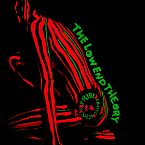
Album: The Low End Theory (1991)
Play Video

Songfacts®:

  • A Tribe Called Quest really did have the jazz. They were the first major hip-hop act to incorporate samples from that genre into their songs.

    On "Jazz (We've Got)," the main sample is from a 1972 jazz tune called "Green Dolphin Street" by Jimmy McGriff. There are also some drums from "Don't Change Your Love" by the Five Stairsteps (1968).
  • The song is part of the second A Tribe Called Quest album, The Low End Theory, released in 1991. By this time the group was comprised of rappers Q-Tip and Phife Dawg, along with their DJ, Ali Shaheed Muhammad (another rapper, Jarobi White, left after their first album).

    It's Q-Tip who delivers the line, "The aim is to succeed and achieve at 21."

    This is true-to-life: All three members were 21 when the album was released, and it did indeed succeed and achieve, going down as one of the great albums in hip-hop history.
  • In the music video, the song is paired with "Buggin' Out," another song on The Low End Theory that was the B-side of "Jazz (We've Got)." When it transitions to "Buggin' Out," the video goes from black-and-white to color, like in The Wizard Of Oz.
  • In an interview with Moovmnt Records, Q-Tip has acknowledged that the original beat for "Jazz (We've Got)" came from Pete Rock.

    "We was at his crib in Mount Vernon and we were all just chilling," he said. "He was rockin' it and I was just like 'Are we gonna do it?!' and he was like 'I don't know... I don't know'. So I asked him again 'Yo what's up with that beat that s--t is hot... yo what's those records I wanna hook that beat up!'"

    Q-Tip ended up recreating a similar beat, and gave Pete Rock credit at the end of the track by rapping "Pete Rock for the beat ya don't stop!"
  • When A Tribe Called Quest were inducted into the Rock And Roll Hall Of Fame in 2024, Dave Chappelle gave their speech and explained The Low End Theory album title: "This album's title had one of the illest double entendres ever. The 'low end' refers to the bass and the drums, and it also refers to a Black man's status in America."

Comments

Be the first to comment...

Editor's Picks

Jesus Christ Superstar: Ted Neeley Tells the Inside Story

Jesus Christ Superstar: Ted Neeley Tells the Inside StorySong Writing

The in-depth discussion about the making of Jesus Christ Superstar with Ted Neeley, who played Jesus in the 1973 film.

Corey Hart

Corey HartSongwriter Interviews

The Canadian superstar talks about his sudden rise to fame, and tells the stories behind his hits "Sunglasses At Night," "Boy In The Box" and "Never Surrender."

Martin Page

Martin PageSongwriter Interviews

With Bernie Taupin, Martin co-wrote the #1 hits "We Built This City" and "These Dreams." After writing the Pretty Woman song for Go West, he had his own hit with "In the House of Stone and Light."

Roger McGuinn of The Byrds

Roger McGuinn of The ByrdsSongwriter Interviews

Roger reveals the songwriting formula Clive Davis told him, and if "Eight Miles High" is really about drugs.

A Monster Ate My Red Two: Sesame Street's Greatest Song Spoofs

A Monster Ate My Red Two: Sesame Street's Greatest Song SpoofsSong Writing

When singers started spoofing their own songs on Sesame Street, the results were both educational and hilarious - here are the best of them.

Matthew Wilder - "Break My Stride"

Matthew Wilder - "Break My Stride"They're Playing My Song

Wilder's hit "Break My Stride" had an unlikely inspiration: a famous record mogul who rejected it.