
Bloodstream

Album: Spilling My Guts (2026)
Charted: 12
Play Video

Songfacts®:

  • "Bloodstream" finds Alyssa Grace revisiting one of the darkest moments of a toxic relationship: a night when her mother found her crying on the bathroom floor and urged her to leave. Looking back, Grace admitted she wasn't ready to hear the advice. "When I was in my lowest in my last relationship, my mom tried to help me realize I needed to get out, but I just didn't listen," she explained on TikTok. Grace later described "Bloodstream" as "a song about begging for help from someone that's listening but refuses to be there for you."
  • The title draws on the image of trying to purge someone from your system the way a body clears a drug from the bloodstream - Grace describes wanting her ex "off my mind and far out of my bloodstream," likening his hold over her to that of an addict returning to their drug. The metaphor acknowledges her feelings are not a choice but a chemical reality, something that has to be physically worked out of her system rather than simply decided away. It's an uncomfortable image, but heartbreak has never been especially interested in behaving like a sensible houseguest.
  • The song's opening verse reveals the deeper roots of the story as Grace reflects on the ways her father's behavior shaped her understanding of relationships:

    I am my father's daughter but I'm nothing like him at all
    I hear him in the way I speak when I look in the mirror
    The anger's grown in me


    The lyric captures the contradiction of recognizing traits you've inherited while desperately hoping not to repeat the damage that came with them. Grace emphasizes her partner "never laid his hands on me," but she recalls ignoring warning signs, including moments of uncontrolled anger. In doing so, "Bloodstream" traces a painful connection between her father's example and the patterns she later accepted in her own romantic life.
  • In the chorus, Grace contrasts her own desperation with her partner's seemingly compassionate response:

    I hear you, I love you, my heart it hurts for you
    And I just cannot give you what you need


    On the surface, it reads as a sweet sentiment, but as Holler notes, "it's clear these are sadly empty words."

    The song closes with hard-won clarity: "I'm so glad I made it out."
  • "Bloodstream" is the third in Grace's trilogy of songs inspired by the same relationship. While "Picking Petals" explores the uncertainty of whether to leave, and "Dog With a Bone" chronicles the inability to let go, "Bloodstream" represents acceptance. The relationship is over, the lesson has been learned, and the fog has finally started to clear.
  • Other songs where a woman connects a father's behavior to her emotional patterns in relationships include:

    2003: John Mayer: "Daughters":
    Mayer approaches the theme from the outside, arguing that fathers play a crucial role in shaping their daughters' future relationships. It functions almost as a companion piece to songs like "Bloodstream," examining the cause rather than the effect.

    2004: Kelly Clarkson: "Because Of You":
    Clarkson traces her inability to trust and her fear of vulnerability directly back to her parents' dysfunction. Like "Bloodstream," it examines how childhood wounds quietly follow a person into adulthood.

    2015: Kelly Clarkson: "Piece by Piece":
    Clarkson contrasts her father's abandonment with the stability she found in her husband, illustrating how healthy love forced her to re-evaluate expectations shaped by childhood trauma.

    2015: Demi Lovato: "Father":
    Lovato confronts the complicated legacy of a troubled paternal relationship, balancing anger, grief, forgiveness and self-reflection in a way that parallels Grace's emotional honesty.

    2015: The Neighbourhood: "Daddy Issues":
    Few songs arrive at the subject with less subtlety - the title does most of the heavy lifting before the first note plays. The Neighbourhood vocalist Jesse Rutherford addresses a woman whose father's absence has shaped her romantic life, but the song's key line - "I know that you got daddy issues, and I do too" - pivots it into something closer to "Bloodstream's" territory: a mutual recognition of inherited damage shared between two people still working through it.

    The song's title inevitably invites comparison to Ed Sheeran's 2014 track "Bloodstream." Sheeran used the image to describe substance-fueled emotional chaos, but Grace applies the metaphor to a toxic relationship's lingering effects. Different circumstances, same basic problem: something unwanted circulating through the system long after it should have left.
  • Alyssa Grace wrote "Bloodstream" with producer Steven Martinez. Martinez, who has also worked with Sara Kays and Alec Benjamin, builds the arrangement to match the song's emotional trajectory. As the lyrics grow more intense, the production expands with them, mirroring the feeling of emotions that have been suppressed for too long finally demanding to be heard.
  • After Alyssa Grace released "Bloodstream," fans began using the TikTok audio to share their experiences with fathers and brothers. One request kept coming up in the comments: a "mother's version." Grace brought up the idea during a TikTok Live, and the response convinced her to record it.

    "Bloodstream (Mother's Version)" shifts the focus of the original, which was written about a guy Grace had met. Speaking to BBC Radio 1's Sian Eleri, she explained that seeing fans apply the song to family relationships made her rethink its scope: "It wasn't like a relationship with a girlfriend or boyfriend, it was also something with their family. So I wanted to change the lyrics up and make it so it could be for anybody."
  • Alyssa Grace was still working as a server at the Cheesecake Factory when "Bloodstream" landed on the Hot 100. While her co-workers "were all freaking out," seeing her name on the chart became a wake-up call for the rising singer-songwriter.

    "I was getting a little overwhelmed," she told Billboard, recalling what it was like trying to juggle a day job with a suddenly accelerating music career. "So I was like, 'Let's focus on this one thing.'"

    Not long after, she handed in her two weeks' notice and made music her full-time job.

Comments

Be the first to comment...

Editor's Picks

Thomas Dolby

Thomas DolbySongwriter Interviews

He wrote "She Blinded Me With Science" so he could direct a video about a home for deranged scientists.
Little Big Town

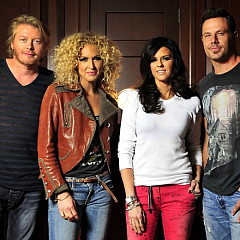
Little Big TownSongwriter Interviews

"When seeds that you sow grow by the wicked moon/Be sure your sins will find you out/Your past will hunt you down and turn to tell on you."
Donnie Iris (Ah! Leah!, The Rapper)

Donnie Iris (Ah! Leah!, The Rapper)Songwriter Interviews

Before "Rap" was a form of music, it was something guys did to pick up girls in nightclubs. Donnie talks about "The Rapper" and reveals the identity of Leah.
Keith Reid of Procol Harum

Keith Reid of Procol HarumSongwriter Interviews

As Procol Harum's lyricist, Keith wrote the words to "A Whiter Shade Of Pale." We delve into that song and find out how you can form a band when you don't sing or play an instrument.
Deconstructing Doors Songs With The Author Of The Doors Examined

Deconstructing Doors Songs With The Author Of The Doors ExaminedSong Writing

Doors expert Jim Cherry, author of The Doors Examined, talks about some of their defining songs and exposes some Jim Morrison myths.
"Private Eyes" - The Story Behind the Song

"Private Eyes" - The Story Behind the SongSong Writing

How a goofy detective movie, a disenchanted director and an unlikely songwriter led to one of the biggest hits in pop history.