If I Close My Eyes

Album: Up The Sandbox (1973)
Play Video

Songfacts®:

  • This soaring ballad about the merits of daydreaming was written for the 1972 movie Up The Sandbox, starring Barbra Streisand as a bored housewife who escapes her dull existence through a series of bizarre fantasies. Although it wasn't included in the film, the song was tagged as the movie's theme and released as a radio single in 1973.
  • In a 1975 interview with Time magazine, the film's composer, Billy Goldenberg, said he regularly received late-night phone calls from Streisand asking him to hum the next day's music over the line. During one of their 2:30 a.m. chats, she asked him to extend a portion of the score into a song for her to sing - and she wanted it done by 4 p.m.

    "I wrote like mad," Goldenberg recalled. "When she called, I hummed her the tune. She liked it, and the next day we got the word writers, Marilyn and Alan Bergman, to fit it out with a lyric."

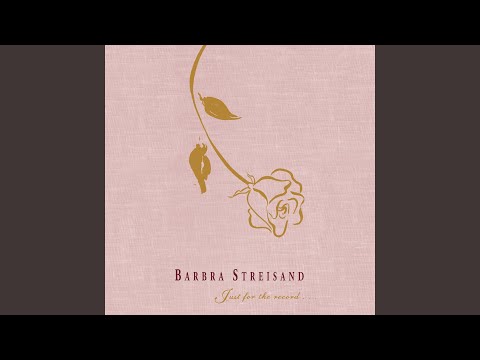
    The song was "If I Close My Eyes" and was distributed for radio airplay in January 1973, a month after the movie's release. Streisand never included it on an album until she released a version featuring her longtime collaborator Michel Legrand on the 1991 compilation, Just For The Record.
  • Streisand's subsequent single was also penned by the Bergmans - the chart-topping hit "The Way We Were," the theme song to the 1973 movie of the same name, starring Streisand opposite Robert Redford.
  • Streisand spent the early '70s working with producer Richard Perry on a series of contemporary pop albums to broaden her appeal, with Stoney End boasting a title hit by Laura Nyro and Barbra Joan Streisand featuring covers of Carole King's "Where You Lead " and John Lennon's "Mother." She hit her stride in the pop realm, landing seven singles in the Top 10 of the Billboard Hot 100 by the end of the decade.
  • Prior to Up The Sandbox, Streisand was already a movie star thanks to her roles in Funny Girl (1968), Hello, Dolly! (1969) and What's Up, Doc? (1972), but it was her first movie released through her own production company, Barwood Films (in partnership with the Warner Bros. subsidiary First Artists), which allowed her to have more creative input in her film work. The movie also gave her the chance to test her range as an actress.

    "In all my other films, I played characters full of idiosyncrasies, with lots of funny lines," she said (source: Barbra Archives). "In this one, I get back to my beginnings. I don't think I even smile, except at the end. And there are no more than seven funny lines in the whole film. My character is more banal than any I've ever played. This is the most natural role I've had, and so I've had to strive for simplicity. I really want people to think of me as an actress."

Comments

Be the first to comment...

Editor's Picks

Amy Grant

Amy GrantSongwriter Interviews

The top Contemporary Christian artist of all time on song inspirations and what she learned from Johnny Carson.

John Lee Hooker

John Lee HookerSongwriter Interviews

Into the vaults for Bruce Pollock's 1984 conversation with the esteemed bluesman. Hooker talks about transforming a Tony Bennett classic and why you don't have to be sad and lonely to write the blues.

Butch Vig

Butch VigSongwriter Interviews

The Garbage drummer/songwriter produced the Nirvana album Nevermind, and Smashing Pumpkins' Gish and Siamese Dream.

Annie Haslam of Renaissance

Annie Haslam of RenaissanceSongwriter Interviews

The 5-octave voice of the classical rock band Renaissance, Annie is big on creative expression. In this talk, she covers Roy Wood, the history of the band, and where all the money went in the '70s.

Tim Butler of The Psychedelic Furs

Tim Butler of The Psychedelic FursSongwriter Interviews

Tim and his brother Richard are the Furs' foundation; Tim explains how they write and tells the story of "Pretty In Pink."

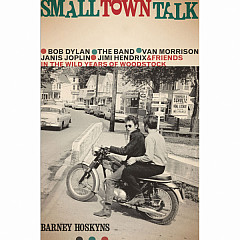
Barney Hoskyns Explores The Forgotten History Of Woodstock, New York

Barney Hoskyns Explores The Forgotten History Of Woodstock, New YorkSong Writing

Our chat with Barney Hoskyns, who covers the wild years of Woodstock - the town, not the festival - in his book Small Town Talk.