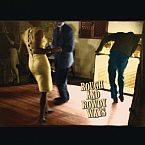
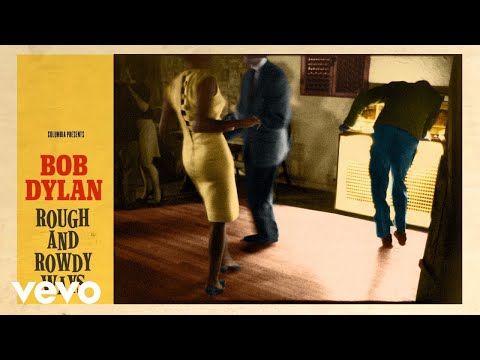
Black Rider

Album: Rough And Rowdy Ways (2020)
Play Video

Songfacts®:

  • In this song, Dylan speaks to a figure he identifies only as "Black Rider." There's not enough information to identify with certainty who this character may be (though we have a good guess mentioned below), but it's clear he's not a good dude. He "visits" Dylan's wife and disrupts the restfulness of Dylan's heart.

    Sometimes he doesn't seem wholly evil so much as lost and confused, though, as shown in the verse:

    The path that you're walking, too narrow to walk
    Every step of the way, another stumbling block
    The road that?you're?on,?same road that?you know
    Just not?the same as it was a minute ago
  • The Black Rider seems cut from the same cloth as the character addressed in "False Prophet," particularly with the line "don't hug me, don't flatter me, don't turn on the charm." In both instances, the antagonist in the song is a deceitful charmer that Dylan's calling out for being something other than he appears.

    Seeing as how the False Prophet alludes to the Biblical book of Revelation, it's safe to guess that the Black Rider is none other than the Third Horseman of the Apocalypse, who also appears in Revelation.

    When He broke the third seal, I heard the third living creature saying, "Come." I looked, and behold, a black horse; and he who sat on it had a pair of scales in his hand. And I heard something like a voice in the center of the four living creatures saying, "A quart of wheat for a denarius, and three quarts of barley for a denarius; but do not damage the oil and the wine."
    -?Revelation 6:5–6

    Dylan's music is often filled with Biblical imagery and allusion, but Rough and Rowdy Ways takes that to a level only before seen in the albums from Dylan's "Christian Trilogy" (Slow Train Coming, Saved, and Shot of Love) released from 1979 to 1981.

    So, it's hardly a stretch to see the Black Rider coming from the Bible. This idea is also bolstered in the line, "You fell into the fire and you're eating the flame," referring to the character falling into hell.

    The Third Horseman is called Famine, but its nature is more nuanced than just starvation. Famine carries a scale and seeks to create deprivation and destruction through the manipulation of market prices. It is, in effect, an economic horror more than anything, pricing people out of food. This idea can easily be applied to 2020 (when Rough and Rowdy Ways was released) because the increasing cost of food around the world has been a growing problem. That doesn't really solve who Dylan is fingering as the Black Rider, though. Many theories are sure to abound.

Comments: 2

  • John from NashvilleBlack rider black rider
    Your heart is at rest
    and at the same time
    your soul is distressed??

    I'm not impressed
    with your cock or the chime
    Of another one of Dylan's thoughtless rhymes :)
  • Andy Anon from New ZealandBlack Rider seems to me to be his own consciousness. Maybe mixed with the chattering mind or ego that never stops. The writer is saying”you lead me down false trails, I’m reaching for my true soul.”
see more comments

Editor's Picks

Charlotte Caffey of The Go-Go's

Charlotte Caffey of The Go-Go'sSongwriter Interviews

Charlotte was established in the LA punk scene when a freaky girl named Belinda approached her wearing a garbage bag.

Who Did It First?

Who Did It First?Music Quiz

Do you know who recorded the original versions of these ten hit songs?

Michael Bolton

Michael BoltonSongwriter Interviews

Into the vaults for this talk with Bolton from the '80s when he was a focused on writing songs for other artists.

Ralph Casale  - Session Pro

Ralph Casale - Session ProSongwriter Interviews

A top New York studio musician, Ralph played guitar on many '60s hits, including "Lightnin' Strikes," "A Lover's Concerto" and "I Am A Rock."

Glen Burtnik

Glen BurtnikSongwriter Interviews

On Glen's résumé: hit songwriter, Facebook dominator, and member of Styx.

Lace the Music: How LSD Changed Popular Music

Lace the Music: How LSD Changed Popular MusicSong Writing

Starting in Virginia City, Nevada and rippling out to the Haight-Ashbury, LSD reshaped popular music.