Drifter's Escape

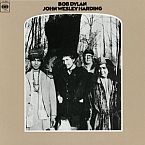
Album: John Wesley Harding (1967)
Play Video

Songfacts®:

  • Recorded in four takes on October 17, 1967, "Drifter's Escape" is a song about a drifter put on trial for reasons he doesn't understand. Even the judge seems outraged by the injustice of the situation, as he throws his robe aside and cries. For reasons unspecified, the trial seems doomed to go on, no matter how much anyone protests. Yet, at the last minute, a bolt of lightning strikes the courthouse "out of shape" and, as the onlookers kneel to pray, the drifter escapes.

    The surreal absurdity of the song has been compared to the writing of Franz Kafka. Its ambiguous nature has provoked all manner of analyses. Some critics have noted that the song mirrored Dylan's own experience with the media and his fans and critics (which seemed to overlap more frequently than one might expect).

    There is a definite religious/spiritual undertone in the song, as it's an "act of God" that brings the unrighteous to their knees while saving the poor drifter. The meaning of even this, though, is ultimately nebulous, as Dylan used Biblical and religious imagery throughout his career for many different reasons and effects.
  • In The Bob Dylan Encyclopedia, Michael Gray noted several interesting connections between "Drifter's Escape" and Lewis Carrol's Alice's Adventures in Wonderland. The general theme of an absurd trial runs across both tales, but there are also specific lines that bear a resemblance, according to Gray. As evidence he compares:

    Well the judge he cast his robe aside
    A tear came to his eye
    'You fail to understand,' he said
    'Why must you even try?


    With Wonderland's "The Lobster Quadrille" lines:

    "What matters is how far we go?" his scaly friend replied
    "There is another shore, you know, upon the other side"
  • Clinton Heylin, who wrote Dylan: Behind the Shades, among other books on the musician, observed that "Drifter's Escape" was Dylan's first use of a writing style that packed five-act stories into three verses. This same method was used throughout the John Wesley Harding album.
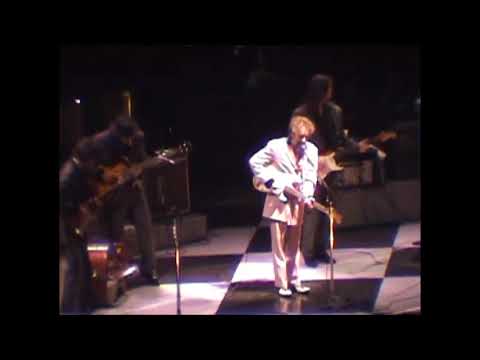
  • The first known live Dylan performance "Drifter's Escape" was on April 30, 1992, the day after police were exonerated after the beating of Rodney King. The trial was covered around the world and the final verdict was considered by many across the nation to be unjust.
  • Jimi Hendrix recorded a version of this song in 1970, but it didn't appear until 1974 on his album Loose Ends.

Comments

Be the first to comment...

Editor's Picks

Jay, Peaches, Spinderella and other Darrining Victims

Jay, Peaches, Spinderella and other Darrining VictimsSong Writing

Just like Darrin was replaced on Bewitched, groups have swapped out original members, hoping we wouldn't notice.

We Will Rock You (To Sleep): Pop Stars Who Recorded Kids' Albums

We Will Rock You (To Sleep): Pop Stars Who Recorded Kids' AlbumsSong Writing

With the rise of Kindie rock, more musicians are embracing their inner child with tunes for tots - here, we look at pop stars who recorded kids' albums.

Janet Jackson

Janet JacksonFact or Fiction

Was Janet secretly married at 18? Did she gain 60 pounds for a movie role that went to Mariah Carey? See what you know about Ms. Jackson.

Barry Dean ("Pontoon," "Diamond Rings And Old Barstools")

Barry Dean ("Pontoon," "Diamond Rings And Old Barstools")Songwriter Interviews

A top country songwriter, Barry talks about writing hits for Little Big Town, Tim McGraw and Jason Aldean.

Song Cities

Song CitiesMusic Quiz

Nirvana, Billy Joel and Bruce Springsteen are among those who wrote songs with cities that show up in this quiz.

Alan Merrill of The Arrows

Alan Merrill of The ArrowsSongwriter Interviews

In her days with The Runaways, Joan Jett saw The Arrows perform "I Love Rock And Roll," which Alan Merrill co-wrote - that story and much more from this glam rock pioneer.