Talkin' Bear Mountain Picnic Massacre Blues

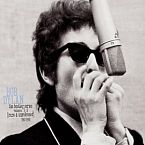
Album: The Bootleg Series Volumes 1-3: Rare & Unreleased (1991)
Play Video

Songfacts®:

  • Even though this song didn't emerge for 30 years after its recording, it's an important one in the story of Bob Dylan's evolution as a songwriter. Not only was it a landmark in the development of his signature talent for crafting songs that poignantly captured the times in which they were made, it was also instrumental in initiating Dylan's business relationship with manager Albert Grossman.

    In June of 1961, Dylan was respected among the folkies of Greenwich Village as an interpreter of songs, but he wasn't yet known as a songwriter. That's part of the reason why some of those close to Dylan distinctly remembered him busting out "Talkin' Bear Mountain Picnic Massacre Blues" one day after reading the news story that inspired it.

    June 18, 1961, was a Sunday. It was also Father's Day. A Wilson Line steamer named the Hudson Belle was set to take off from a Jersey City, New Jersey, port, carrying African-American families to Bear Mountain for a holiday picnic celebration. The families were mostly from Harlem, New York. Bear Mountain is still a recreation spot today as part of Harriman-Bear Mountain State Parks.

    Newspaper accounts from the time differ slightly in the number of people involved in what came next. Some say it was a total of 4,000 while others say it was a total of 5,000. In "Talkin' Bear Mountain Picnic Massacre Blues," Dylan identifies it as 6,000. Whatever the exact number, the gist of it is that three youths had sold fraudulent tickets to a tour whose legitimate tickets were completely sold old, resulting in 1,000 too-many people trying to get onto the boat to Bear Mountain.

    In Dylan's retelling in "Talking Bear Mountain Picnic Massacre Blues," he sings that the weight of all the people made the ship sink.

    Well, we all got on 'n' what d'ya think
    That big old boat started t' sink
    More people kept a-pilin' on
    That old ship was a-slowly goin' down
    Funny way t' start a picnic
  • Because the song is based on an actual event, many Dylan sources erroneously report that that's how things actually went down. It isn't, though. The swelling of people didn't cause a sinking - it caused a stampede/riot.

    Before boarding the Hudson Belle, the attendees started figuring out that many of them held fake tickets, which would mean many of them wouldn't be able to actually go on the trip. So, when the Hudson Belle pulled up to the pier, people started pushing and shoving to get onboard. Upwards of 150 police officers arrived to try to contain the situation and prevent people from boarding.

    What followed was described as a panic and a riot, but that seems to be using the terms generously. In the surge to get on the ship, many people did get trampled, but the most serious injury was a broken leg by 26-year-old Coldridge Barbour of 128 West 115th Street (back in the day newspapers printed people's full addresses). Barbour was a musician, a member of a Trinidad steelband that was supposed to play for the attendants.

    Other than Barbour, 75 people were treated and released on-site. Six went to Knickerbocker Hospital but were quickly released. The Knickerbocker was the location of a Cinemax series that was titled The Knick, which ran from 2014 to 2015.

    The ship's captain decided to cancel the trip to Bear Mountain. All those who paid for legitimate tickets were refunded, but those with fraudulent tickets were out of luck. According to The Daily News (June 19, 1961), they'd paid $3 for each adult ticket and $1.50 for kid's tickets. In today's dollars, that's about $26 or $13, respectively.

    Noel Paul Stookey (the "Paul" of folk trio Peter, Paul, and Mary) read the story in a June 19 paper. He brought it to Dylan, and by the next day, Dylan had written "Talkin' Bear Mountain Picnic Massacre Blues."
  • The song is funny but also shines a light on an important theme in Dylan's art, which is his railing against injustice and people doing other people wrong all for a dollar. It's maybe the first self-penned example of what Dylan would come to call his "finger-pointing songs," meaning he was pointing the finger at wrongdoers. Usually his targets were politicians and rich fat cats, but in this case the three fraudulent Bear Mountain ticket sellers turned out to be three African-American teenagers.

    They were Joseph Osborne, Arnold Cherry, and Phillip Clayton. Osborne and Cherry were students at an unspecified college nearby while Clayton was a member of the Claude Greene band that was supposed to play. The racket reportedly was led by Osborne and Cherry, who printed the tickets and paid Clayton to do the selling.

    Stookey was so impressed by the fact that Dylan pumped out a topical song so quickly that he told manager Albert Grossman, who'd built Peter, Paul and Mary, and who would manage some of the biggest folk acts of the era, including Odetta, Gordon Lightfoot, Janis Joplin, and the Band.

    Grossman started managing Dylan a few months later. Though their relationship later became contentious, few doubt how important Grossman was to Dylan's success. Grossman was known for being an aggressive and effective negotiator and for passionately defending his clients. He insulated Dylan from the business side of music so that Dylan could focus exclusively on the creative.
  • Dylan recorded three versions of the song on April 25, 1962, at Columbia Recording Studios. They weren't released until 1991, when one version was included on The Bootlegs Series Volumes 1-3: Rare & Unreleased.
  • A "talking blues" is a distinct style of music where performers speak rather than sing. The accompanying music is usually slowed down accordingly. Its origins are usually traced to South Carolina musician Christopher Bouchillon. Woody Guthrie used it a lot, as well, with songs like "Talking Dust Bowl Blues" and "Talking Fishing Blues." Guthrie was the single biggest formative influence on Dylan.

    Dylan employed the talking blues technique more than once, with "Talkin' New York," "Talkin' John Birch Paranoid Blues," and "Talking World War III Blues."

    The researchers at Bob Dylan Roots make a good case for a 1958 John Greenway album titled Talking Blues and published by Folkways records to be the central inspiration for Dylan's use of talking blues style. They also point out that some lyrics from "Talkin' Bear Mountain Picnic Massacre Blues" appear to have been inspired directly by Greenway's "Talking Butcher," which is about Greenway sleeping with a butcher's wife and then running from the butcher.

    Greenway's "Talking Butcher" has the line:

    Women screamin'. Babies yellin'. Me a-hidin'.

    Dylan's "Talkin' Bear Mountain Picnic Massacre Blues":

    Women screamin', fists a-flyin', babies cryin', cops a-coming' me a-runnin'.

Comments

Be the first to comment...

Editor's Picks

Director Mark Pellington ("Jeremy," "Best Of You")

Director Mark Pellington ("Jeremy," "Best Of You")Song Writing

Director Mark Pellington on Pearl Jam's "Jeremy," and music videos he made for U2, Jon Bon Jovi and Imagine Dragons.

Dexys (Kevin Rowland and Jim Paterson)

Dexys (Kevin Rowland and Jim Paterson)Songwriter Interviews

"Come On Eileen" was a colossal '80s hit, but the band - far more appreciated in their native UK than stateside - released just three albums before their split. Now, Dexys is back.

Church Lyrics

Church LyricsMusic Quiz

Here is the church, here is the steeple - see if you can identify these lyrics that reference church.

Francis Rossi of Status Quo

Francis Rossi of Status QuoSongwriter Interviews

Doubt led to drive for Francis, who still isn't sure why one of Status Quo's biggest hits is so beloved.

The Punk Photography of Chris Stein

The Punk Photography of Chris SteinSong Writing

Chris Stein of Blondie shares photos and stories from his book about the New York City punk scene.

Charlie Benante of Anthrax

Charlie Benante of AnthraxSongwriter Interviews

The drummer for Anthrax is also a key songwriter. He explains how the group puts their songs together and tells the stories behind some of their classics.