Talkin' Hava Negeilah Blues

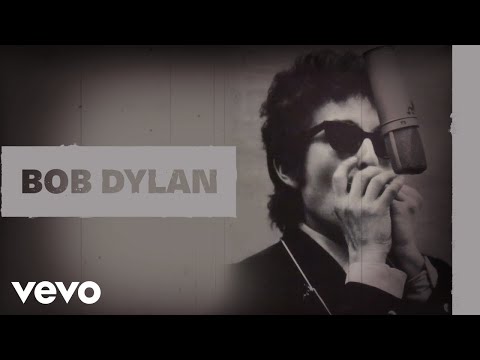
Album: The Bootleg Series Volumes 1-3: Rare & Unreleased (1991)
Play Video

Songfacts®:

  • This song isn't really a talking blues, nor is it even a blues of any sort at all. It is instead 21-year-old Bob Dylan making a joke and in the process crafting one of his funniest songs.

    Just 52-seconds long, it opens with Dylan declaring, "Here's a foreign song I learned in Utah." The joke here is that the title of the song refers to "Hava Nagila," a 1918 Jewish folk song traditionally performed at celebrations such as weddings and bar mitzvahs. Dylan is Jewish and was raised knowing this song. Utah at that time was also distinctly Mormon country, so the notion of a Jew learning a traditional Jewish song in Utah in 1961 was automatically ridiculous.

    With his absurd claim of learning the song in Utah, Dylan launches into a yodeling pronunciation of the words "hava nagila," which means "let us rejoice" in Hebrew, and that's pretty much it.
  • The term "talking blues" is used for a musical styling in which the artist uses a strict and often monotonous guitar rhythm that he or she speaks around in freeform rhythm. The contrast generally has a comical effect, and talking blues are often humorous songs. The man who pioneered the form was Christopher Allen Bouchillon, dubbed "The Talking Comedian of the South."

    Folk icon (and Dylan hero) Woody Guthrie used the talking blues form often. Dylan himself used it frequently both in covers and originals early in his career. Several of his earliest original songs were of the sort, including "Talkin' New York," "Talkin' Bear Mountain Picnic Massacre Blues," "Talkin' John Birch Paranoid Blues," and "Talkin' World War III Blues."
  • In his early career, Dylan embodied a sort of vaudeville performer who bumbled around like Charlie Chaplin and cracked jokes between songs. It wouldn't be long before he'd become famous for the gravitas of his political and protest songs and then, later, his wild and surreal visions of America, but early on he was often openly humorous and clownish. "Talkin' Hava Negelah Blues" is an artifact of that period.
  • Dylan recorded this brief take on April 25, 1962, in sessions for his second album, The Freewheelin' Bob Dylan. It was the third song he recorded during those sessions. The song wasn't included on that album and didn't see the light of day until March 26, 1991, when it was released on The Bootleg Series Volumes 1-3. The original recording was in Studio A of Columbia Recording Studios, New York.
  • Dylan performed the song live regularly in 1961 when he was working the beatnik coffee shops of New York. One of his performances at Gerde's Folk City landed in a September 29, 1961 review by Robert Shelton writing for the New York Times.

Comments

Be the first to comment...

Editor's Picks

Part of Their World: The Stories and Songs of 13 Disney Princesses

Part of Their World: The Stories and Songs of 13 Disney PrincessesSong Writing

From "Some Day My Prince Will Come" to "Let It Go" - how Disney princess songs (and the women who sing them) have evolved.

Marc Campbell - "88 Lines About 44 Women"

Marc Campbell - "88 Lines About 44 Women"They're Playing My Song

The Nails lead singer Marc Campbell talks about those 44 women he sings about over a stock Casio keyboard track. He's married to one of them now - you might be surprised which.

Director Nick Morris ("The Final Countdown")

Director Nick Morris ("The Final Countdown")Song Writing

Nick made some of the biggest videos on MTV, including "The Final Countdown," "Heaven" and "Don't Know What You Got (Till It's Gone)."

Grateful Dead Characters

Grateful Dead CharactersMusic Quiz

Many unusual folks appear in Grateful Dead songs. Can you identify them?

The Real Nick Drake

The Real Nick DrakeSong Writing

The head of Drake's estate shares his insights on the late folk singer's life and music.

Holly Knight ("The Best," "Love Is A Battlefield")

Holly Knight ("The Best," "Love Is A Battlefield")Songwriter Interviews

Holly Knight talks about some of the hit songs she wrote, including "The Warrior," "Never" and "The Best," and explains some songwriting philosophy, including how to think of a bridge.