The Lonesome Death Of Hattie Carroll

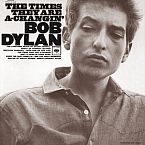
Album: The Times They Are A-Changin' (1964)
Play Video

Songfacts®:

  • This song gives the account of the killing of 51-year-old barmaid Hattie Carroll by the wealthy young William Devereux "Billy" Zantzinger and his subsequent sentence of six months in jail. The actual incident took place February 9, 1963 at a ball at the Emerson Hotel in Baltimore, Maryland. Dylan's song accurately implies, but never states, that Carroll was black and Zantzinger is white. The song implies that Zantzinger beat Carroll to death with his cane, when in fact he drunkenly assaulted Carroll and at least two others with the cane (a bellboy and a waiter both also reported being attacked by Zantzinger the same night).

    At about 1:30 a.m. on the morning of February 9, Zantzinger ordered a drink from Carroll and when she did not bring it immediately, he cursed at her, to which Carroll replied: "I'm hurrying as fast as I can." Zantzinger said, "I don't have to take that kind of s--t off a nig--r," and struck her on the shoulder with the cane. Carroll was heard to remark, "I feel deathly ill, that man has upset me so," before collapsing and being taken to the hospital.

    After Carroll died the following morning, Zantzinger was charged with homicide. However, this was changed to manslaughter and assault after it was discovered that Carroll had hardened arteries, an enlarged heart, high blood pressure, and that she had in fact probably died of a brain hemorrhage caused by the stress of Zantzinger's verbal and physical abuse, rather than the physical assault itself (the cane left no mark on her).

    On August 28, 1963, Zantzinger was convicted of assault and manslaughter and was sentenced to six months in jail. Dylan's song strongly implies that Zantzinger's upper-class status contributed to the lenient sentence. After the sentence was announced, the New York Herald Tribune conjectured that Zantzinger was not given more jail time to keep him out of the state prison, since the notoriety of his crime would make him a marked target among its largely African American inmates (Zantzinger instead served his time in the comparative safety of the Washington county jail). Zantzinger began serving his term on September 15, and paid to the Carroll family the sum of $25,000.
  • Dylan recorded this song on October 23, 1963 when the trial was still relatively fresh news, and incorporated it into his live repertoire immediately, before releasing the studio version on January 13, 1964. Dylan performed the song on Steve Allen's network television program February 25, 1964.

    The Steve Allen Show appearance is re-created in the Todd Haynes' 2007 Dylan film I'm Not There. The film features several different actors playing Dylan, but this particular part is played by Christian Bale playing folk singer Jack Rollins. >>>
    Suggestion credit:
    Daniel - Nashville, TN, for above 2
  • After getting out of jail, Zantzinger got involved in real estate. In 1986 his local county authority took possession of some of his low-income houses that he was renting out to blacks due to unpaid county taxes. Zantzinger continued to charge rent on property he no longer owned, even successfully suing his putative tenants for back rent. The press got wind of the scandal and in 1991 he was arrested and sentenced to 19 months in prison, some of which was later served in a work release program, and fined $50,000. Zantzinger died on January 3, 2009, aged 69.
  • Zantinger refused to say anything about the Dylan song until 2001 when he told Bob Dylan biographer Howard Sounes: "[Dylan] is a no-account son a bitch. He's just like a scum bag of the earth. I should have sued him and put him in jail. [The song is] a total lie."
  • Judy Collins recorded this for her 1964 live album The Judy Collins Concert. She explained to Uncut magazine in 2019 why Dylan's broadside against William Zanzinger's casual killing of his black maid will survive its subject matter.

    "It transcends time and specifics because it's so visceral," Collins said. "There's this big blustering racist, striding around with his watch chain, and this poor maid. It's also so visual. He explicitly describes this guy who, if you saw him in a bar, you'd try to get him thrown out. Get the picture in your mind and get it down on paper. Then it might last."

Comments: 2

  • David from Woburn, MaBobby was pretty pissed, no?
  • Peter from Allentown, PaMichael Rose, of Black Uhuru, does a great reggae version of this song on a reggae Dylan-cover version album. Worth the listen if you like Dylan and reggae.
see more comments

Editor's Picks

Donnie Iris (Ah! Leah!, The Rapper)

Donnie Iris (Ah! Leah!, The Rapper)Songwriter Interviews

Before "Rap" was a form of music, it was something guys did to pick up girls in nightclubs. Donnie talks about "The Rapper" and reveals the identity of Leah.

Album Cover Inspirations

Album Cover InspirationsSong Writing

Some album art was at least "inspired" by others. A look at some very similar covers.

Linda Perry

Linda PerrySongwriter Interviews

Songwriting Hall of Famer Linda Perry talks about her songs "What's Up" and "Beautiful," her songwriting process, and her move into film music.

Howard Jones

Howard JonesSongwriter Interviews

Howard explains his positive songwriting method and how uplifting songs can carry a deeper message.

Mac Powell of Third Day

Mac Powell of Third DaySongwriter Interviews

The Third Day frontman talks about some of the classic songs he wrote with the band, and what changed for his solo country album.

Incongruent Opening Acts

Incongruent Opening ActsSong Writing

Here's what happens when an opening act is really out of place with the headliner, like when Beastie Boys opened for Madonna.