Bob Marley & the Wailers

Bob Marley & the Wailers Artistfacts

  • 1963-1981
    Bob MarleyVocals, guitar
    Peter ToshGuitar, keyboards, vocals1963-1974
    Bunny Wailer (Neville Livingston)Vocals, percussion1963-1974
    Aston "Family Man" BarrettBass1969-1981
    Carlton "Carly" BarrettDrums1969-1981
    Al AndersonGuitar1974-1981
    Tyrone DownieKeyboards1974-1981
    Earl "Wya" LindoKeyboards1974-1981
    Alvin "Seeco" PattersonPercussion1974-1981
    Rita MarleyBacking vocals1974-1981
    Judy MowattBacking vocals1974-1981
    Marcia GriffithsBacking vocals1974-1981
    Junior MarvinGuitar1977-1981
  • We think of "No Woman No Cry," "One Love" and other classics as Bob Marley songs, but they're all credited to Bob Marley & the Wailers. When they formed in 1963 they were just The Wailers, comprised of Bob Marley, Peter Tosh and Bunny Wailer. They were an equal partnership, but when they signed to Island Records in 1972, label boss Chris Blackwell decided Marley was the star (he was right) and made him the focal point, rechristening the group Bob Marley & the Wailers. Marley insisted they keep the name even after Tosh and Wailer left in 1974.
  • They were famous in their native Jamaica long before the rest of the world became aware of them. Their first single there, "Simmer Down," topped the charts there and made them stars. They didn't get much attention internationally until the early 1970s.
  • The Grammy for Best Reggae Album wasn't awarded until 1985, so Bob Marley & the Wailers didn't win any. Four of Bob's sons have won that award though: Ziggy, Stephen, Damian and Julian.
  • Eric Clapton's only #1 hit on the Hot 100, either as a solo artist or with one of his many bands, was his 1974 cover of the Bob Marley & the Wailers song "I Shot The Sheriff."
  • Their 1977 album Exodus was named the best album of the 20th century by Time magazine in 1999.
  • Bob Marley survived a politically motivated assassination attempt on December 3, 1976, when gunmen stormed his home in Kingston and opened fire. Marley was shot in the arm but made a strong recovery. Two days later he played the Smile Jamaica free concert, opening his shirt so the crowd could see his wounds.
  • Marley loved soccer, or as he called it, football. He was often seen with a soccer ball and played whenever he could. When he injured his toe playing in 1977, doctors discovered a rare and aggressive form of skin cancer under his toenails. They recommended amputating the toe, but Marley refused, unwilling to give up the sport that meant so much to him. The cancer eventually spread to his brain, liver, and lungs, and he died on May 11, 1981, at just 36.
  • Their Live! album, recorded at the Lyceum Theatre in London on July 18, 1975, is often cited as one of the best live albums ever made. Their performance of "No Woman No Cry" on the album is considered the definitive version of the song.
  • It's been reported that the last words Bob said to his oldest son Ziggy before he died were "Money can't buy life," but Ziggy says that's not true.

    "He said to me, 'What's up young Bob? I've got a song for you," Ziggy said on the Off The Record podcast. "And I'm saying, 'On your way up, take me up. On your way down, don't let me down.' That was what he said to me."

Comments

Be the first to comment...

Editor's Picks

Carl Sturken

Carl SturkenSongwriter Interviews

Hitmaker Carl Sturken on writing and producing for Rihanna, 'N Sync, Christina Aguilera, Kelly Clarkson, Donny Osmond, Shakira and Karyn White.
Trans Soul Rebels: Songs About Transgenderism

Trans Soul Rebels: Songs About TransgenderismSong Writing

A history of songs dealing with transgender issues, featuring Pink Floyd, David Bowie, Morrissey and Green Day.

Vanessa Carlton

Vanessa CarltonSongwriter Interviews

The "A Thousand Miles" singer on what she thinks of her song being used in White Chicks and how she captured a song from a dream.
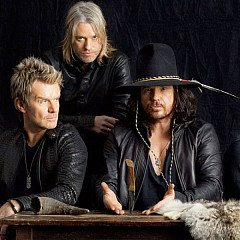
Ian Astbury of The Cult

Ian Astbury of The CultSongwriter Interviews

The Cult frontman tells who the "Fire Woman" is, and talks about performing with the new version of The Doors.
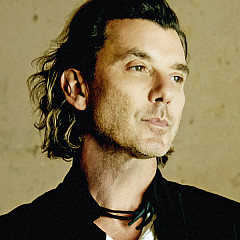
Gavin Rossdale On Lyric Inspirations and Bush's Album The Kingdom

Gavin Rossdale On Lyric Inspirations and Bush's Album The KingdomSongwriter Interviews

The Bush frontman on where he finds inspiration for lyrics, if his "machine head" is a guitar tuner, and the stories behind songs from the album The Kingdom.

Adam Young of Owl City

Adam Young of Owl CitySongwriter Interviews

Is Owl City on a quest for another hit like "Fireflies?" Adam answers that question and explains the influences behind many others.