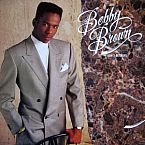
Don't Be Cruel

Album: Don't Be Cruel (1988)
Charted: 13 8
Play Video

Songfacts®:

  • The title track to Bobby Brown's second solo album, "Don't Be Cruel" was written by the team of Babyface (aka Kenneth Edmonds), L.A. Reid, and Daryl Simmons. Babyface and Reid, who were the producers of the track, keyed into late '80s new jack swing, blending hip-hop with R&B. Brown was a great fit for this sound, since he could sing or rap, allowing for lots of little hooks in a song.

    The song was released as the first single from the album, and it proved a breakthrough. The single shot to #1 on the R&B chart, where Brown had been before with a track from his first album ("Girlfriend"), and four times as a member of New Edition. It also went to #8 on the Hot 100, harkening his emergence as a crossover artist. His next single, "My Prerogative," hit #1 on both the Hot 100 and R&B chart.
  • The song is about a girl who doesn't appreciate her man and treats him badly. He works hard to give her the finer things in life, but she's never satisfied.

    There are three rap interludes in the song, which hash out the details of the story and even provide her name: Jackie. We learn that despite his best efforts, Brown has never been able to extract any gratitude from her, and even though he loves her, he knows he's a catch and is willing to let her go. The song ends with an ultimatum: treat me like another girl would, or you're gone.
  • The line, "There's a lot of girls out there that won't say no" made its way into the popular lexicon, as it summarized the message of this song: treat me right or another girl will. The rapper Positive K says it in his 1993 hit "I Got A Man."
  • This song helped send the Don't Be Cruel album to #1, making Brown (age 19) just the fourth teenager to top the US albums chart, following Ricky Nelson, Stevie Wonder and Tiffany. Don't Be Cruel was the top-selling album in America in 1989.
  • Cheap Trick's cover of the Elvis Presley hit "Don't Be Cruel" peaked at #4 US on October 8, 1988. Bobby Brown's "Don't Be Cruel" peaked at #8 exactly one week later.
  • On the album, this song runs a hearty 6:52. The single release was cut down to 4:07.
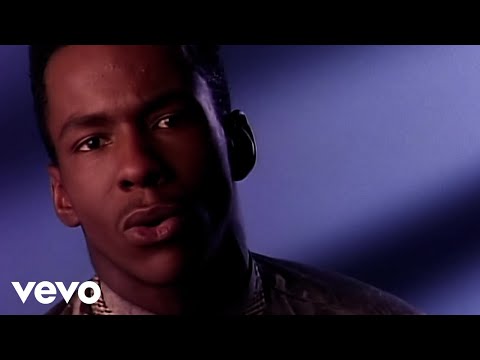
  • The music video is very literal, with Brown confronting the girl on the street (kinda like Michael Jackson's video for "The Way You Make Me Feel). It was directed by Alek Keshishian, who took a different tack when he did Brown's videos for "Every Little Step" and "My Prerogative" - those abandoned storyline in favor of dancing. Keshishian later directed Madonna's Truth or Dare documentary.
  • In the UK, this made #42 when it was first released. After "My Prerogative" hit #6 and established Brown in Britain, the "Rapacious Edit" of "Don't Be Cruel" was issued as a single, making #13 in April 1989.
  • Daryl Simmons, Kenneth "Babyface" Edmonds and L.A. Reid first hooked up with Bobby Brown after they got a call from MCA Records A&R exec Louil Silas. Simmons recalled to Songwriter Universe:

    "Louil says, 'Hey man, Bobby Brown [has left New Edition], and he's looking to do a record - Y'all need to work with him.' We were like, 'Okay.' At the time, we were working in Silver Lake with this group, The Boys. We'd just done a song called 'Dial My Heart.' So Bobby comes by…I think he had just turned 21. He was full of energy, and we started talking. We [decided to] start working on songs for Bobby.

    At the time, Kenny has just gotten his house up in the hills, and it had a guest house. L.A. would work in the studio in the guest house and program drums. Kenny and I couldn't be in the same room because he turned it up so loud. This dude busted so many speakers over our career and drove engineers crazy.

    So one day, we hear this beat coming out of the guest house. (He sings 'Boom Boom Taka Boom, Boom Taka Boom, Boom Boom Taka Boom'). And Kenny was like, 'What the hell is that?' So we run in the room and L.A. said, 'I got this beat!' I said, 'Damn…that s--t is nasty! That's already a song by itself!' Kenny said, 'All I got to do is put the right thing on it.' So Kenny went to the bass sizer (creating the bass line). So as you know, Bobby [had the reputation of being] this bad boy, nasty, always in trouble. We said, 'This is Bobby…this is so nasty. This is Cruel…this track is Cruel.' So that's how Kenny came up with Don't Be Cruel as the concept. Then we had to make it make sense. So that's how 'Don't Be Cruel' came about."
  • Bobby Brown thought that the original rap that Daryl Simmons wrote for "Don't Be Cruel" was corny so the songwriter agreed to let him finish it. Simmons recalled: "He made it 'Bobby' - he brought attitude to it. We were so ecstatic."
  • When writing "Don't Be Cruel," Babyface was consciously thinking of Elvis Presley's original song of the same name. He told The New York Times he felt Bobby Brown had "some Elvis in him."

Comments

Be the first to comment...

Editor's Picks

Kim Thayil of Soundgarden

Kim Thayil of SoundgardenSongwriter Interviews

Their frontman (Chris Cornell) started out as their drummer, so Soundgarden takes a linear approach when it comes to songwriting. Kim explains how they do it.

Edwin McCain

Edwin McCainSongwriter Interviews

"I'll Be" was what Edwin called his "Hail Mary" song. He says it proves "intention of the songwriter is 180 degrees from potential interpretation by an audience."
90210 to Buffy to Glee: How Songs Transformed TV

90210 to Buffy to Glee: How Songs Transformed TVSong Writing

Shows like Dawson's Creek, Grey's Anatomy and Buffy the Vampire Slayer changed the way songs were heard on TV, and produced some hits in the process.
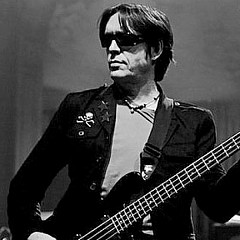
Tim Butler of The Psychedelic Furs

Tim Butler of The Psychedelic FursSongwriter Interviews

Tim and his brother Richard are the Furs' foundation; Tim explains how they write and tells the story of "Pretty In Pink."
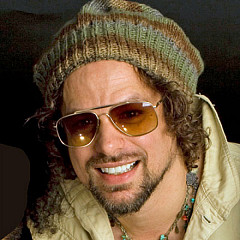
Michael Glabicki of Rusted Root

Michael Glabicki of Rusted RootSongwriter Interviews

Michael tells the story of "Send Me On My Way," and explains why some of the words in the song don't have a literal meaning.
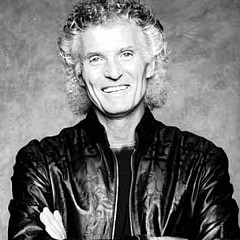
Don Brewer of Grand Funk

Don Brewer of Grand FunkSongwriter Interviews

The drummer and one of the primary songwriters in Grand Funk talks rock stardom and Todd Rundgren.