Fixin' To Die Blues

Album: The Country Blues (1940)
Play Video

Songfacts®:

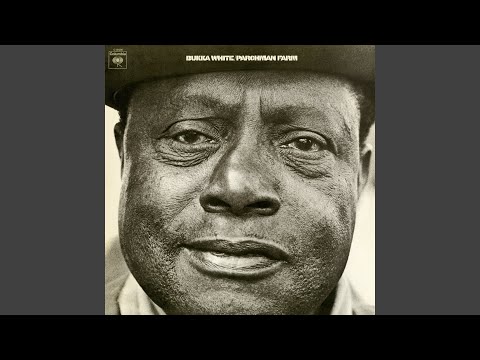
  • In "Fixin' To Die Blues," Bukka White faces his own impending death. A loving family man all his life, his thoughts go to his family and concerns for what will happen to them after he passes.

    White wrote the song after watching a friend die on the Parchman Farm prison in Mississippi. Because of The Farm's dreadful living conditions, some have politicized the song, but there's no indication that White saw it that way. He seemed to approach the song from a purely personal perspective.
  • White plays acoustic slide guitar and sings on the track. He's backed by Washboard Sam, the most notable washboard player of his time. The musical washboard is a modified version of an actual washboard, a simple technology that early Americans used to clean clothes.
  • In 1918 Lester Melrose started producing blues records in Chicago. He was one of the first people in the city to do so and holds a place in the Blues Hall of Fame for his efforts. He spent the remainder of his life scouting and recording blues talent. Melrose recorded White in September 1937, just before White was sent to Parchman Farm for shooting a man in the leg.

    When White got out in 1940, he traveled to Chicago to meet Melrose. He brought some cover songs that he wanted to record, but Melrose thought originals would sell better, so he got a hotel room for Melrose to write some tunes. "Fixin' To Die Blues" came out of that situation. White recorded the song on May 8, 1940, only days after writing it.
  • The song is held in high esteem by modern blues aficionados, but it didn't sell well in its day. White quit playing music professionally shortly afterwards. In 1959, Folkways Records compiled some old blues recordings by various artists, including this one (with the shortened title "Fixin' to Die"). They released it on seminal album The Country Blues. The album and its accompanying book, which gave a sense of legitimatized historical depth that the blues had previously lacked among the general public, were instrumental in the folk-blues revival of the early 1960s.
  • After his departure from music, White reemerged when his work was discovered in the early 1960s folk revival that came primarily out of New York City. Fans tracked him down and found he was a vibrant man even in his early 50s. He'd continued playing regularly for friends and family and was able to transition into a second act in his life - one that saw him performing throughout North American and Europe.
  • Bob Dylan covered the song on his self-titled debut album. The influence of his mentor Dave Van Ronk can be heard in the deliberately rough vocals. For the most part, Dylan stopped mimicking the vocal style after the debut album.

    Dylan recorded three takes of the song in one session. The last was the one used for the album. He recorded "You're No Good," the album's opening track, earlier the same day.
  • In 2010 G. Love sans The Special Sauce covered the song for his second solo album, also titled Fixin' To Die.

    Eli Book recorded the song in 2007 for his third studio album, Miss Blues'es Child.

    Widespread Panic included a cover of the song on their 21st album, a collection of live songs titled Wood.

    UK rock band Stretch recorded the song in 1976 for their second album, You Can't Beat Your Brain for Entertainment.
  • On multiple occasions, Led Zeppelin included "Fixin' To Die Blues" in live medleys with "Whole Lotta Love." On their 1997 BBC Sessions album, they combined both of those songs in a medley with "Boogie Chillun'," "That's Alright Mama" (by Jesse Fuller, not Elvis), and "A Mess of Blues."

    Zeppelin frontman Robert Plant covered the song as "Funny In My Mind (I Believe I'm Fixin' To Die)" on his 2002 Dreamland solo album.

Comments

Be the first to comment...

Editor's Picks

Martin Page

Martin PageSongwriter Interviews

With Bernie Taupin, Martin co-wrote the #1 hits "We Built This City" and "These Dreams." After writing the Pretty Woman song for Go West, he had his own hit with "In the House of Stone and Light."

Yacht Rock!

Yacht Rock!Song Writing

A scholarly analysis of yacht rock favorites ("Steal Away," "Baker Street"...) with a member of the leading YR cover band.

Def Leppard Quiz

Def Leppard QuizMusic Quiz

Can you name Def Leppard's only #1 hit in America? Get rocked with this adrenalized quiz.

Jesus Christ Superstar: Ted Neeley Tells the Inside Story

Jesus Christ Superstar: Ted Neeley Tells the Inside StorySong Writing

The in-depth discussion about the making of Jesus Christ Superstar with Ted Neeley, who played Jesus in the 1973 film.

Leslie West of Mountain

Leslie West of MountainSongwriter Interviews

From the cowbell on "Mississippi Queen" to recording with The Who when they got the wrong Felix, stories from one of rock's master craftsmen.

He Hit Me (And It Felt Like A Kiss): A History Of Abuse Pop

He Hit Me (And It Felt Like A Kiss): A History Of Abuse PopSong Writing

Songs that seem to glorify violence against women are often misinterpreted - but not always.