The Wayfaring Stranger

Album: The Wayfaring Stranger (1944)
Play Video

Songfacts®:

  • This traditional folk and gospel song made one of its first appearances in Joseph Bever's Christian Songster, a collection of hymns and spirituals published in 1858. In the woeful song, the poor wayfaring stranger is struggling through an arduous journey but remains hopeful in the promise of a peaceful afterlife, where he'll reunite with loved ones and leave behind a world full of turmoil.

    The song's origins are uncertain, but it's thought to have originated in the southern Appalachian Mountains in the late 1700s, though there are several other theories. Music scholars David Warren Steel and Richard H. Hulan, authors of the 2010 book The Makers of the Sacred Harp, connect it to the 1816 German-language hymn "Ich bin ein Gast auf Erden" by Isaac Niswander, while other sources claim the song is a reworked Black spiritual.
  • After the Civil War, this was known as the "Libby Prison Hymn," after it was erroneously attributed to a Union soldier who sang it while incarcerated in a Confederate prison in Richmond, Virginia. Because of its ties to the horrors of war, the song was used in the films Cold Mountain (a banjo/fiddle version by Jack White) and 1917 (a haunting rendition by Jos Slovick).
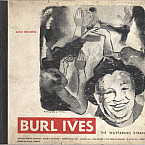
  • This was popularized by Burl Ives in the 1940s when he used the title "The Wayfaring Stranger" as the name of his radio program, his first two albums, and his 1948 autobiography. Despite the title Okeh Presents The Wayfaring Stranger, he didn't record the song for his 1941 debut album (or its 1944 Columbia reissue). It made its first appearance as "The Poor Wayfaring Stranger" on 1944's The Wayfaring Stranger, released via Asch Records.

    Ives identified with the song's beleaguered wanderer as he dropped out of college and went on his own journey across the US, singing and collecting folk songs in the 1930s. Although he became well-known for his holly jolly Christmas tunes thanks to his role as Sam the Snowman in the 1964 TV special Rudolph The Red-Nosed Reindeer, traditional folk songs were his bread and butter. He popularized many of them, including "Blue Tail Fly" (with The Andrews Sisters) and "The Big Rock Candy Mountain."
  • This was first recorded in 1930 by Vaughan's Texas Quartet as "The Wayfaring Pilgrim."
  • A version by blues/folk-rock singer Dave Alvin was used in the 2013 movie Saving Lincoln.
  • This was used on The Simpsons episode "Gal Of Constant Sorrow" in 2016, when Lisa Simpson tries to help Hettie, a homeless Appalachian folk singer, launch a singing career. Dixie Chicks frontwoman Natalie Maines, who provided the singing voice for Hettie, performs the tune.
  • Emmylou Harris recorded this for her 1980 album, Roses In The Snow. Her version peaked at #7 on the Country chart. Many other prominent artists recorded it, including Jo Stafford, Pete Seeger, Tennessee Ernie Ford, Bill Monroe, Ronnie Hawkins, Frankie Laine, The Oak Ridge Boys, Odetta, Joan Baez, Jerry Reed, Glen Campbell, Peter Yarrow, Alison Krauss, Dolly Parton, Johnny Cash, Dusty Springfield, Ed Sheeran, and Paula Cole, among others.
  • Country singer-songwriter Mac Davis, who wrote Elvis Presley's "In The Ghetto," "A Little Less Conversation," sang this when he appeared on the TV show 8 Simple Rules in the 2004 episode "Let's Keep Going: Part 2."

Comments

Be the first to comment...

Editor's Picks

Steve Morse of Deep Purple

Steve Morse of Deep PurpleSongwriter Interviews

Deep Purple's guitarist since 1994, Steve talks about writing songs with the band and how he puts his own spin on "Smoke On The Water."
Tom Waits Lyrics Quiz

Tom Waits Lyrics QuizMusic Quiz

Pool balls, magpies and thorns without roses - how well do you know your Tom Waits lyrics?

Verdine White of Earth, Wind & Fire

Verdine White of Earth, Wind & FireSongwriter Interviews

The longtime bassist of Earth, Wind & Fire discusses how his band came to do a holiday album, and offers insight into some of the greatest dance/soul tunes of all-time.
Commercials

CommercialsFact or Fiction

Was "Ring Of Fire" really used to sell hemorrhoid cream?

George Harrison

George HarrisonFact or Fiction

Did Eric Clapton really steal George's wife? What's the George Harrison-Monty Python connection? Set the record straight with our Fact or Fiction quiz.

Def Leppard Quiz

Def Leppard QuizMusic Quiz

Can you name Def Leppard's only #1 hit in America? Get rocked with this adrenalized quiz.