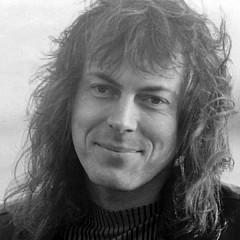
Chris Rainbow

Chris Rainbow Artistfacts

  • November 18, 1946 – February 11, 2015
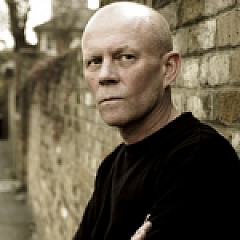
  • Chris Rainbow was born Christopher James Harley in Glasgow. He changed his surname after spotting the name "Christopher Rainbow" in a TV news reporter's on-screen credit one evening - he and his friends agreed it was the perfect stage name. The switch was also practical: Steve Harley of Cockney Rebel was at the peak of his fame, and Rainbow didn't want any confusion between the two.
  • Before he became a musician, Rainbow trained and worked as a graphic artist from 1964 to 1972. He didn't form his first band, Hopestreet, until he was 25, releasing two singles on Regal Zonophone and Parlophone between 1972 and 1973.
  • Rainbow's early solo singles, "Give Me What I Cry For" and "Solid State Brain," became unlikely radio (but not chart) hits in the mid-1970s thanks to heavy rotation by DJs Kenny Everett and Tony Blackburn. Everett, then at Capital Radio in London, was a particular champion of Rainbow's music and helped build his cult following.
  • Rainbow built his own recording studio on the Isle of Skye, where he lived from the 1970s onwards. His only solo studio albums were Home of the Brave (1975), Looking Over My Shoulder (1977), and White Trails (1979) - all released before he turned 33.
  • Rainbow sang on Alan Parsons Project albums from Eve (1979) right through to Parsons' 1999 solo album The Time Machine. Alan Parsons nicknamed Rainbow "the one-man Beach Boys" for his extraordinary ability to layer vocal harmonies entirely by himself in the studio.
  • In the early 1980s he joined the progressive rock band Camel as a touring and recording member, appearing on the albums The Single Factor (1982) and Stationary Traveller (1984) and touring with them in 1982 and 1984. He also provided vocal work for Jon Anderson of Yes on the albums Song of Seven (1980) and Animation (1983).
  • Rainbow provided backing vocals on Culture Club's 1984 album Waking Up with the House on Fire, including on the lead single "The War Song," which reached #2 in the UK. He shared vocal duties on the track with backing singers Helen Terry, Phil Pickett, and Clare Torry.
  • Rainbow became a respected record producer in Scotland (working under his birth name Chris Harley) producing multiple albums for Scottish Celtic rock band Runrig throughout the 1980s and 1990s, including Heartland (1985), The Cutter and the Clan (1987), and Amazing Things (1993).
  • More than a decade after his death aged 68 from Parkinson's disease in February 2015, Rainbow made his Billboard Hot 100 debut. The nearly 50-year-old deep cut "Be Like A Woman" from White Trails entered the chart in April 2026 after gaining traction on TikTok, where its hazy retro sound attracted millions of users.

Comments

Be the first to comment...

Editor's Picks

Have Mercy! It's Wolfman Jack

Have Mercy! It's Wolfman JackSong Writing

The story of the legendary lupine DJ through the songs he inspired.

The 10 Bands Most Like Spinal Tap

The 10 Bands Most Like Spinal TapSong Writing

Based on criteria like girlfriend tension, stage mishaps and drummer turnover, these are the 10 bands most like Spinal Tap.

Incongruent Opening Acts

Incongruent Opening ActsSong Writing

Here's what happens when an opening act is really out of place with the headliner, like when Beastie Boys opened for Madonna.

Janis Ian: Married in London, but not in New York

Janis Ian: Married in London, but not in New YorkSong Writing

Can you be married in one country but not another? Only if you're part of a gay couple. One of the first famous singers to come out as a lesbian, Janis wrote a song about it.

Neal Smith - "I'm Eighteen"

Neal Smith - "I'm Eighteen"They're Playing My Song

With the band in danger of being dropped from their label, Alice Cooper drummer Neal Smith co-wrote the song that started their trek from horror show curiosity to the Rock and Roll Hall of Fame.

Justin Hayward of The Moody Blues

Justin Hayward of The Moody BluesSongwriter Interviews

Justin wrote the classic "Nights In White Satin," but his fondest musical memories are from a different decade.