
Looking for Jack

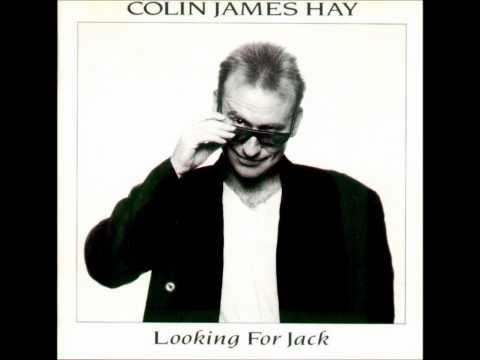
Album: Looking for Jack (1987)
Play Video

Songfacts®:

  • "Looking for Jack" is the title track to Colin Hay's first solo album after disbanding his group Men At Work. When the group split up in 1986, he started work on the album in Los Angeles, which was a strange place for Hay, who was raised in Scotland before moving to Australia at age 14.

    "When I was in Los Angeles I was driving around and I was aware of the fact that everyone was looking for something in Los Angeles," he said in a Songfacts interview. "I wasn't sure what they were looking for, but I knew they were looking for something.

    I couldn't sum it up: why people go to Los Angeles, why they take that trip. I knew a lot of people go there to realize their dreams and to get famous or whatever it is. People are drawn to that particular city for some reason and they all seem to be looking for something.

    I couldn't finish the song. I had that idea and I had a little bit of music for it. Then I went to a concert and I saw Jack Nicholson standing in the audience, and he was standing next to me at the mixing console. I said, 'Excuse me, Mr. Nicholson, my name's Colin Hay. I just want to say, I'm a great big fan of yours.' And he said, 'I can't hear you.'

    I got a little bit embarrassed and I went into the green room. I was talking to these girls and Jack came into the green room and he came right up to me and said, 'I just want to say, I'm a great big fan of yours too.'

    So, I got excited by that because I had just met Jack Nicholson and then he walked off. The girl was still talking to me but I was distracted and I kept looking over her shoulder. She said, 'What are you doing, Colin?' and I said, 'Oh, I'm sorry, you'll have to excuse me, I'm just looking for Jack.' And she said, 'Yeah, everybody's always looking for Jack.' So, I said: 'Excuse me, I have to go home and finish something.'"
  • This song aged well, finding space in Hay's setlists, but it fared poorly when it was released, making no chart impact. It was quite a comedown for Hay, who was a huge star with Men At Work, but couldn't find an audience with his solo material despite label support - the album was released on Men At Work's label Columbia, which commissioned a video to promote it.

    Hay moved to MCA for his next album, Wayfaring Sons (1990), but was dropped after that one flopped. For much of the '90s, he battled alcohol addiction while playing small shows and releasing independent albums. The work paid off: he got sober and earned a deal with Compass Records, which helped him find a new audience. He never again came close to the heights he reached with his former band, but he earned enough acclaim to fill small venues on a regular basis and earn airplay on some eclectic radio stations.

Comments: 1

  • Steve from Harbor City, CaHerbie Hancock is the pianist on this song. It's a shame this album never achieved the success it deserved because it really is a masterpiece, from first song to last.
see more comments

Editor's Picks

Creedence Clearwater Revival

Creedence Clearwater RevivalFact or Fiction

Is "Have You Ever Seen the Rain" about Vietnam? Was John Fogerty really born on a Bayou? It's the CCR edition of Fact or Fiction.

Gary LeVox

Gary LeVoxSongwriter Interviews

On "Life Is A Highway," his burgeoning solo career, and the Rascal Flatts song he most connects with.

Dennis DeYoung

Dennis DeYoungSongwriter Interviews

Dennis DeYoung explains why "Mr. Roboto" is the defining Styx song, and what the "gathering of angels" represents in "Come Sail Away."

Jon Anderson of Yes

Jon Anderson of YesSongwriter Interviews

From the lake in "Roundabout" to Sister Bluebird in "Starship Trooper," Jon Anderson talks about how nature and spirituality play into his lyrics for Yes.

Rob Halford of Judas Priest

Rob Halford of Judas PriestSongwriter Interviews

Rob Halford dives into some of his Judas Priest lyrics, talking about his most personal songs and the message behind "You've Got Another Thing Comin'."

90210 to Buffy to Glee: How Songs Transformed TV

90210 to Buffy to Glee: How Songs Transformed TVSong Writing

Shows like Dawson's Creek, Grey's Anatomy and Buffy the Vampire Slayer changed the way songs were heard on TV, and produced some hits in the process.