Safe

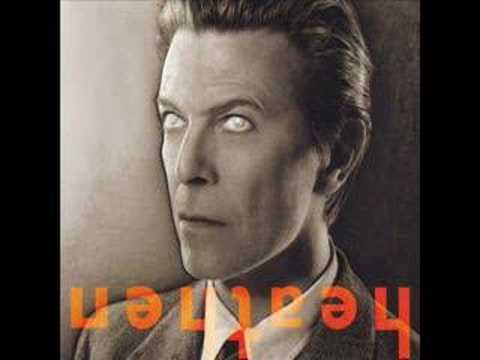
Album: Heathen (2002)
Play Video

Songfacts®:

  • "Safe" is one of those David Bowie songs that seems to have slipped through a crack in spacetime, only to re-emerge years later blinking, rearranged, and wondering how on earth it got there. In Bowie's catalogue - already crowded with space oddities, thin white dukes, and assorted starmen – "Safe" occupies the peculiar role of the song that was too good, too strange, and ultimately too Bowie for a children's movie about cartoon toddlers.
  • Bowie wrote the song in early 1998 with guitarist Reeves Gabrels, initially under the working title "(Safe In This) Sky Life." It was commissioned for The Rugrats Movie, whose makers were hoping for something classic, "A little bit of 'Space Oddity,' 'Heroes' and 'Absolute Beginners' rolled into one," Rugrats musical director Karyn Rachtman said.
  • The original 1998 version was lavish to the point of mild absurdity. There was a 24-piece string section, Gabrels on guitar, harmony vocals by Richard Barone of The Bongos, drums from Clem Burke of Blondie, and keyboards by Jordan Rudess (of Dream Theater fame). This version, alas, remains unreleased: one more lost Bowie artifact to sit alongside abandoned Ziggy outtakes and half-finished Berlin ghosts.

    Then came the cut. During post-production, the scene "Safe" was meant to accompany was removed, and with it went the song. The film's musical coordinator was incandescent. "He delivered a song far beyond my wildest dreams," Rachtman lamented, "and now I can't even use it."
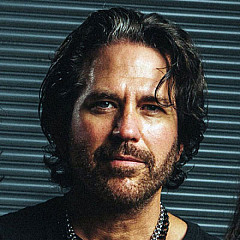
  • Bowie recorded "(Safe In This) Sky Life" with his great 1970s collaborator Tony Visconti, returning to the studio together for the first time since Scary Monsters (and Super Creeps) in 1980.

    Visconti was surprised - and delighted - to hear from Bowie again after a 20-year gap. When they got back together in the studio, the chemistry was immediate. "It was like nothing had changed," Visconti recalled to Uncut magazine. They worked obsessively, even joking that the song took 405 days to complete. "Everybody wants to be in a movie," Visconti said, "so that made us work harder."
  • Bowie and Visconti's work on the Rugrats track involved tense teleconferences with the film's producer.

    "She was a very aggressive woman, who told us she didn't like our song because that frightened her children," Visconti recalled to Uncut. "We said it didn't frighten ours - we didn't tell her that they were grown-up by then. It was a weird situation, but we did our best and I am quite fond of that track."
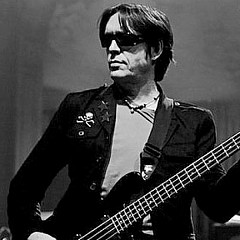
  • Years later, during the Heathen sessions (July–September 2001), Bowie dusted "Safe" off and gave it a new life. The 2001–2002 version was substantially rebuilt, retaining little beyond the original string arrangement. New players came in: Matt Chamberlain on drums, Rudess back on keyboards, and guitars from David Torn and Gerry Leonard, alongside Bowie's own vocals and 12-string guitar. Visconti, now firmly back in Bowie's orbit, would remain his collaborator right through to Blackstar in 2016.
  • The revived "Safe" first appeared quietly in June 2002 as a download for BowieNet subscribers before graduating to official release as the B-side of "Everyone Says "Hi"" on September 16, 2002. The standard single ran a neat 4:44, but a longer 5:53 version surfaced exclusively on the December 2002 Super Audio CD edition of Heathen, complete with a 5.1 surround mix by Visconti and an extra guitar solo.
  • "Safe" is a gentle meditation on security, acceptance, and resignation, infused with a faint spiritual yearning that betrays its origins as family film material. The chorus circles around the idea of safety within a skyline, Bowie stretching the word into long, floating vowels - "skyyyliiiiiifes" - as if trying to hover there indefinitely. It's a far cry from Major Tom's doomed capsule or the defiant lovers of "Heroes," but it belongs unmistakably to the same universe.

Comments

Be the first to comment...

Editor's Picks

The Girl in That Song

The Girl in That SongFact or Fiction

Billie Jean, Delilah, Sara, Laura and Sharona - do you know who the girls in the songs really are?

David Paich of Toto

David Paich of TotoSongwriter Interviews

Toto's keyboard player explains the true meaning of "Africa" and talks about working on the Thriller album.

John Parr

John ParrSongwriter Interviews

John tells the "St. Elmo's Fire (Man In Motion)" story and explains why he disappeared for so long.

Oliver Leiber

Oliver LeiberSongwriter Interviews

Oliver Leiber talks about writing and producing hits for Paula Abdul, and explains his complicated relationship with his father, the songwriter Jerry Leiber.

The 10 Bands Most Like Spinal Tap

The 10 Bands Most Like Spinal TapSong Writing

Based on criteria like girlfriend tension, stage mishaps and drummer turnover, these are the 10 bands most like Spinal Tap.

Justin Hayward of The Moody Blues

Justin Hayward of The Moody BluesSongwriter Interviews

Justin wrote the classic "Nights In White Satin," but his fondest musical memories are from a different decade.