Lazy

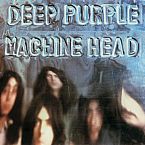
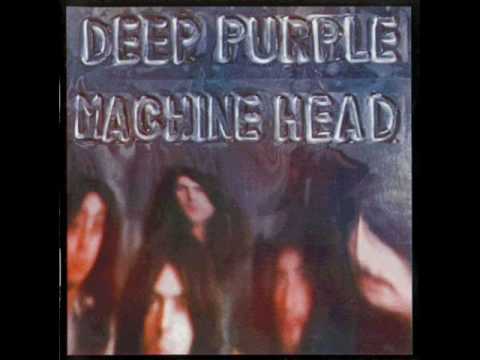
Album: Machine Head (1972)
Play Video

Songfacts®:

  • Most definitely not to be confused with the Irving Berlin standard of the same name, this album track is actually quite an uptempo number. Although basically a blues-based ego trip for lead guitarist Ritchie Blackmore and keyboard wizard Jon Lord, vocalist Ian Gillan also chips in on harmonica.

    The song's most noticeable feature is its riff, the words are largely superfluous:

    You're lazy, just stay in bed
    You're lazy, just stay in bed
    You don't want no money
    You don't want no bread
  • "Lazy" was co-written by all five members of Deep Purple Mark II (ie Blackmore, Gillan, Glover, Lord and Paice); group compositions being a trademark of this particular lineup.

    The studio version runs to 7 minutes 23 seconds and was recorded for the Machine Head sessions at Montreaux, Switzerland in December 1971. Being a track that lends readily to improvisation - as well as the aforementioned ego tripping - on stage it would often be spun out for considerably longer. A quarter of a century after it was released, Ritchie Blackmore's "Lazy" guitar solo was voted #75 of all time by a readers' poll for Guitar World magazine. >>
    Suggestion credit:
    Alexander Baron - London, England, for above 2
  • The story of recording the Machine Head album is told on the track "Smoke On The Water." When the band decamped to Montreaux, they were set to record the album at the casino there, which also served as a concert hall, but it burned down the day after they got there. They had the Rolling Stones' mobile unit with them to record, so instead of recording at the casino, they parked it at their hotel and record there. It took them about two weeks to complete the album.
  • Deep Purple's shredder Simon McBride, who took over for Steve Morse in 2022, enjoys improvising his own solos during live performances; but there's one riff by Ritchie Blackmore that remains a hurdle.

    "I don't play the same solo he plays in 'Lazy,' but 'Lazy' is one of those songs where I feel I can just improvise a bit more and just have a bit more fun with it," McBride told Ultimate Guitar. "But there's this one lick he does in it, and I said, 'I have to play that.' And it's a bitch of a lick. It's not ultrafast. It's just there's a lot of chromatic stuff in it and slides in a very tight space, within three or four frets, and that's it. So that, to me, is the hardest thing about playing Purple."

Comments: 2

  • Ricky from Killie, United KingdomRitchie has said in interviews that the main riff for Lazy was influenced by Clapton's version of Steppin' Out. Clapton recorded a version with the Bluesbreakers on the Beano album and later with Cream which is more likely where Ritchie heard it (Purple supported Cream in '68).
  • Joe from Grants Pass, OrBlackmores' solo was much more than blues, as anyone of you out there may know or realize...
see more comments

Editor's Picks

Donnie Iris (Ah! Leah!, The Rapper)

Donnie Iris (Ah! Leah!, The Rapper)Songwriter Interviews

Before "Rap" was a form of music, it was something guys did to pick up girls in nightclubs. Donnie talks about "The Rapper" and reveals the identity of Leah.

Bass Player Scott Edwards

Bass Player Scott EdwardsSong Writing

Scott was Stevie Wonder's bass player before becoming a top session player. Hits he played on include "I Will Survive," "Being With You" and "Sara Smile."

Chris Fehn of Slipknot

Chris Fehn of SlipknotSongwriter Interviews

A drummer for one of the most successful metal bands of the last decade, Chris talks about what it's like writing and performing with Slipknot. Metal-neck is a factor.

Carol Kaye

Carol KayeSongwriter Interviews

A top session musician, Carol played on hundreds of hits by The Beach Boys, The Monkees, Frank Sinatra and many others.

James Bond Theme Songs

James Bond Theme SongsMusic Quiz

How well do you know the 007 theme songs?

Annie Haslam of Renaissance

Annie Haslam of RenaissanceSongwriter Interviews

The 5-octave voice of the classical rock band Renaissance, Annie is big on creative expression. In this talk, she covers Roy Wood, the history of the band, and where all the money went in the '70s.