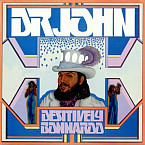

Desitively Bonnaroo

Album: Desitively Bonnaroo (1974)
Play Video

Songfacts®:

  • In this funky track, a high-stepping mama catches Dr. John's eye as she's strutting down the street, and the New Orleans bluesman encourages her to "keep on foxin' with your foxy self."
  • Although it's often attributed to Cajun-French slang with various feel-good translations, including "the best on the streets," the fanciful title is actually a Dr. John-ism that means "everything's fine" or "everything's good." Decades later, the term "Bonnaroo" became famous when it inspired the name of the annual Tennessee music festival. Bonnaroo co-founder Jonathan Mayer told Spin how he discovered the little-known phrase.

    "We were based in New Orleans at the time we came up with the name, which was around 2001, and we wanted to find a name that had a connection to where we were and what was inspiring to us," he explained in the 2010 interview. "I remember sitting in my apartment looking up old records online and I came across this Dr. John album called Desitively Bonnaroo. The word 'Bonnaroo' looked cool. It turned out that it's Creole slang for 'good stuff.' That just seemed to represent what we're about. I Googled it and it didn't seem like it was too widely used, which meant that it was a term that we could really brand as our own. It's been a perfect fit."
  • Dr. John, whose real name is Mac Rebennack, was on the Atlantic roster (via the imprint Atco Records) for years before he finally had his commercial breakthrough with the 1973 album, In The Right Place, which boasted the Top 10 hit, "Right Place, Wrong Time." The label was eager for a follow-up and pushed him to get back into the studio. It had all the same players - including the New Orleans group The Meters as his backing band and Allen Toussaint as produce - but Desitively Bonnaroo was decidedly not a success. In fact, it got Dr. John kicked off the label.

    "After doing five records for Atlantic I finally made one that really sells," he recalled in the liner notes for his Mos' Scocious compilation. "Then we made Desitively Bonnaroo, which I thought was pretty good. Atlantic wanted me to cut that record with the Average White Band. I asked them, 'Why should I cut with the Average White Band when I'm touring with the Meters?' I finally started making money for Atlantic, and I wound up getting dropped by the label. It didn't make any sense."
  • Although Dr. John enjoys the now-classic album in retrospect, he admitted at the time it wasn't his best work due to time constraints.

    "When we cut that Right Place album the Meters were on the road with me and we were tight as a unit. But when we went back and tried something like that for Desitively Bonnaroo the Meters were working with King Biscuit Boy, and Allen was in the middle of other projects and I was in the middle of being on the road... trying to throw an album together in the middle of all that, it was too rushed," he told Sounds in 1975.

    "The album suffered a lot from me not having enough time and having to leave too much of a load on Toussaint's shoulders at a time when he needed me as an artist to put more of myself into it. It was hard on both of us, but as an album I didn't feel it was so bad. It just wasn't what the people at Atlantic were looking for. There was no big hit single off it right away, and at that time in order for me to stay with Atlantic it was vital to have a hit single."
  • To celebrate the Bonnaroo festival's 10th anniversary, co-founder Paul Peck produced a special reunion performance of its namesake album. "The Meters hadn't played together in eight years, so I was able to reunite them for the first time in a very long time," Peck told the Songfacts Podcast in 2022. "That album is just a classic album and it was produced by Allen Toussaint, and I got him to play on it too."

Comments

Be the first to comment...

Editor's Picks

Women Who Rock

Women Who RockSong Writing

Evelyn McDonnell, editor of the book Women Who Rock, on why the Supremes are just as important as Bob Dylan.

He Hit Me (And It Felt Like A Kiss): A History Of Abuse Pop

He Hit Me (And It Felt Like A Kiss): A History Of Abuse PopSong Writing

Songs that seem to glorify violence against women are often misinterpreted - but not always.

Krishna Das

Krishna DasSongwriter Interviews

The top chant artist in the Western world, Krishna Das talks about how these Hindu mantras compare to Christian worship songs.

Tom Bailey of Thompson Twins

Tom Bailey of Thompson TwinsSongwriter Interviews

Tom stopped performing Thompson Twins songs in 1987, in part because of their personal nature: "Hold Me Now" came after an argument with his bandmate/girlfriend Alannah Currie.

Jimmy Webb

Jimmy WebbSongwriter Interviews

Webb talks about his classic songs "By the Time I Get to Phoenix," "Wichita Lineman" and "MacArthur Park."

Jackie DeShannon - "Put a Little Love in Your Heart"

Jackie DeShannon - "Put a Little Love in Your Heart"They're Playing My Song

It wasn't her biggest hit as a songwriter (that would be "Bette Davis Eyes"), but "Put a Little Love in Your Heart" had a family connection for Jackie.