Whisper My Name

Album: Iceman (2026)
Charted: 3
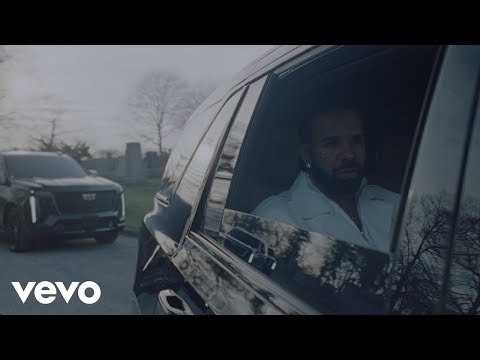
Play Video

Songfacts®:

  • "Whisper My Name" is one of the coldest and most confrontational tracks on Drake's ninth album, Iceman, pairing icy, atmospheric production with some of his most direct industry shots. Positioned as track 3, the song establishes the album's mood early: suspicious, combative, and fully convinced that everyone is talking behind Drake's back. Later songs like "Make Them Pay" expand into broader grievances involving former friends and rivals, while "Janice STFU" attacks gossip culture and industry politics. "Whisper My Name," however, is more focused and surgical. Its central message is distilled in the title itself: if you're going to say Drake's name, be prepared for what follows.
  • The chorus lays out the threat in blunt terms

    Whisper my name and don't say it too loud
    'Cause you gotta come here and you know I pop out


    The line works on two levels. On the surface, it's a warning: mention Drake recklessly and be prepared for consequences. But "pop out" is also a direct reclaiming of language associated with Kendrick Lamar's 2024 victory anthem "Not Like Us," where Kendrick rapped:

    Sometimes you gotta pop out and show ni--as

    That phrase became culturally inseparable from Kendrick's Juneteenth 2024 concert, The Pop Out: Ken & Friends, held at the Kia Forum in Inglewood. The event - streamed globally and celebrated across the West Coast - culminated in Kendrick performing "Not Like Us" six times, turning Drake's public humiliation into something resembling a civic festival. By reusing "pop out" here, Drake flips Kendrick's phrase into a threat of his own. The language once used to bury him now becomes his announcement of survival and return.
  • Drake uses festival imagery as shorthand for dominance:

    We turnt up Coachella, had boys backin' down
    We might do the same if we touch Rolling Loud


    The 2015 Coachella reference is pointed; Drake headlined the festival that year in a set that cemented his crossover from hip-hop star to mainstream cultural force. The threat to repeat the exercise at Rolling Loud extends the logic: major festival stages become symbols of territorial control rather than entertainment.
  • One of the song's most pointed bars targets Jay-Z:

    I'll take $500K, not the dinner, I never could learn s--t from none of y'all

    The line references the long-running internet debate asking whether people would rather receive $500,000 or have dinner with Jay-Z and gain his wisdom. The argument became one of social media's favorite pseudo-philosophical discussions, which is impressive considering it essentially boils down to "Would you prefer money or lunch?"

    Jay-Z addressed the meme in 2023, arguing people should simply take the money because his knowledge already exists in his music. Drake agrees with taking the money, but for a much harsher reason. His point is not that Jay's lessons are publicly available; it's that he believes the industry establishment has nothing left to teach him. The follow-up line, "I never could learn s--t from none of y'all," broadens the rejection from Jay-Z specifically to rap's entire mentorship culture and old-guard hierarchy.
  • Another major target is Playboi Carti.

    Baby boy please, I heard what you said to lil bro about me
    Yeah, and when you run into the Iceman, what you gon' do except freeze


    Drake frames Carti as performative rather than genuinely threatening, dismissing him as someone whose image outweighs his substance. The "freeze" line doubles as a play on Drizzy's "Iceman" persona while suggesting Carti would become paralyzed in a real confrontation. "You not in the streets" is even harsher, one of hip-hop's clearest ways of questioning someone's authenticity.

    Drake implies comments Carti made in private circles found their way back to him, turning the diss into a complaint about loyalty and betrayal. The tension is tied closely to the Drake and Kendrick Lamar feud, during which Carti was widely perceived as aligned with Kendrick's anti-Drake coalition. In Drake's framing, Carti chose a side - and chose incorrectly.
  • A third loaded moment comes with the line:

    Stop sittin' with Farrakhan, nigga

    This is a layered warning, referencing the Nation of Islam leader in a way that implies Drake's opposition is seeking ideological or community protection from a figure known for his rhetoric against Jewish people. Given Drake's Jewish heritage on his mother's side, this carries particular personal resonance.
  • "Whisper My Name" was produced by OZ (real name Oz Rios), one of Drake's most trusted long-term collaborators. OZ has worked with Drake extensively, contributing to Certified Lover Boy (2021), Honestly, Nevermind (2022), and For All the Dogs (2023), among others, and is one of the producers most closely associated with Drake's melodic and atmospheric sound.

Comments

Be the first to comment...

Editor's Picks

Sarah Brightman

Sarah BrightmanSongwriter Interviews

One of the most popular classical vocalists in the land is lining up a trip to space, which is the inspiration for many of her songs.

George Harrison

George HarrisonFact or Fiction

Did Eric Clapton really steal George's wife? What's the George Harrison-Monty Python connection? Set the record straight with our Fact or Fiction quiz.

Rick Astley

Rick AstleySongwriter Interviews

Rick Astley on "Never Gonna Give You Up," "Cry For Help," and his remarkable resurgence that gave him another #1 UK album.

Deconstructing Doors Songs With The Author Of The Doors Examined

Deconstructing Doors Songs With The Author Of The Doors ExaminedSong Writing

Doors expert Jim Cherry, author of The Doors Examined, talks about some of their defining songs and exposes some Jim Morrison myths.

Kip Winger

Kip WingerSongwriter Interviews

The Winger frontman reveals the Led Zeppelin song he cribbed for "Seventeen," and explains how his passion for orchestra music informs his songwriting.

Philip Cody

Philip CodySongwriter Interviews

A talented lyricist, Philip helped revive Neil Sedaka's career with the words to "Laughter In The Rain" and "Bad Blood."