The Cutter

Album: Porcupine (1983)
Charted: 8
Play Video

Songfacts®:

  • Like many Echo & the Bunnymen lyrics, "The Cutter" is hard to decipher. Lead singer Ian McCulloch did offer some hints in a 1983 interview with the New Musical Express: "'The Cutter' is about three different aspects of this man, The Cutter. I'm six-foot tall, so that's a clue."
  • The lyric could be influenced by the 1962 novel A Clockwork Orange, which Stanley Kubrick turned into a famous film in 1971. In the first scene, a vagrant asks, "Can you spare some cutter, me brothers," before being beaten senseless. "Cutter" is British slang for spare change.

    The band's record label, an imprint of Sire, was named Korova, a reference to the Korova Milk Bar in A Clockwork Orange.
  • One of the biggest hits for the band, "The Cutter" was the second single from their album Porcupine. Like most of their early hits, it was quite popular in England (especially in their home turf of Liverpool), but largely ignored in America when it was released. The song did get some attention in the US in 1984 when it when it was included on the EP The Sound of Echo. In a Songfacts interview with guitarist Will Sergeant, he said: "We did a few tours of America where we just playing clubs - the Paradise, and places like that. The Channel in Boston. We'd do these clubs and we were kind of like another band. It might have been when the movie Urgh! A Music War came out and that put us on another level. We had been playing to a few hundred people and then we started selling out."
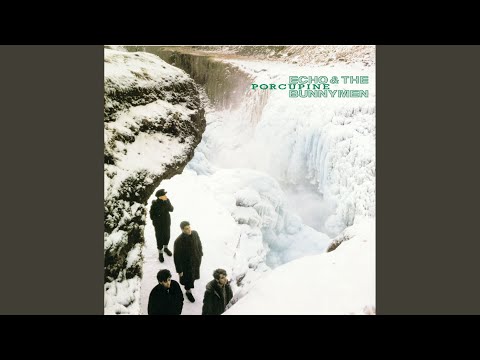
  • The video was shot in Iceland along with the album art.
  • The band recorded a new version of this song when they performed it on the British TV show Top Of The Pops. Per Musicians' Union rules, they had to re-record the song for the show, which they then lip-synched to on stage. The band did the show between tour stops and were exhausted, which is why the performance is rather lethargic. Ian McCulloch did provide a memorable moment when near the end of the song, he pulled his shirt down past his chest.
  • "The Cutter" was produced by Ian Broudie under the alias Kingbird. Recording on his own as The Lightning Seeds, Broudie had a big hit in 1989 with "Pure" and an even bigger one (with English football fans, at least) in 1996 with "Three Lions."

Comments: 8

  • Ks from SeSeems to me it’s about Margaret Thatchers austerity policies?
  • Dave SocalI was 17 year old high school dropout. In 1983, this song and others like it were popular in Los Angeles, thanks to our radio station KROQ 106.7 FM. I couldn't understand what it meant, but I enjoyed the British alternative bands. I thought it maybe referring to someone getting punished for not fitting in, which I was specializing in.
  • Ritchie from Boston UkI agree with Rebecca. I've never heard of cutter in British slang. Lynne Nolte surely has the right of it; it must derive from Clockwork Orange which invented a whole genre of fictitious gang slang, which incidentally became quite popular for a short while amongst British school kids in the 70s. A case of reality imitating art!
  • Lynne Nolte from OhioCutter was a term in nadsat, teen slang from A Clockwork Orange made up by author Anthony Burgess. Basil was in the bottom drawer:)
  • Anonymousmaybe the cutter is for cutting the recording tape and it is (including sellotape and knives) kept in the bottom drawer so you fear it will remove some of your best ideas!!
  • Martin Murphy from Welwyn Garden City The 7th floor references the BBC building where John Peel was able to record upcoming bands for his show.
  • Rebecca Lane from UkCutter is not british slang for small change - never heard of it
  • Pedro from PortugalWell, Echo were an incredible influence in many artists, people. They were of the same time of Bauhaus, Cure. The 2nd album is the proof. Similar to Cure but better. Sad is not here.
see more comments

Editor's Picks

Lace the Music: How LSD Changed Popular Music

Lace the Music: How LSD Changed Popular MusicSong Writing

Starting in Virginia City, Nevada and rippling out to the Haight-Ashbury, LSD reshaped popular music.

Elton John

Elton JohnFact or Fiction

Does he have beef with Gaga? Is he Sean Lennon's godfather? See if you can tell fact from fiction in the Elton John edition.

Ian Anderson of Jethro Tull

Ian Anderson of Jethro TullSongwriter Interviews

The flautist frontman talks about touring with Led Zeppelin, his contribution to "Hotel California", and how he may have done the first MTV Unplugged.

Janis Ian: Married in London, but not in New York

Janis Ian: Married in London, but not in New YorkSong Writing

Can you be married in one country but not another? Only if you're part of a gay couple. One of the first famous singers to come out as a lesbian, Janis wrote a song about it.

Mick Jones of Foreigner

Mick Jones of ForeignerSongwriter Interviews

Foreigner's songwriter/guitarist tells the stories behind the songs "Juke Box Hero," "I Want To Know What Love Is," and many more.

Bible Lyrics

Bible LyricsMusic Quiz

Rockers, rappers and pop stars have been known to quote the Bible in their songs. See if you match the artist to the biblical lyric.