Afterlife

Album: released as a single (2025)
Play Video

Songfacts®:

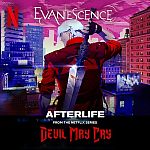
  • "Afterlife" is a thunderous, brooding anthem that arrives with all the grand, cinematic intensity of a supernatural showdown, which is fitting given that it was written for the Netflix adult animated fantasy action series Devil May Cry. The song is Evanescence's first new music in four years since their 2021 album The Bitter Truth.
  • The track was co-written by Amy Lee and Alex Seaver - professionally known as Mako (NewJeans' "Gods," Stromae's "Ma Meilleure Ennemie"). Mako had already been working on music for the show's score when he reached out to Lee with the beginnings of a song. "We'd worked together once before on a Lindsey Stirling track during the pandemic," Lee told Audacy Music, explaining that the collaboration initially unfolded via email. "I still haven't met the guy in person."

    What began as a casual inquiry - Hey, would you sing on this?" - quickly snowballed into a full-fledged Evanescence production. The band took it into the studio with longtime producer Nick Raskulinecz. "He is right here in Nashville, so it's fun and easy for me and I could just keep going over there and annoying him," Lee said. "And it kind of just happened, kind of fast."
  • Lee wasn't familiar with the Devil May Cry universe, but after immersing herself in the series, she crafted "Afterlife" as a reflection of its themes. It explores ideas of transformation and reckoning rather than a simple notion of life after death, making it an ideal fit for the story's demon-hunting protagonist, Dante. She describes the song as capturing "both the pain and the resolve" of someone who has endured immense loss but emerged fearless.
  • The video for "Afterlife" was directed by Jason Lester (Hozier, Maren Morris) and shot in a historic (and supposedly haunted) house in Tennessee.
  • When "Afterlife" hit #1 on Billboard's Mainstream Rock Airplay chart dated July 5, 2025, it ended a 22-year wait for Evanescence. The band first appeared on the chart back in May 2003 with "Bring Me To Life," which peaked at #11. Until "Afterlife," their highest-charting single on Mainstream Rock Airplay was 2006's "Call Me When You're Sober," which reached #5.

    Evanescence also topped Billboard's Rock & Alternative Airplay chart for the first time with the song. Their previous best, "What You Want," peaked at #11 in 2011.

Comments

Be the first to comment...

Editor's Picks

Who's Johnny, And Why Does He Show Up In So Many Songs

Who's Johnny, And Why Does He Show Up In So Many SongsSong Writing

For songwriters, Johnny represents the American man. He has been angry, cool, magic, a rebel and, of course, marching home.
Zakk Wylde

Zakk WyldeSongwriter Interviews

When he was playing Ozzfest with Black Label Society, a kid told Zakk he was the best Ozzy guitarist - Zakk had to correct him.

Art Alexakis of Everclear

Art Alexakis of EverclearSongwriter Interviews

The lead singer of Everclear, Art is also their primary songwriter.

John Lee Hooker

John Lee HookerSongwriter Interviews

Into the vaults for Bruce Pollock's 1984 conversation with the esteemed bluesman. Hooker talks about transforming a Tony Bennett classic and why you don't have to be sad and lonely to write the blues.

Tim McIlrath of Rise Against

Tim McIlrath of Rise AgainstSongwriter Interviews

Rise Against frontman Tim McIlrath explains the meanings behind some of their biggest songs and names the sci-fi books that have influenced him.

80s Video Director Jay Dubin

80s Video Director Jay DubinSong Writing

Billy Joel and Hall & Oates hated making videos, so they chose a director with similar contempt for the medium. That was Jay Dubin, and he has a lot to say on the subject.