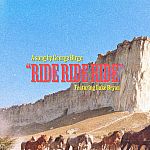
Ride, Ride Ride
by George Birge (featuring Luke Bryan)

Album: yet to be titled (2026)
Play Video

Songfacts®:

  • "Ride, Ride, Ride" is a cowboy-ethos anthem built around the idea of resilience - specifically the kind of gritty, unyielding perseverance symbolized by West Texas ranch life.
  • George Birge wrote the song with Tyler Hubbard, Parker Welling and Casey Brown.

    One half of the Platinum-selling duo Florida Georgia Line before launching a successful solo career, Tyler Hubbard is one of Nashville's most commercially instinctive singer-songwriters, with credits spanning his own chart-topping hits and high-profile collaborations.

    A Nashville-based staff writer whose credits include co-writing Russell Dickerson's "Love You Like I Used To" and Thomas Rhett's "What's Your Country Song?," Parker Welling has built a reputation as a reliable hit-maker in the mainstream country space.

    A Nashville producer and songwriter who is Russell Dickerson's longtime writing partner, Casey Brown is a frequent Birge collaborator who produced "Ride, Ride, Ride" at his home studio.
  • The setup is classic country storytelling: a young man sitting in a bar is handed a piece of hard-earned wisdom by an older cowboy who has clearly seen a thing or two. It's a narrative device as old as bar stools themselves, letting the message arrive secondhand, as if smuggled in from experience rather than announced from a soapbox. "That's one of our tricks," Tyler Hubbard told Billboard. "You make it a message that's coming from someone else - your parents, somebody at a bar - anywhere but yourself."
  • The song's central image - being "barbed-wire tough" - comes straight out of Birge's West Texas upbringing. "Barbed wire is something that you find everywhere, and it doesn't go away," Birge noted to Billboard. "It sticks around, no matter if all the ranches burned down, if fence posts are a couple hundred years old, that barbed wire is still hanging around."

    That same stubbornness, the song's writers argue, is an essential human quality.
  • There's a long tradition of this sort of cowboy stoicism in country music. You can hear its distant hoofbeats in "Mammas Don't Let Your Babies Grow Up To Be Cowboys," where the lifestyle is both romanticized and gently cautioned against. Meanwhile, "Should've Been A Cowboy" - that great armchair daydream of the open range - shares the same underlying belief that somewhere out there is a code: work hard, stand tall, and don't complain unless the horse complains first. In "Ride, Ride, Ride," that code is distilled into something closer to a chant.
  • The idea for the song traces back, in part, to one of John Wayne's more durable lines: "Courage is being scared to death but saddling up anyway." Birge, whose father learned English by watching Wayne's films, seized on that notion and arrived at an early working title, "Saddle Up Anyway," before the song evolved into something even more direct.
  • The original chorus placed the cowboy in the saddle with "ride" embedded in a sentence, but Hubbard stripped it back to the now-anthemic "Ride, ride, ride." Birge had pushed for exactly that kind of crowd-ready simplicity. "I needed an anthem crowds could sing back that's easy on first listen," he told Billboard.

    Hubbard also pushed to repeat "ride, ride, ride" at the end of the verse, creating a stadium-sized hook. "Tyler's commercial instincts are insane," Welling noted to Billboard. "We were like, 'Of course, we should've done that from the beginning.'"

    The word "ride" appears 31 times in the finished song.
  • The track leans into a 6/8 rhythm, not by accident, but because it quite literally sounds like a horse in motion. Two hooves hit the ground together, over and over, producing that unmistakable cadence. "It's got a nice gallop to it," Brown observed.
  • The song was intended as a duet between George Birge and Tyler Hubbard, but after the writing session, Hubbard's duet with Nate Smith, "After Midnight," created scheduling conflicts that delayed "Ride Ride Ride." The song's fortunes changed when Birge - then opening shows for Luke Bryan - played it for him on the tour bus one night. Bryan agreed to join the project within 24 hours.

    "When you hear me and George on that thing together," Bryan told Billboard, "It just sounds like something totally meant to be."

    Bryan asked Birge to sing the first verse as lead, with Bryan taking verse two.
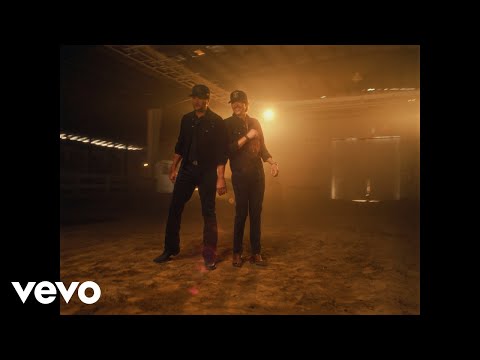
  • Set in an enormous barn with sunlight pouring through the rafters, the video shows George Birge and Luke Bryan delivering high-intensity performances with just a few wardrobe changes and a horse for visual texture. "Luke brings positive energy and star power to everything he does," Birge said. "I was so thankful he agreed to be part of this music video. The grit and the visuals really helped bring the song to life."

Comments

Be the first to comment...

Editor's Picks

80s Video Director Jay Dubin

80s Video Director Jay DubinSong Writing

Billy Joel and Hall & Oates hated making videos, so they chose a director with similar contempt for the medium. That was Jay Dubin, and he has a lot to say on the subject.

Desmond Child

Desmond ChildSongwriter Interviews

One of the most successful songwriters in the business, Desmond co-wrote "Livin' La Vida Loca," "Dude (Looks Like A Lady)" and "Livin' On A Prayer."

Robert DeLeo of Stone Temple Pilots

Robert DeLeo of Stone Temple PilotsSongwriter Interviews

Stone Temple Pilots bass player Robert DeLeo names the songs that have most connected with fans and tells the stories behind tracks from their Tiny Music album.

Pam Tillis

Pam TillisSongwriter Interviews

The country sweetheart opines about the demands of touring and talks about writing songs with her famous father.

Eric Clapton

Eric ClaptonFact or Fiction

Did Eric Clapton really write "Cocaine" while on cocaine? This question and more in the Clapton edition of Fact or Fiction.

Randy Newman

Randy NewmanSongwriting Legends

Newman makes it look easy these days, but in this 1974 interview, he reveals the paranoia and pressures that made him yearn for his old 9-5 job.