Nothing Rhymed

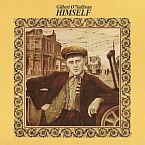
Album: Himself (1970)
Charted: 8 114
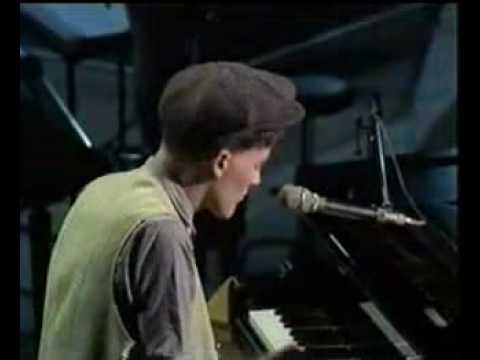
Play Video

Songfacts®:

  • "Nothing rhymed" is a way of saying that things are out of order, which is how Gilbert O'Sullivan felt when he saw footage of famished children in Africa. "That was the first time on television there had been starving children," he told the Sodajerker podcast. "There had never been any film of what was going on in Africa, so that really resonated with everybody who watched that. As a lyric writer, I very often write about what I read in the newspaper or see on television. It was a song of the times. The horror that goes on in the world, the violence, the starving, those issues are the day-to-day things that for me as a lyricist interest me."
  • This was O'Sullivan's first single from his debut album Himself. Released on the MAM Label backed by "Everybody Knows," it was recorded at Audio International Studios, London, and produced by Gordon Mills.

    According to Dick Tatham writing in the British girls' weekly Jackie in 1974, Mills was sure "Nothing Rhymed" was the best of the songs to start the ball rolling, and advised him to pack in his job with Mobil Oil at once, but having worked for them for three years, O'Sullivan felt obliged to give them two weeks' notice.
  • "Nothing Rhymed" was released October 30, 1970; he was at Mills' house when a call came through to say it had charted at #30 in the UK. This fully orchestrated, somewhat enigmatic song was a breakthrough for O'Sullivan and rose to #8 on that tally. Perhaps more surprising, the very British-sounding song also found an audience in America, where it reached #114. O'Sullivan's next album, Back To Front, contained his US #1 "Alone Again (Naturally)" and his UK chart-topper "Clair."
  • Tom Jones and Burton Cummings are among those to cover the song. It has also been recorded in other languages: in Dutch as "Niets Gedaan" by Marc-Marie Huijbregts (with lyrics by Frank Houtappels), and in Italian as "Era Bella" by I Profeti (with lyrics by Daniel Pace). >>>
    Suggestion credit:
    Alexander Baron - London, England, for above 3
  • To symbolize his decadent comfort, O'Sullivan sings:

    I'm drinking my Bonaparte shandy
    Eating more than enough apple pies


    Speaking with Songfacts, he explained that "Bonaparte shandy" indicates Napoleon brandy, which is a luxury spirit.

Comments: 2

  • P.j. O'connor from Glen Cove, NyIt is a beautiful melody but haunts me at the same time... a paradox of sorts.
  • Alistair from Daventry, United KingdomIt was a ground-breaking song and not only for O'Sullivan's drummer style of piano playing. He had further good songs to his name and is still touring to this day.
see more comments

Editor's Picks

Jules Shear - "All Through The Night"

Jules Shear - "All Through The Night"They're Playing My Song

Shears does very little promotion, which has kept him secluded from the spotlight. What changed when Cyndi Lauper had a hit with his song? Not much, really.

Brenda Russell

Brenda RussellSongwriter Interviews

Brenda talks about the inspiration that drove her to write hit songs like "Get Here" and "Piano in the Dark," and why a lack of formal music training can be a songwriter's best asset.

Ralph Casale  - Session Pro

Ralph Casale - Session ProSongwriter Interviews

A top New York studio musician, Ralph played guitar on many '60s hits, including "Lightnin' Strikes," "A Lover's Concerto" and "I Am A Rock."

Jesus Thinks You're a Jerk: Rock vs. Televangelists

Jesus Thinks You're a Jerk: Rock vs. TelevangelistsSong Writing

When televangelists like Jimmy Swaggart took on rockers like Ozzy Osbourne and Metallica, the rockers retaliated. Bono could even be seen mocking the preachers.

Jay, Peaches, Spinderella and other Darrining Victims

Jay, Peaches, Spinderella and other Darrining VictimsSong Writing

Just like Darrin was replaced on Bewitched, groups have swapped out original members, hoping we wouldn't notice.

Who's Johnny, And Why Does He Show Up In So Many Songs

Who's Johnny, And Why Does He Show Up In So Many SongsSong Writing

For songwriters, Johnny represents the American man. He has been angry, cool, magic, a rebel and, of course, marching home.