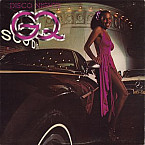
Disco Nights (Rock-Freak)
by GQ

Album: Disco Nights (1979)
Charted: 42 12
Play Video

Songfacts®:

  • GQ, a disco-funk quartet from The Bronx, debuted in 1979 with "Disco Nights (Rock-Freak)," a hit single that became a staple in dance clubs across the US. But the group, and their signature song, evolved over a number of years until they were ready for the masses. The early iteration of GQ started way back in 1968 when singer Emanuel Rahiem LeBlanc and bassist Keith "Sabu" Crier formed Sabu & The Survivors. They went through a series of lineup changes and names, including the Rhythm Makers, before becoming GQ. All the while, they were working on "Disco Nights (Rock-Freak)," refashioning it based on growing music trends and audience feedback.

    "We tried to incorporate all those feelings that we had performing and listening to the charts at the time, the way music was changing," LeBlanc recalled in The Billboard Book Of Number One R&B Hits. "'Rock-Freak' was a chant that came very naturally. The music broke down, so we rocked low and freaked high. That was the dance. There was a 'Rock' dance where you would sway your knees back and forth, and the 'Freak' was, you would point your hands up in the sky like John Travolta. So rock low and freak high. It became a call-and-response thing."
  • As the Rhythm Makers - LeBlanc and Crier, along with keyboardist Herb Lane and drummer Kenny Banks - landed a record deal with an independent label and issued an album in 1976, but a few key changes needed to happen before their career really got rolling: a new drummer (Banks split after the Rhythm Makers' dismal debut), a new manager, a new name, and a new label. The new drummer was LeBlanc's old school chum Paul Service, whose stick work helped the band become a hot act around the clubs in New York City. Their new manager was Tony Lopez, who came up with the name GQ (Good Quality) and connected them with producer Beau Ray Fleming, who in turn introduced them to Arista Records execs Vernon Gibbs and Larkin Arnold. "Disco Nights," in particular, made an impression of Arnold.

    LeBlanc told Blues & Soul in 1979: "After he'd seen us in The Bronx he came down to check us out at a gig we were doing the same evening at the Starship Discovery. But during our rehearsal he made us play 'Disco Nights' eight times in succession! We figured he must have really liked the tune!"

    The song sealed the deal, and a week later GQ was officially on Arista's roster.
  • Larkin Arnold and Beau Ray Fleming produced the track with Jimmy Simpson (the brother of Valerie Simpson, half of the hit Motown songwriting duo Ashford & Simpson).
  • As the Rhythm Makers, they recorded an early iteration of the tune called "Soul On My Side," which was also the title of their 1976 album.
  • This was a #1 hit on the R&B chart for two weeks in April 1979. It also crossed over to the Billboard Hot 100, where it peaked at #12.
  • The single was backed with their cover of A Taste Of Honey's chart-topping 1978 hit, "Boogie Oogie Oogie."
  • Before releasing their debut album, GQ honed their skills in nightclubs, where they earned a reputation as the little group with the big sound.

    "Being a self-contained group - we were only four pieces - when we went out, it blew a lot of minds that our sound was bigger than they expected," LeBlanc explained in The Billboard Book Of Number One R&B Hits. "They were looking for people behind the curtain because we were known as 'the little orchestra.' We always captured the nuances of recording even though we had minimal instrumentation."
  • GQ's sound carries a bunch of labels - R&B, disco, soul, funk - but they preferred the descriptor "Gentlemen's Funk." While Disco Nights did a good job of introducing their style, it didn't offer the full range of their sonic talents. The group told Blues & Soul their debut "is representative of us although we did have to compromise - you have to whenever you start out because that's the nature of the business, you have to compromise until such time as you can do musically all the things you want to do. But we feel that the next album will show just a bit more of what GQ is really all about."
  • They followed up with Two in 1980, which resulted in a pair of R&B hits: "Standing Ovation" and "Sitting In the Park."
  • This was used in the movies Skatetown U.S.A. (1979) and 54 (1998).
  • This was sampled by Kon Kan, a synthpop project by Canadian producer Barry Harris, on the 1988 Dance Club hit "I Beg Your Pardon."

Comments

Be the first to comment...

Editor's Picks

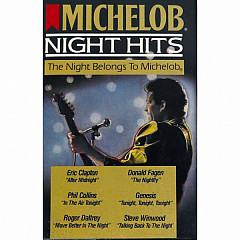
When Rock Belonged To Michelob

When Rock Belonged To MichelobSong Writing

Michelob commercials generated hits for Eric Clapton, Genesis and Steve Winwood in the '80s, even as some of these rockers were fighting alcoholism.
Mike Campbell

Mike CampbellSongwriter Interviews

Mike is lead guitarist with Tom Petty & the Heartbreakers, and co-writer of classic songs like "Boys Of Summer," "Refugee" and "The Heart Of The Matter."

Protest Songs

Protest SongsMusic Quiz

How well do you know your protest songs (including the one that went to #1)?

Best Band Logos

Best Band LogosSong Writing

Queen, Phish and The Stones are among our picks for the best band logos. Here are their histories and a design analysis from an expert.

Michael Schenker

Michael SchenkerSongwriter Interviews

The Scorpions and UFO guitarist is also a very prolific songwriter - he explains how he writes with his various groups, and why he was so keen to get out of Germany and into England.

American Hits With Foreign Titles

American Hits With Foreign TitlesSong Writing

What are the biggest US hits with French, Spanish (not "Rico Suave"), Italian, Scottish, Greek, and Japanese titles?