Jack-A-Roe

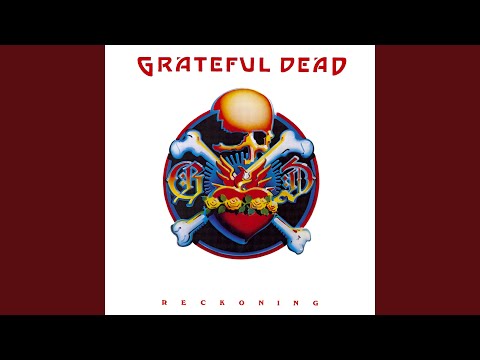
Album: Reckoning (1981)
Play Video

Songfacts®:

  • "Jack-A-Roe" (originally "Jack Munro") may be the world's oldest song about a cross-dresser. If not, it's certainly in the running. It could also be called a song of woman's empowerment, perhaps even one of feminism (if a listener were so inclined).

    The song is best known today for being a staple of the Grateful Dead's live set, but it can be traced back definitively to early 1800s England. The oldest broadside version, held by the Bodleian Libraries of Oxford University, is dated between 1812 and 1825. At that time, the song was titled "Jack Munro."

    The song is about a young woman who dresses as a sailor in order to find her lover, Jack. She's the daughter of a wealthy merchant, yet elects to put herself in grave danger in order to get her sweetheart back. The naval men notice her slight build and question if she can succeed in battle, but she proves her mettle, finds her wounded Jack, gets him to a doctor, and marries him.

    The Dead's version leaves out a bit of the traditional song's lyrics but keeps the gist of things. Nothing substantive is lost, but in some traditional variations there are more details about the central character's relationship with her father.
  • Over its evolution as an English and then American folk song, "Jack-A-Roe" has been known by many names, including "Jackie Frazier," "The Love of Polly and Jack Monroe," "The Maid of Chatham," and others. We'll call it "Jack-A-Roe" because that's the title the Dead used, and the Dead version is the most commonly known today.

    Cecil Sharp's English Folk Songs from the Southern Appalachians (volume 1) has a version of the song titled "Jack Went A-Sailing."
  • The Dead first performed the song on May 13, 1977, at the Auditorium Theatre in Chicago. Over the course of their career, they played it at least 110 times.

    The version on Reckoning was recorded October 10, 1980, at the Warfield Theatre in San Francisco.

    Dead frontman Jerry Garcia often played the song solo and with other non-Dead bands.
  • As memorialized on the ill-fated cover photograph of Go To Heaven (the Dead's 11th studio album, released in 1980), there was no '60s band more ill-suited for the glitz-and-glam culture of the '80s than the Grateful Dead.

    Reckoning notably harked back to the band's earliest days, before they were even called the Grateful Dead, when they frequently performed acoustic renditions of bluegrass, country, and folk standards. Going by names like the Warlocks, Mother McCree's Uptown Jug Champions, and some other Garcia-led incarnations, they started out specializing in psychedelicizing (or otherwise just modernizing) traditional songs. So "Jack-A-Roe" refers back to the Dead's essential beginnings, though it came out in those calamitous '80s.

Comments

Be the first to comment...

Editor's Picks

Andrew Farriss of INXS

Andrew Farriss of INXSSongwriter Interviews

Andrew Farriss on writing with Michael Hutchence, the stories behind "Mystify" and other INXS hits, and his country-flavored debut solo album.
George Harrison

George HarrisonFact or Fiction

Did Eric Clapton really steal George's wife? What's the George Harrison-Monty Python connection? Set the record straight with our Fact or Fiction quiz.

Sending Out An SOS - Distress Signals In Songs

Sending Out An SOS - Distress Signals In SongsSong Writing

Songs where something goes horribly wrong (literally or metaphorically), and help is needed right away.

Martin Page

Martin PageSongwriter Interviews

With Bernie Taupin, Martin co-wrote the #1 hits "We Built This City" and "These Dreams." After writing the Pretty Woman song for Go West, he had his own hit with "In the House of Stone and Light."
Does Jimmy Page Worship The Devil? A Look at Satanism in Rock

Does Jimmy Page Worship The Devil? A Look at Satanism in RockSong Writing

We ring the Hell's Bells to see what songs and rockers are sincere in their Satanism, and how much of it is an act.
Tom Keifer of Cinderella

Tom Keifer of CinderellaSongwriter Interviews

Tom talks about the evolution of Cinderella's songs through their first three albums, and how he writes as a solo artist.