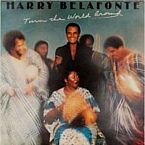
Turn the World Around

Album: Turn the World Around (1977)
Play Video

Songfacts®:

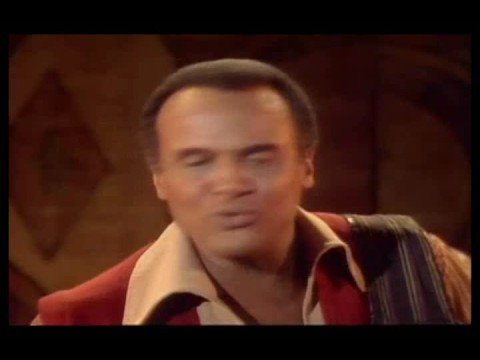
  • When Harry Belafonte was the guest star on a season 3 episode of The Muppet Show in 1979, he explained the inspiration for this song before he performed it with various Muppets in African garb. When Fozzie Bear asked him about writing, Belafonte said: "I discovered that song in Africa. I was in a country called Guinea. I went deep into the interior of the country, and in a little village, I met with a storyteller. That storyteller went way back in African tradition and African mythology and began to tell this story about the fire, the sun, the water, the Earth [at this point a crowd of Muppets gathers around]. He pointed out the whole of these things put together turns the world around. That all of us are here for a very very short time. In that time that we're here, there really isn't any difference in any of us, if we take time out to understand each other. The question is: Do I know who you are, or who I am? Do we care about each other? Because if we do, together we can turn the world around."

Comments: 2

  • Diane M Hanson from CaliforniaI love this song!
  • Douglas Jack from Lasalle-montreal, Kahnawake North, Tiohtiake, Kanien'keh, Haudenosaunee Confederacy, Turtle Island (north-america)I fondly remember listening to Harry Belafonte as a child in the 1950s & 60s. Twelve years ago in 2009, I had a vivid dream interacting with Harry. I found out after I woke up that; he was coming to Montreal that week to a conference at McGill University, so I was able to attend his talk & singing. I researched Harry's song on the internet & came across his version with Sesame Streets Muppets. In the verses, 'Do-I-know-who-you-are-?, Do-you-know-who-I-am-? See-we-one-another-clearly-? Do-we-know-who-we-are-?', I understood Harry & the Griot story-teller were telling the loving story of 'indigenous' (Latin 'self-generating') 'economy' (Greek 'oikos' = 'home' + 'namein' = 'care-&-nurture').
    For 58 years now, since 1963, (of my 69 years of age) I've been working in solidarity with 1st Nations & indigenous peoples on rebirthing indigenous economy practices of accounting & organization. Combined with John McKnight & John Kretzman's work 'Asset-Based-Community-Development on Cataloguing local typically business talents, goods, services, resources & dreams, this ancient indigenous practice of all human ancestors which Harry sings about, puts the emphasis right down to individuals. When we catalogue individual & business talents within the Multihome-Dwelling-Complexes (eg. Apartments, Townhouse & Village clustered buildings) where 70% of humanity live today, then we lay the foundation for economic circular economy or 'community' (L 'com' = 'together' + 'munus' = 'gift-or-service'). All our indigenous ancestors would account for each person's contribution to diverse collective economies upon the String-shell (eg. Wampum on Turtle-Island/North-America, Quipu in S. America, Cowrie in Europe, Asia, Africa, Australia & all of the islands) time-based Value tools. Collective Domestic economy within the ~100 person multihomes (eg. Longhouse, Pueblo & Kanata) was recognized & accounted for as the foundational 'economy'. Industry & commerce form sub-categories & were as well organized into the progressive-ownership of specialized Production-Society-Guilds.
    The average size of Multihomes today is 32 dwelling units or ~100 people, which all humanity's indigenous ancestors worldwide cultivated as an intimate, intergenerational, female-male, interdisciplinary, critical-mass, economies-of-scale collaboration. Multihome economies are powerful yet intimate, private, yet with the proximity for collaboration. 20% of people in Multihomes today are extended family living in proximity within buildings or neighbourhoods for family joy & collaboration worth trillions of dollars in essential goods & services annually.
    This insight from Harry's singing of ancient West African Indigenous wisdom, set me off in the direction of helping to compose with colleagues a set of web-based Community-Economy software called 'DO-WE-KNOW-WHO-WE-ARE-?', which 1) Catalogues local Multihome individual & business talents, 2) Maps relationships so people find each other to put their gifts together, 3) Accounts for buying, selling, contributions, investing & exchanging together. 4) Facilitates electronic Communication, Record-keeping, Knowledge repertoires, Library etc for Multihomes & neighbourhoods. Its within the complementary talents, which we each innately possess & instinctively cultivate that real 'education' (L 'educare' = 'to-lead-forth-from-within') or the Vision-Quest of each person is able to be cultivated & connected. https://bit.ly/3voO1jI
    Indigenous economy where each of us in can help humanity regain sustainable biosphere based livelihood innately loving, caring & sharing together as Relational Economy. https://bit.ly/3FSPDax
see more comments

Editor's Picks

Colbie Caillat

Colbie CaillatSongwriter Interviews

Since emerging from MySpace with her hit "Bubbly," Colbie has become a top songwriter, even crafting a hit with Taylor Swift.

Emilio Castillo from Tower of Power

Emilio Castillo from Tower of PowerSongwriter Interviews

Emilio talks about what it's like to write and perform with the Tower of Power horns, and why every struggling band should have a friend like Huey Lewis.

Rock Revenge Songs

Rock Revenge SongsMusic Quiz

John Lennon, Paul Simon and Lynyrd Skynyrd are some of the artists who have written revenge songs. Do you know who they wrote them about?

Director Paul Rachman on "Hunger Strike," "Man in the Box," Kiss

Director Paul Rachman on "Hunger Strike," "Man in the Box," KissSong Writing

After cutting his teeth on hardcore punk videos, Paul defined the grunge look with his work on "Hunger Strike" and "Man in the Box."

Jim Adkins of Jimmy Eat World

Jim Adkins of Jimmy Eat WorldSongwriter Interviews

Jim talks about the impact of "The Middle" and uses a tree metaphor to describe his songwriting philosophy.

David Gray

David GraySongwriter Interviews

David Gray explains the significance of the word "Babylon," and talks about how songs are a form of active imagination, with lyrics that reveal what's inside us.