Quiet Life

Album: Quiet Life (1979)
Charted: 19
Play Video

Songfacts®:

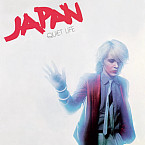
  • Japan, contrary to their moniker, were a British band fronted by the very stylish David Sylvian. "Quiet Life" is the title track to their third album, which found them at a crossroads that inspired the lyric. They hadn't landed any big hits and knew their record label, Hansa, was likely to drop them. Sylvian, therefore anticipated the "quiet life" without the success they were striving for. All that work just to go back to where they started: "Here comes the quiet life again."
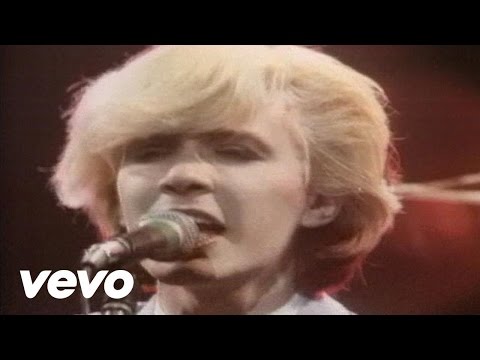
  • In a cosmic twist, this song about watching the band's fortunes slip away ended up bringing them to new heights. The song was released as a single in some territories in 1979 but went nowhere. And as expected, Hansa Records dropped them. They were quickly picked up by Virgin Records, though, and in 1981 Hansa remixed "Quiet Life" and put it out again as a single. This time it climbed to #19 in the UK and earned them lots of press, including an appearance on the influential show Top Of The Pops, where they performed it (they were in the odd position of having a hit song released by their former record label). A string of UK hits on Virgin followed, including "Visions of China" and "Ghosts," before the band called it quits in 1982 over personal and creative differences.
  • Japan's guitarist at the time was Robert Dean, who later joined the American group Vivabeat. He told Songfacts how the song "Quiet Life" came together:

    "This song - as was usually the case - was originally written and presented to the rest of the band by the lead singer/songwriter as a simple chord-driven guitar song. In our small rehearsal studio in Willesden, North London, we then set about creating the arrangement, starting with the sequencer part, and then constructing the bass and drum parts over which I would play the rhythmic guitar parts. Once we were happy with the basic ideas, it was then ready for the more organic creative elements that would evolve during the recording process.

    This took place at AIR studios with John Punter (the producer of our favorite Roxy Music albums, among others) at the helm. Up until this point, we had not worked with someone who was so keyed into our wavelength, and understood what we wished to achieve. Consequently, the entire process was the most satisfactory of my career with the band.

    I had just acquired a new Gibson guitar which incorporated revolutionary and unique Moog technology in its pickup design, and I was able to create clean, rich, ringing tones as well as thick sustain. It was also the first time that I had applied the eBow - an electric string vibrating device in the instrumental break of the song - which soon became something of a signature in my playing style."

Comments

Be the first to comment...

Editor's Picks

Little Richard

Little RichardFact or Fiction

Was Long Tall Sally a cross-dresser? Did he really set his piano on fire? See if you know the real stories about one of rock's greatest innovators.

Lori McKenna

Lori McKennaSongwriter Interviews

Lori's songs have been recorded by Faith Hill and Sara Evans. She's performed on the CMAs and on Oprah. She also has five kids.

Barney Hoskyns Explores The Forgotten History Of Woodstock, New York

Barney Hoskyns Explores The Forgotten History Of Woodstock, New YorkSong Writing

Our chat with Barney Hoskyns, who covers the wild years of Woodstock - the town, not the festival - in his book Small Town Talk.

Let Me Be Your Teddy Bear: Teddy Bears and Teddy Boys in Songs

Let Me Be Your Teddy Bear: Teddy Bears and Teddy Boys in SongsSong Writing

Elvis, Little Richard and Cheryl Cole have all sung about Teddy Bears, but there is also a terrifying Teddy song from 1932 and a touching trucker Teddy tune from 1976.

Devo

DevoSongwriter Interviews

Devo founders Mark Mothersbaugh and Jerry Casale take us into their world of subversive performance art. They may be right about the De-Evoloution thing.

La La Brooks of The Crystals

La La Brooks of The CrystalsSong Writing

The lead singer on "Da Doo Ron Ron" and "Then He Kissed Me," La La explains how and why Phil Spector replaced The Crystals with Darlene Love on "He's A Rebel."