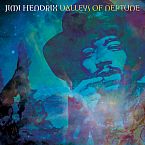
Valleys of Neptune

Album: Valleys of Neptune (2010)
Play Video

Songfacts®:

  • Valleys of Neptune is a collection of 12 tracks that never saw proper official release. They include the final studio sessions of the original Jimi Hendrix Experience line-up and Hendrix's first recordings with bassist Billy Cox, an old army buddy he'd recruited into his new ensemble, both in 1969. A number of the songs were recorded for what was originally supposed to be the follow-up to 1968's Electric Ladyland. There are also alternative versions of "Fire" and "Red House" plus an instrumental cover of Cream's "Sunshine Of Your Love" and a version of Elmore James's "Bleeding Heart."
    The title track, released as a single prior to the album's release on Mar. 9th 2010, remained uncovered for nearly four decades since Hendrix recorded it at New York's Record Plant in May 1970.
  • John McDermott, a co-producer of Valleys of Neptune, told Musicradar.com that this track had a long gestation period, which was not unusual for Hendrix. He explained: "With Jimi, his approach was 'refine, refine, refine' - whether it was in the studio or at home in his apartment, that's what he did.
    He was a perfectionist. That's what fueled his whole energy. Even when you listen to "Ships Passing Through The Night," he would go back and expand that into "Night Bird Flying." "Lullaby For The Summer" became "Ezy Ryder." That was just his way.
    For an artist as talented as he was, he was never satisfied. He didn't make changes just to make changes; every time he did something different to a song, it would improve. He was a real craftsman."
  • The version we hear on Valleys of Neptune features Billy Cox rather than Noel Redding on bass. McDermott explained: "Jimi had tried to develop the song with the original Experience, but nothing came about as far as a finished recording. It really evolved over time; and yes, at which point it was becoming a fully realized song he was comfortable playing with Billy." (Redding left The Jimi Hendrix Experience following a show on June 26, 1969 in Denver, Colorado, at which point Hendrix began to form a new band to continue work on his new compositions.)
  • Producer/engineer Eddie Kramer married a demo of this song Hendrix recorded in a hotel room with a band version from almost a year later for Valleys of Neptune. Kramer said to Toronto's The Globe and Mail March 5, 2010 referring to the cutting-and-pasting: "That's the sort of thing Jimi would have done, which is one of the reasons I had no qualms about doing it."
  • Valleys of Neptune debuted at #4 on the Billboard 200, making it Hendrix's highest-charting album since The Cry of Love reached #3 in 1971.
  • The front cover of the album is of a photo of Jimi Hendrix taken by Linda McCartney, superimposed over a painting by Jimi. >>>
    Suggestion credit:
    Bertrand - Paris, France

Comments

Be the first to comment...

Editor's Picks

The Evolution of "Ophelia"

The Evolution of "Ophelia"Song Writing

How five songs portray Shakespeare's character Ophelia.

Ian Anderson: "The delight in making music is that you don't have a formula"

Ian Anderson: "The delight in making music is that you don't have a formula"Songwriter Interviews

Ian talks about his 3 or 4 blatant attempts to write a pop song, and also the ones he most connected with, including "Locomotive Breath."

Michael Glabicki of Rusted Root

Michael Glabicki of Rusted RootSongwriter Interviews

Michael tells the story of "Send Me On My Way," and explains why some of the words in the song don't have a literal meaning.

Colin Hay

Colin HaySongwriter Interviews

Established as a redoubtable singer-songwriter, the Men At Work frontman explains how religion, sobriety and Jack Nicholson play into his songwriting.
Commercials

CommercialsFact or Fiction

Was "Ring Of Fire" really used to sell hemorrhoid cream?

Stan Ridgway

Stan RidgwaySongwriter Interviews

Go beyond the Wall of Voodoo with this cinematic songwriter.