
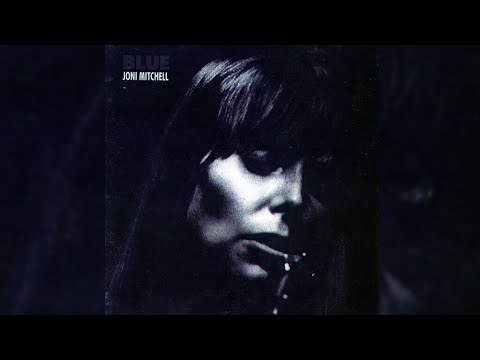

Carey

Album: Blue (1971)
Charted: 93
Play Video

Songfacts®:

  • This song was written during Joni Mitchell's time in the caves of the island of Matala, Crete, in March through June of 1969. It was a popular retreat for 1960s hippies, who went there seeking enlightenment and wound up sleeping in the old Roman burial crypts.
  • Carey was a real person Joni met in Matala. He had flaming red hair and often wore a turban. They met, says Mitchell, when Carey "blew out of a restaurant in Greece, literally. Kaboom! I heard, facing the sunset. I turned around and this guy is blowing out the door of this restaurant. He was a cook; he lit a gas stove and it exploded. Burned all the red hair off himself right through his white Indian turban. I went, 'That was an interesting entrance - I'll take note of that.'"

    The following transcript of the introduction to this song that Mitchell gave during a performance at the Troubadour is on this site devoted to Crete:

    "I went to Greece a couple years ago and over there I met a very unforgettable character. I have a hard time remembering people's names, like, so I have to remember things by association, even unforgettable characters I have to remember by association, so his name was 'Carrot' Raditz, Carey Raditz, and oh, he's a great character. He's got sort of a flaming red personality, and flaming red hair and a flaming red appetite for red wine and he fancied himself to be a gourmet cook, you know, if he could be a gourmet cook in a cave in Matala. And he announced to my girlfriend and I the day that we met him that he was the best cook in the area and he actually was working at the time I met him – he was working at this place called the Delphini restaurant – until it exploded, singed half of the hair off of his beard and his legs, and scorched his turban, melted down his golden earrings.

    "Anyway, one day he decided he was going to cook up a feast, you know, so we had to go to market because, like, in the village of Matala there was one woman who kind of had a monopoly – well actually there were three grocery stores, but she really had a monopoly, and because of her success and her affluence, she had the only cold storage in the village, too. So she had all the fresh vegetables and all the cold soft drinks and she could make the yogurt last a lot longer than anyone else, and we didn't feel like giving her any business that day. Rather than giving her our business we decided to walk ten miles to the nearest market.

    "So I had ruined the pair of boots that I'd brought with me from the city, because they were really 'citified,' kind of slick city boots that were meant to walk on flat surfaces. The first night there we drank some Raki and I tried to climb the mountain and that was the end of those shoes. So he lent me these boots of his which were like Li'l Abner boots – like those big lace-up walking boots - and a pair of Afghani socks, which made my feet all purple at the end of the day. And I laced them up around my ankles and I couldn't touch any – the only place my foot touched was on the bottom, you know, there was nothing rubbing in the back or the sides – they were huge - and he wasn't very tall, either, come to think of it, was kind of strange – I guess he had sort of webbed feet or something. But we started off on this long trek to the village, I forget the name of it now, between Matala and Iraklion – and started off in the cool of the morning. And by the time we got halfway there we were just sweltering, me in these thick Afghani socks and heavy woolens and everything. So we went into the ruins of King Phestos' palace to sit down and have a little bit of a rest, and while we were there these two tourist buses pulled up and everybody got off the buses in kind of an unusual symmetry, you know, they all sort of walked alike and talked alike and they all kind of looked alike. And they all filed over to a series of rubble-y rocks- a wall that was beginning to crumble – lined themselves up in a row and took out their viewing glasses, overgrown opera glasses, and they started looking at the sky. And suddenly this little speck appeared on the horizon that came closer and closer, this little black speck.

    "Carey was standing behind all of this leaning on his cane, and as it came into view he suddenly broke the silence of this big crowd and he yells out, 'it's ah MAAGPIE' in his best North Carolina drawl. And suddenly all the glasses went down in symmetry and everybody's heads turned around to reveal that they were all very birdlike looking people. They had long skinny noses – really – they had been watching birds so long that they looked like them, you know – and this one woman turned around and she says to him (in British accent) "it's NOT a magpie – it's a crooked crow." Then she very slowly and distinctly turned her head back, picked up her glasses, and so did everybody else, and we kept on walking. Bought two kilos of fish which would have rotted in the cave hadn't it been for the cats.

    "When we got back from that walk, Stelios, who was the guy who ran the Mermaid Cafe, had decided to put an addition on his kitchen, which turned out to be really illegal and it was so illegal, as a matter of fact, that the Junta dragged him off to jail. And torture was legal over there – they burnt his hands and his feet with cigarette butts mainly because they hated, you know, all of the Canadians and Americans and wandering Germans living in the caves, but they couldn't get them out of there because it was controlled by the same archaeologist that controlled the ruins of King Phestos' palace, and he didn't mind you living there as long as you didn't Day-Glo all of the caves. And everyone was, like, putting all of their psychedelia over all this ancient writing. So they carted him off to jail."
  • The Mermaid Cafe in Matala was a popular place in the late '60s, boasting a battery-operated radio and bare-wire lightbulbs strung through the tree branches for lighting. The owner of the Mermaid, Stelios Xagorarakis, was arrested during the hippie occupation of Matala for some dubious illegal non-menu items that he allegedly cooked at his restaurant. According to Stelios himself, he was held for three days and not only survived, but thrived, now the owner of 7 health food stores in the Southern California region where he lives.
  • The standard fare on the menu at the Mermaid Cafe included fresh oatmeal, grilled cheese with onions, omlettes, and always halva, which is described as a "dense, sweet confection."
  • Raditz originally resented Mitchell's arrival in Matala. Her growing celebrity was causing something of a disturbance among the community's regular drinkers. Despite several encounters in which Raditz admitted he was rude to her, Mitchell eventually approached him one evening as he sat on a wall near the Delphini Taverna, where he worked. "We admired the sunset, where the sun's rays refracted such that the sun appeared to dip twice at the horizon," he recalled to Mojo magazine. "My guard was down. "

    Raditz mentioned Percy Bysshe Shelley's "To Night" and recited the first stanza. Mitchell asked if he knew the rest. He did, and Raditz invited her to the Mermaid Café for a drink, promising to recite it there. "Hilarious stuff happened that night in the Mermaid café," he said. "We walked back to my cave, and she moved in."

    Their relationship began in March 1970. On April 19, during Raditz' birthday party in their cave, with eight or 10 other people present, Mitchell gave him chocolate bars containing Disney character cards and sang him "Carey." Raditz had already heard fragments of the song as she worked on it on her dulcimer around the caves. "It was sweet and a bit sad, as it was a goodbye song," he said. "I wasn't sure I liked the 'mean old daddy' refrain, but she was trying to let me down easy."

    Mitchell was conflicted about leaving Matala and returning to California. According to Raditz, she worried that she should be back in Hollywood but found the music business inhibiting and unpleasant. His response was characteristically unsympathetic: he told her to stop whining.

    Eventually, the pair flew to Athens, where their time together came to an end. Mitchell returned to California, while Raditz remained behind in the world that had inspired "Carey," a sun-soaked cave-dwelling romance that, like the sunset they watched together, proved beautiful but destined to disappear over the horizon.

Comments: 1

  • Clem from NewjerseyI guess you hadda be there.
see more comments

Editor's Picks

Bryan Adams

Bryan AdamsSongwriter Interviews

What's the deal with "Summer of '69"? Bryan explains what the song is really about, and shares more of his songwriting insights.
Rufus Wainwright

Rufus WainwrightSongwriter Interviews

Rufus Wainwright on "Hallelujah," his album Unfollow The Rules, and getting into his "lyric trance" on 12-hour walks.

Pete Anderson

Pete AndersonSongwriter Interviews

Pete produced Dwight Yoakam, Michelle Shocked, Meat Puppets, and a very memorable track for Roy Orbison.

Francesca Battistelli

Francesca BattistelliSongwriter Interviews

The 2011 Artist of the Year at the Dove Awards isn't your typical gospel diva, and she thinks that's a good thing.
Butch Vig

Butch VigSongwriter Interviews

The Garbage drummer/songwriter produced the Nirvana album Nevermind, and Smashing Pumpkins' Gish and Siamese Dream.

Deconstructing Doors Songs With The Author Of The Doors Examined

Deconstructing Doors Songs With The Author Of The Doors ExaminedSong Writing

Doors expert Jim Cherry, author of The Doors Examined, talks about some of their defining songs and exposes some Jim Morrison myths.