Warrior

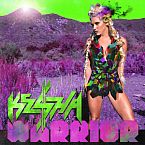
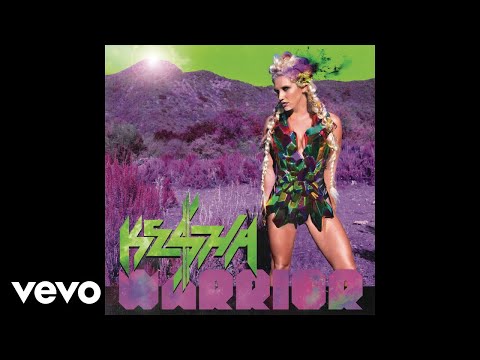
Album: Warrior (2012)
Play Video

Songfacts®:

  • This squelching party tune is the title track of Kesha's second album. It serves as a mission statement for the record as Kesha embraces her inner warrior. She explained: "It's idea is instead of being a victim be a warrior, no matter what anybody says or whatever you go through, never be a victim - be a warrior. I think that this is something my animals can relate to. Everybody has to deal with something, no matter what, but instead of letting it take over and letting whatever or whoever that is win and beat you down, you stand up, face it and fight it."
  • Speaking with The Hollywood Reporter, Kesha said the album title was inspired by conversations the singer had with her fans and hearing their stories. She explained: "I have a lot of gay and lesbian and transgender fans and I heard a lot of stories on Twitter and around the world about how they have to struggle with bullying and things like that. There's a gay suicide epidemic. So that was inspired by hearing my fans stories and wanting to give them back the strength to be a warrior. It's a strong word. That's the energy of the record: strong, fearless, power. I wanted to hopefully inspire my fans with it."
  • The album title was also inspired by all the negative comments directed towards Kesha, which have served as motivation for her. "I remember every person who told me I couldn't do something or that I was ugly or too fat. I have a 'sh-- list' - people from my past who have been soulless and judgmental," she told Seventeen magazine "Even after I got through my awkward phase, got my braces off and figured out how to dress my body, people in the music business were like, 'You're never going to make it.' I see them now and I'm like, 'Ha!' That's one of the reasons I named my record Warrior. You can be a victim and let that eat your soul, or you can say, 'You're going on my list and I'm going to prove you wrong!'"
  • The super-producer Max Martin and his associates Dr. Luke and Cirkut wrote this song with Kesha along with Pebe Sebert, Kesha's mom. The maternal involvement wasn't a fluke: Pebe was established as a songwriter before Kesha was even born - she had co-written a #1 country hit for Dolly Parton in 1980 called "Old Flames (Can't Hold a Candle to You)."

    Pebe was a source of support for her daughter a few years later when Kesha accused Dr. Luke of abuse, allegations he strenuously denied. He is one of the producers on "Warrior" along with Cirkut and Emily Wright.
  • Kesha spent months tweaking this song with her mom to meet Max Martin's specifications. "Kesha and I are not generally that particular, but since that song was with Max Martin, he wanted the rhythms a certain way, so we would turn in lyrics, and he'd go, 'No, that rhythm is wrong here,'" Pebe said in a Songfacts interview. "And when your rhythm is wrong, the whole lyric is going to be wrong. And you can't just change the rhythm because that's going to make the whole lyric feel wrong. So we'd have to go rewrite the whole lyric. That was just that one particular song, 'Warrior.' We rewrote that for like six months over and over and over."

Comments

Be the first to comment...

Editor's Picks

Tom Waits Lyrics Quiz

Tom Waits Lyrics QuizMusic Quiz

Pool balls, magpies and thorns without roses - how well do you know your Tom Waits lyrics?

Curt Kirkwood of Meat Puppets

Curt Kirkwood of Meat PuppetsSongwriter Interviews

The (Meat)puppetmaster takes us through songs like "Lake Of Fire" and "Backwater," and talks about performing with Kurt Cobain on MTV Unplugged.

Christopher Cross

Christopher CrossSongwriter Interviews

The man who created Yacht Rock with "Sailing" wrote one of his biggest hits while on acid.

Band Names

Band NamesFact or Fiction

Was "Pearl" Eddie Vedder's grandmother, and did she really make a hallucinogenic jam? Did Journey have a contest to name the group? And what does KISS stand for anyway?

Chris Frantz of Talking Heads

Chris Frantz of Talking HeadsSongwriter Interviews

Talking Heads drummer Chris Frantz on where the term "new wave" originated, the story of "Naive Melody," and why they never recorded another cover song after "Take Me To The River."

David Gray

David GraySongwriter Interviews

David Gray explains the significance of the word "Babylon," and talks about how songs are a form of active imagination, with lyrics that reveal what's inside us.