
Still Echoes

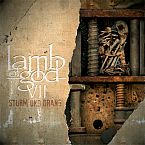
Album: VII: Sturm und Drang (2015)
Play Video

Songfacts®:

  • The first taster from VII: Sturm und Drang is a heavy, aggressive track inspired by frontman Randy Blyth's time in Prague's 19th century Pankrác Prison.

    Blythe was arrested in late June 2012 in the Czech Republic and indicted on manslaughter charges related to the 2010 death of Daniel Nosek, a 19-year-old fan, during a Lamb of God concert. He was incarcerated for over a month in Prague's Pankrác Prison before being released on bail. Blythe was acquitted of the charges the following year.
  • The song opens with the lyric: "A thousand heads cut clean across their necks, right down the hall from me." Blythe explained the inspiration for the line to Rolling Stone. "There was a guillotine right down the hall from me, from when the Nazis had the prison," he said. "From 1943 to 1945 they executed almost 2,000 people by the guillotine, because it was cheaper than shooting and quicker than hanging … They call it the Pankrác 'Saw Room' or the 'Axe Room.'"

    Blythe continued: "I sat there at night, and I'd think about all those dudes that got their heads chopped off – men and women – in that place not too far from me."
  • This is Lamb of God's take on the Misfits song "London Dungeon," which was written by the legendary punk group's former singer Glenn Danzig after being locked up in England. According to Randy Blythe, that was one of three songs that kept going through his head while he was in prison (the others: "Attitude" by the Bad Brains and "Rise Above" by Black Flag.

    In our interview with Blythe, he said: "I'm like, 'Well, I'm going to write my 'London Dungeon,' but I'm in Prague in a dungeon.'"
  • The "Sturm Und Drang" subtitle in the album's name is German for "storm and stress." The term was used for a German literary movement of the late 18th century, where the dramas were typified by the extravagant passion of the characters.

    Lamb of God guitarist Mark Morton, whose mother is German, came across the title while researching German vocabulary. He explained during an interview on the Swiss TV show Living Room on Joiz TV: "When Randy and I were putting the lyrics together for this album, we were discussing what the themes were. And we were trying to find a phrase that best encompassed the common threads that ran through the lyrics of all the songs. And it just happened to be that 'Sturm Und Drang' represented that inner conflict and the pressure and the turmoil and the chaos and how one responds to those things. If it had been a French phrase, we would have probably named it that. But it just happened to be German."

    Randy Blythe told Billboard magazine his use of "Sturm Und Drang" indirectly refers to his experience of being arrested and incarcerated in the Czech Republic. "I didn't set out to write this record about my perception of how people handle stress and difficulties," he said, "but as I was writing, it kind of started coming to me."

Comments

Be the first to comment...

Editor's Picks

Chrissie Hynde of The Pretenders

Chrissie Hynde of The PretendersSongwriter Interviews

The rock revolutionist on songwriting, quitting smoking, and what she thinks of Rush Limbaugh using her song.

Evolution Of The Prince Symbol

Evolution Of The Prince SymbolSong Writing

The evolution of the symbol that was Prince's name from 1993-2000.

Facebook, Bromance and Email - The First Songs To Use New Words

Facebook, Bromance and Email - The First Songs To Use New WordsSong Writing

Where words like "email," "thirsty," "Twitter" and "gangsta" first showed up in songs, and which songs popularized them.

Susanna Hoffs - "Eternal Flame"

Susanna Hoffs - "Eternal Flame"They're Playing My Song

The Prince-penned "Manic Monday" was the first song The Bangles heard coming from a car radio, but "Eternal Flame" is closest to Susanna's heart, perhaps because she sang it in "various states of undress."

Allen Toussaint - "Southern Nights"

Allen Toussaint - "Southern Nights"They're Playing My Song

A song he wrote and recorded from "sheer spiritual inspiration," Allen's didn't think "Southern Nights" had hit potential until Glen Campbell took it to #1 two years later.

Chris Robinson of The Black Crowes

Chris Robinson of The Black CrowesSongwriter Interviews

"Great songwriters don't necessarily have hit songs," says Chris. He's written a bunch, but his fans are more interested in the intricate jams.