I Am the Blues

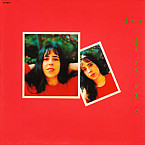
Album: Smile (1976)
Play Video

Songfacts®:

  • On "I Am the Blues" Laura Nyro uses the language of the blues as a state of being; restless, lonely, spiritually adrift, and peering out at what she calls "a world of war" with no clear sign of God, laughter, or much of a future.

    The repeated affirmation of "Right on. Right on" near the song's climax acts as a defiant rallying cry against that despair, before the track dissolves into the imagery of a plane flying high over a night wind.
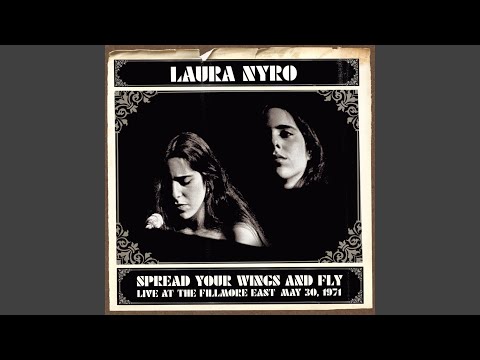
  • Nyro recorded the song for her Smile album after road-testing it for years. She first showcased "I Am the Blues" at live gigs around 1971–72, and rougher, more skeletal versions circulated on bootlegs from that period. The song was part of a batch of compositions that Nyro refined during her four-year self-imposed hiatus from the music industry, a period in which she married, divorced, and withdrew almost entirely from public life before returning with Smile in early 1976.
  • Nyro reunited with producer and arranger Charlie Calello for Smile after he previously worked on her 1968 opus Eli and the Thirteenth Confession. Calello's other credits include Lou Christie's "Lightnin' Strikes," The Four Seasons' "Let's Hang On!" and Glen Campbell's "Southern Nights."
  • Laura Nyro played piano on the track. The other musicians are

    Richard Davis: bass
    Allan Schwartzberg: drums
    John Tropea: guitar
    Joe Beck: guitar
    Randy Brecker: trumpet
    David Friedman: vibraphone

    The sparse, jazz-inflected arrangement - sustained trumpet, vibraphone, and restrained guitar - frames Nyro's fragile, high-register vocal delivery and builds a sense of quiet anguish.
  • The players were subject to Nyro's unusual methodology. As a synesthete, she experienced music as colors, and she directed musicians in those terms. Randy Brecker, who played trumpet on the track, recalled to Uncut magazine a session in which Nyro came out of the booth and told him she wanted his solo to be "more orange."

    "I said 'sure' but thought to myself 'uh oh here we go,'" Brecker recounted. "So I visualized a sunset on the beach while I was playing and the next solo I played was cool with her, so maybe there is something to this color thing after all, who knows?"
  • Smile was Nyro's sixth album and her comeback record after four years away from the music industry. The album is generally considered to mark the beginning of her "mellow period," a gentler, folk-tinged and jazz-inflected sound that replaced the intense piano drama of her late-1960s work. "I Am the Blues" sits at track 4 and is one of the album's most intimate moments.

    Despite her long absence, Smile reached #60 on the US albums chart and led to her first full-band tour, documented on the 1977 live album Season of Lights.
  • Nyro dedicated Smile to her mother Gilda (née Mirsky) Nigro. In 1975, the year before Smile was recorded, Nyro's mother died of ovarian cancer at age 49. The loss came at an already turbulent moment: Nyro had also separated from her husband David Bianchini that same year. Recording the album was, in large part, an act of grief and consolation.

    What makes the story even more haunting is the eerie parallel that followed: Laura was diagnosed with ovarian cancer in late 1996 and died on April 8, 1997, also at the age of 49, exactly the same age and the same disease as her mother.

Comments

Be the first to comment...

Editor's Picks

Sam Phillips

Sam PhillipsSongwriter Interviews

Collaborating with T Bone Burnett, Leslie Phillips changed her name and left her Christian label behind - Robert Plant, who recorded one of her songs on Raising Sand, is a fan.

Pete Anderson

Pete AndersonSongwriter Interviews

Pete produced Dwight Yoakam, Michelle Shocked, Meat Puppets, and a very memorable track for Roy Orbison.

Part of Their World: The Stories and Songs of 13 Disney Princesses

Part of Their World: The Stories and Songs of 13 Disney PrincessesSong Writing

From "Some Day My Prince Will Come" to "Let It Go" - how Disney princess songs (and the women who sing them) have evolved.

Dave Pirner of Soul Asylum

Dave Pirner of Soul AsylumSongwriter Interviews

Dave explains how the video appropriated the meaning of "Runaway Train," and what he thought of getting parodied by Weird Al.

Peter Lord

Peter LordSongwriter Interviews

You may not recognize his name, but you will certainly recognize Peter Lord's songs. He wrote the bevy of hits from Paula Abdul's second album, Spellbound.

Jon Foreman of Switchfoot

Jon Foreman of SwitchfootSongwriter Interviews

Switchfoot's frontman and main songwriter on what inspires the songs and how he got the freedom to say exactly what he means.