Hallelujah

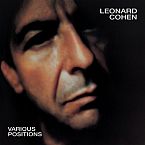
Album: Various Positions (1984)
Charted: 36 59
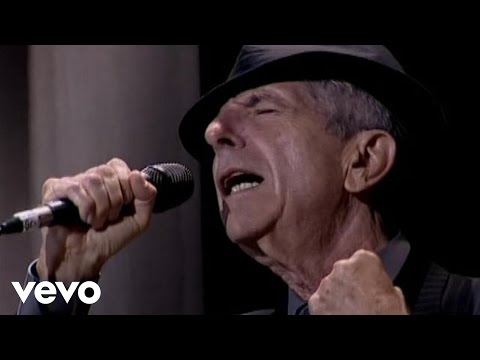
Play Video

Songfacts®:

  • One of Leonard Cohen's most popular songs, "Hallelujah" is his magnum opus, crafted over a period of five years.

    The word "hallelujah" is Hebrew for "glory to the lord." The idea of the song is, there are lots of different hallelujahs, and they're all valid, even the ones that are cold and broken.
  • The most famous version of this song is Jeff Buckley's cover. He included it on his 1994 album Grace, but his version wasn't widely heard until after his 1997 death when he drowned at age 30. His death renewed interest in the song, bringing it to the attention of many artists, many of whom performed it in tribute to Buckley. Over the years, the song brought a great deal of attention to Cohen as well, but it took a while. Peak "Hallelujah" was probably some time around 2012; by that time it had been recorded by hundreds of artists and performed by many church choirs. Artists to cover it include k.d. lang, Rufus Wainwright (as heard in the movie Shrek), Bono, Regina Spektor, Damien Rice and Tori Kelly.
  • The song is loaded with religious imagery, with references to David, Bathsheba ("You saw her bathing on the roof") and Samson ("She broke your throne and she cut your hair"). Cohen explained that the song is "a desire to affirm my faith in life, not in some formal religious way but with enthusiasm, with emotion."
  • Cohen wrote about 80 verses for the song, settling on six he included. Some of the extra verses he would sometimes use when he performed the song live.
  • Cohen's original version was a #1 hit in France and charted in his native Canada, but had just a small fan base in America, so the song didn't get much attention there. It didn't chart in America until after Cohen's death in 2016, when it went to #59.
  • There is a faction that doesn't rank "Hallelujah" among Cohen's best songs. In that camp is Jennifer Warnes, Cohen's longtime backing vocalist who sang on the track and arranged the choir. By this time, Warnes was far more popular than Cohen in America, with the hits "Right Time Of The Night" and "Up Where We Belong," her #1 duet with Joe Cocker for the movie An Officer And A Gentleman.

    Warnes released an album of Cohen covers in 1986 called Famous Blue Raincoat in an attempt to draw more attention to his songs, and she left "Hallelujah" off the set. "We thought it was too generic, and I wasn't fond of the lyric," she told Songfacts. "When it took off, I was kind of surprised, because I don't think it's one of his greatest songs. I don't think it's as cohesive as his other songs are."

Comments: 5

  • Wordpower from CaliforniaHallelujah is indeed about King David and Sampson and powerful men of faith who undo themselves by giving in to lust. King David is one of the most conflicted characters in the Old Testament, a talented harpist who really was less concerned about music than himself and power, and whose affair with Bathsheba, whom he first espies bathing on a roof in the song as in the Bible, was disastrous for him. He is the "baffled king," a powerful and idolized individual but also flawed, and torn between spiritual devotion and human struggles. If you look at this song and think it has nothing to do with religion you shouldn't be commenting. Likewise the image of Sampson being tied to a chair --a kitchen chair in the song, being a place where a woman traditionally is in control, at least back when this was written. This again repeats the biblical imagery of lust -- therefore the "hallelujahs," at once spiritual, life affirming, tragic, and suggesting sexual release. This is a song about individuals torn between spiritual devotion and human desires, as was Cohen himself, a very spiritual man who was Jewish. The Old Testament, unlike the Christian bible, is chock full of sexual imagery, celebrating the relationship between earthly and divine love, which can be confusing.
  • Mike Williams from Albeautiful song
  • Justafan from LouisianaI think Hallelujah by Leonard Cohen has nothing to do with religion. It's about a fiery relationship where he watches a young woman and dreams to be with her. When they are finally together, they both have so much passion. It talks about she tied him to a kitchen chair. Breaking his thrown and pulling his hair was his 'exploding'. Just listen again, you will understand. Sounds like the relationship was forbidden, but the chemistry was more than he could take.
  • Lee from CanadaLeonard Cohen check biblical references? What a hoot! King David had the affair with Bathsheba and Delilah cut Samson’s hair.
  • Pibblemom from UsaShould have checked the biblical references. He confused David and Sampson.
see more comments

Editor's Picks

Concert Disasters

Concert DisastersFact or Fiction

Ozzy biting a dove? Alice Cooper causing mayhem with a chicken? Creed so bad they were sued? See if you can spot the real concert mishaps.

Top American Idol Moments: Songs And Scandals

Top American Idol Moments: Songs And ScandalsSong Writing

Surprise exits, a catfight and some very memorable performances make our list of the most memorable Idol moments.

Keith Reid of Procol Harum

Keith Reid of Procol HarumSongwriter Interviews

As Procol Harum's lyricist, Keith wrote the words to "A Whiter Shade Of Pale." We delve into that song and find out how you can form a band when you don't sing or play an instrument.

Richie McDonald of Lonestar

Richie McDonald of LonestarSongwriter Interviews

Richie talks about the impact of "Amazed," and how his 4-year-old son inspired another Lonestar hit.

Song Cities

Song CitiesMusic Quiz

Nirvana, Billy Joel and Bruce Springsteen are among those who wrote songs with cities that show up in this quiz.

Best Band Logos

Best Band LogosSong Writing

Queen, Phish and The Stones are among our picks for the best band logos. Here are their histories and a design analysis from an expert.