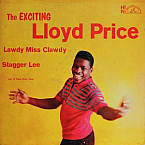
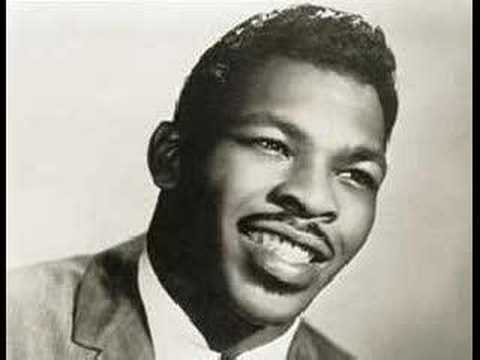
Lloyd Price recorded two versions of this song. The first had Stagger Lee and Billy gambling (Stagger Lee shot Billy at the end), the second, rushed out by ABC-Paramount after hearing complaints from radio listeners, had Stagger Lee and Billy arguing over a girlfriend, who goes back to Stagger at the end.
This was based on the traditional blues/folk song "Ballad of Stack-o-Lee," which was inspired by a real-life incident. Texas-born Lee Shelton, nicknamed Stagger Lee, was a notorious pimp and gambler who made headlines when he shot and killed Billy Lyons on Christmas night in 1895. The friends were drinking at a St. Louis saloon when they broke into an argument over politics that led to Stagger Lee crushing Lyons' hat. When Lyons confiscated Stagger's Stetson and refused to return it, Stagger fatally shot him in the abdomen.
Stagger Lee's legacy as a stone-cold tough guy made a popular villain in folklore. Although early versions of the tune by Mississippi John Hurt and Woody Guthrie concluded with Stagger being hanged for his crime, that wasn't the case. He was sentenced to 25 years in prison for the murder but was paroled in 1909. Two years later, he was back in jail for assault in robbery, where he died of tuberculosis in 1912.
There have been over 170 recorded versions of the song, including four by Taj Mahal and eight by Mississippi John Hurt, released over the past century.
Dick Clark thought Price's original version was too violent, so Price performed the tamer rendition for his appearance on Clark's American Bandstand.
This was the first rock 'n' roll record to hit #1 despite being censored.
Other versions that charted in the US: Wilson Pickett, 1967 (#22, as "Stag-O-Lee"), Tommy Roe, 1971 (#25).
In 2004 The Black Keys recorded this for their album
Rubber Factory as "Stack Shot Billy."
>>
Suggestion credit:
C.J. - Farmington, MI
According to folklorists John and Alan Lomax, Lee "Stagger Lee" Shelton took his nickname from a riverboat called the Stack Lee which was notorious for its on-board prostitution.
New Orleans pianist Leon Gross, known as Archibald, recorded the first mainstream hit rendition, the two-part "Stack-A-Lee," in 1950 and reached #10 on the R&B chart. Lloyd Price heard this version while he was serving in Korea after being drafted into the US Army. After he was discharged in 1956, he formed the Kent Record Company with his old friend Harold Logan and released his first hit, "Just Because." The following year, they rewrote the folk song "Stagger Lee" into the vengeful tale of two gamblers.
Price released this as the B-side to his single "You Need Love," but most radio stations preferred the flip side. As a result, sales of "Stagger Lee" peaked at nearly 200,000 copies a day and the song was a #1 hit on the Billboard Hot 100 and R&B charts.
Several other artist have recorded this, including Pat Boone, James Brown, The Ventures (as a surf-rock instrumental), Ike & Tina Turner, The Righteous Brothers, The Youngbloods, Pacific Gas & Electric, Dr. John, The Grateful Dead, Bob Dylan, Neil Diamond and Huey Lewis & the News, among others.
In 1963, the Isley Brothers recorded a version with a then-unknown Jimi Hendrix on guitar. For
their performance on live TV in England, Ron Isley pulled a gun from his jacket to mime Stagger Lee's crime, which caused a bit of a scandal in the UK.
Although he never released a version, Elvis Presley sang this during rehearsal in the 1970 concert documentary Elvis: That's The Way It Is.
Nick Cave & The Bad Seeds recorded a
different version for their 1996
Murder Ballads album.
Price's rendition was used in the movies 45 Years (2015), All I Want For Christmas (1991), and Shag (1989). Other versions appeared in these films:
Porky's Revenge (1985) - a version by the blues-rock band the Fabulous Thunderbirds.
Death Proof (2007) - a version by Pacific Gas & Electric.
Honeydripper (2007) - a version by blues musician Keb' Mo', whose character, Possum, performs it in a scene.
Black Snake Moan (2007) - Samuel L. Jackson's character sings a version from Stagger Lee's perspective.
Midnight In America (2007) - a hardcore-punk version by Modern Life Is War.