Baby Don't Get Hooked on Me

Album: Baby Don't Get Hooked on Me (1972)
Charted: 29 1
Play Video

Songfacts®:

  • When Mac Davis' producer, Rick Hall, asked him to write a "hook" song, Davis took it literally, coming up with the line "baby, don't get hooked on me" and a melody to go with it. Hall loved it, so Davis finished writing the song that night and recorded it with Hall the next day. The song hooked plenty of fish (listeners), going to #1 on both the Hot 100 and Adult Contemporary charts.
  • In this song, a love interest is getting a little too comfortable with Davis, so he gives her a warning, telling her not to get hooked on him because he's bad news: he'll just use her and set her free. Unlike songs like "Brandy (You're a Fine Girl)" where the singer can't commit but shows some compassion for the girl, in this one Davis doesn't seem to care a whit about her feelings:

    Girl don't let your life get tangled up with mine
    'Cause I'll just leave you, I can't take no clinging vine


    Davis didn't like what he wrote, but once he recorded the song, it was too late: Columbia Records heard its hit potential and put it out as a single. "I thought it was super egotistical and pretentious," David told Billboard.
  • This was recorded at Fame Studios, which was run by Rick Hall in Muscle Shoals, Alabama. In the '60s, soul classics from the likes of Wilson Pickett and Etta James were recorded there; in 1969 four top musicians at Fame left to start Muscle Shoals Sound Studios nearby, establishing two top-tier facilities in this remote locale. When Davis recorded this song in 1972, both studios were going strong.
  • Mac Davis had hits as a songwriter before he started his solo career; he wrote Elvis Presley's "A Little Less Conversation" and "In The Ghetto." He released his first album in 1970, then his second a year later. Baby Don't Get Hooked On Me was his third album, and a breakthrough, selling over a million copies in America thanks largely to this title track. Davis moved into acting at the end of the decade, starring in the highly acclaimed North Dallas Forty in 1979 and the lowly acclaimed The Sting II in 1983.
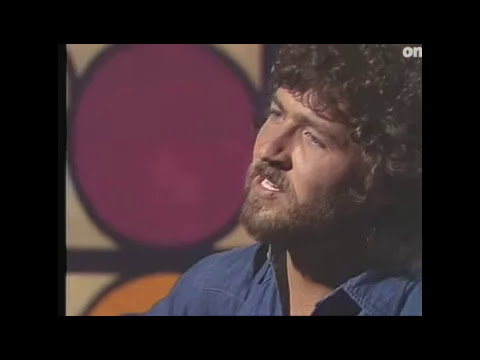
  • Davis performed this song on a number of TV shows. Most singers wore slick fashions or formal wear when they did TV, but Davis wore his "blue suit" - blue jeans and a denim jacket. "When I went to Vegas I wore a tux sometimes, and sometimes I had special clothes made," he told Songfacts. "Then later on I got to thinking, they're not coming to see that, so I went back to my jeans and I played in jeans. So I didn't try to be anybody but me. Whatever there was about me that I could sell, I did."
  • Davis performed this on The Muppet Show when he was a guest star in 1980. He was lowered into an aquarium scene on a fishhook, where he sings it to a mermaid played by Miss Piggy. Thankfully, they edit the line, "It's warm where you're touching me."

Comments

Be the first to comment...

Editor's Picks

Michael Bolton

Michael BoltonSongwriter Interviews

Into the vaults for this talk with Bolton from the '80s when he was a focused on writing songs for other artists.

Oliver Leiber

Oliver LeiberSongwriter Interviews

Oliver Leiber talks about writing and producing hits for Paula Abdul, and explains his complicated relationship with his father, the songwriter Jerry Leiber.

Jason Newsted (ex-Metallica)

Jason Newsted (ex-Metallica)Songwriter Interviews

The former Metallica bassist talks about his first time writing a song with James Hetfield, and how a hand-me-down iPad has changed his songwriting.

Rock Stars of Horror

Rock Stars of HorrorMusic Quiz

Rock Stars - especially those in the metal realm - are often enlisted for horror movies. See if you know can match the rocker to the role.

Subversive Songs Used To Sell

Subversive Songs Used To SellSong Writing

Songs about drugs, revolution and greed that have been used in commercials for sneakers, jeans, fast food, cruises and cars.
Richie Wise (Kiss producer, Dust)

Richie Wise (Kiss producer, Dust)Songwriter Interviews

Richie talks about producing the first two Kiss albums, recording "Brother Louie," and the newfound appreciation of his rock band, Dust.