
White Privilege II

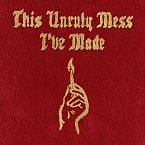
Album: This Unruly Mess I've Made (2016)
Play Video

Songfacts®:

  • This is a sequel to "White Privilege," a track that appeared on Macklemore's 2005 solo album The Language of My World. The song finds the rapper rhyming for nine minutes about a variety of issues concerning racial tensions and engaging with the black community. Topics he references include white supremacy and the Black Lives Matter movement.

    "This song is the outcome of an ongoing dialogue with musicians, activists, and teachers within our community in Seattle and beyond," Macklemore wrote. "Their work and engagement was essential to the creative process."
  • When the original "White Privilege" was released in 2005, few people knew who Macklemore was. However, his message has evolved, now he has recognition in mainstream America as a white rapper. "Writing that song in 2004 - that was a different version of me," he told Complex in 2015. "I was an unknown. I was making an observation: Look at what's happened. Pointing - not in a negative way - but making cultural observation."

    "Fast-forward ten years, my vantage point isn't pointing the finger at anyone else anymore," Macklemore continued. "It's pointing the finger at myself. It was pointing the finger at myself then, too, questioning things. But it's different when - cultural appropriation and white privilege in regard to hip-hop - you're the example."
  • Miley Cyrus, Elvis Presley and Iggy Azalea are all namechecked in the lyrics. Macklemore includes them as examples of white artists that have been accused of appropriating African-American music and culture.

    Iggy Azalea shared her thoughts on being called out on the track, tweeting. "He shouldn't have spent the last three yrs having friendly convos and taking pictures together at events etc if those were his feelings."

    Macklemore told Rolling Stone that his bars weren't intended as a slight to those mentioned. "For me, that second verse is unpacking," he said. "It's an unpacking moment of internalized criticism and self-doubt, and 'What have I done,' and letting the criticism infiltrate who I am. 'Why am I insecure at a protest?' And I think that people get put into boxes, and the conversation around cultural appropriation -- I was at the forefront of that, rightfully so. And that conversation also included Miley Cyrus and Iggy Azalea, and that's why their names are on the record."
  • The song features the Chicago-based poet and singer Jamila Woods, who is best known for her vocal contributions on the Donnie Trump and The Social Experiment tracks "Sunday Candy" and "Questions."
  • The track was born from a Seattle protest following the non-indictment of Darren Wilson - the white cop who fatally shot black teenager Mike Brown. It was an unnamed veteran rapper who then inspired Macklemore to create the track. "It was a long night. And that ended up getting news coverage. Then I got on the phone with an O.G., whose name I want to keep off the record. A hip-hop artist I'd never talked to before," recalled the Seattle MC.

    "He sent me a DM on Twitter and then he called me, and he said, 'I see you, I see what you're doing.' He was very complimentary about the music we've made, and it led into him saying, 'You have a platform, but silence is an action, and right now, you're being silent," Macklemore continued. "You're not saying anything about what's going on, and because you're a white rapper you have perspective and an insight onto these issues that you need to be speaking about. It's very important that you engage your audience.'"
  • The song was co-written by Macklemore's step cousin Tyler "XP" Andrews, one of six This Unruly Mess I've Made tracks he has credits on. He recalled to Genius: "On 'White Privilege II' a lot of people like Jamila Woods, Nikkita, and Hollis had input. Mostly just having conversation. Him and Ryan being like, 'How should we approach this? And is it OK to say some of these things that I want to say?' Once they got into the process of making the song, the one thing I wrote is the chant. 'The blood in the streets, no justice, no peace.' I wrote that for the ladies to sing. We recorded a huge choir—like 10 people, male and female. I helped direct that choir since I have Baptist church experience."

    "I was drawing from our conversations," Andrews continued. "I'm sure from the rallies I've been to, too. If anything, it's a war cry, and it's more spiritual than anything. Probably something I channel—the s--t is in my blood. People before me. My whole family is growing through this s--t. This ain't anything new under the sun. It was almost 500 years old. It's a part of right now. It's a part of the past. That's what we felt and what was happening at the time."

Comments

Be the first to comment...

Editor's Picks

Billy Gould of Faith No More

Billy Gould of Faith No MoreSongwriter Interviews

Faith No More's bassist, Billy Gould, chats to us about his two new experimental projects, The Talking Book and House of Hayduk, and also shares some stories from the FNM days.

Narada Michael Walden - "Freeway of Love"

Narada Michael Walden - "Freeway of Love"They're Playing My Song

As a songwriter and producer, Narada had hits with Aretha Franklin, Whitney Houston, Mariah Carey and Starship. But what song does he feel had the greatest impact on his career?

Pete Anderson

Pete AndersonSongwriter Interviews

Pete produced Dwight Yoakam, Michelle Shocked, Meat Puppets, and a very memorable track for Roy Orbison.

The Police

The PoliceFact or Fiction

Do their first three albums have French titles? Is "De Do Do Do, De Da Da Da" really meaningless? See if you can tell in this Fact or Fiction.

When Rock Belonged To Michelob

When Rock Belonged To MichelobSong Writing

Michelob commercials generated hits for Eric Clapton, Genesis and Steve Winwood in the '80s, even as some of these rockers were fighting alcoholism.

Edie Brickell

Edie BrickellSongwriter Interviews

Edie Brickell on her collaborations with Paul Simon, Steve Martin and Willie Nelson, and her 2021 album with the New Bohemians.