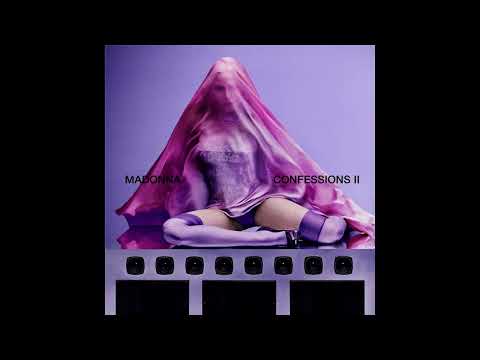
Danceteria

Album: Confessions II (2026)
Play Video

Songfacts®:

  • "Danceteria" is Madonna's nostalgic origin-story banger on Confessions II, retelling how a hungry, unknown club kid in early-'80s Manhattan became "Madonna," and turning that memory into a stomping tribute to the nightclub that launched her career.
  • The title refers to the legendary New York nightclub Danceteria, which occupied a former warehouse at 30 West 21st Street. Before it closed in 1986, the club became a creative crossroads where musicians, artists, fashion designers and downtown eccentrics collided. More importantly for Madonna, it was where she convinced DJ Mark Kamins to play her demo of "Everybody." The record caught the attention of Sire Records founder Seymour Stein, leading to her first recording contract.

    "Artists arrive every day to New York, with a dream and more often than not with little else," Madonna said. "As much as I struggled when I showed up here with nothing, I look back very fondly on this time in my life."
  • Madonna populates the song with real names from the early-'80s New York scene, making it an autobiographical roll call:

    Her roommate and close friend, Martin Burgoyne, a young artist who was instrumental in supporting her in those years.

    The club's legendary doorman and promoter Haoui Montaug, known for curating performers and helping emerging artists, including Madonna, get on stage at Danceteria.

    Her longtime friend, actress Debi Mazar, whom she first met at Danceteria in 1982 and who later appeared in her videos and films.

    A spoken-word section expands the roll call, listing downtown and art-world figures: Fab Five Freddy, Jean-Michel Basquiat, Keith Haring, Tony Shafrazi, Maripol, David Byrne, Nile Rodgers, Kenny Scharf, the B-52s, Rock Steady Crew. The list echoes the spoken Hollywood-icon breakdown in "Vogue." Both tracks use name-checking as a way of honoring the people who shaped the culture around Madonna, with "Danceteria" switching from Old Hollywood to the artists, musicians and cultural agitators who turned early-'80s New York into one giant, wonderfully chaotic laboratory.
  • Madonna felt like an outsider when she first arrived on the scene. Speaking on The Graham Norton Show she described everyone at Danceteria as "cool" while she felt awkward, not having the money for elaborate outfits. As a trained dancer with limited resources, she repurposed what she had into DIY fashion, including her now‑iconic fishnet gloves and layered dancewear.

    "Tights were all the clothes I had," she said. "I was a ballet dancer, so I just took my dance clothes and reinvented it. Hunger was the best sauce."
  • The track tips its hat to New Yorker Lou Reed by interpolating the famous "doo-doo-doo" vocal refrain from "Walk On The Wild Side," earning Reed a co-writing credit alongside Madonna and producers Andrew Watt, Cirkut and Stuart Price. Other songs that have tapped the classic track include:

    1990 A Tribe Called Quest's "Can I Kick It??" is built around the slide bass guitar line "Walk on the Wild Side."

    1991 Marky Mark and the Funky Bunch's "Wildside" lifts the core groove, bass line, drum feel, sax textures, and the famous "doo‑doo‑doo" hook from "Walk on the Wild Side," then replaces Reed's Factory characters with new rap‑told urban cautionary tales. The single peaked higher on the Billboard Hot 100 (#10) than Reed's original (#16).

    2019 Haim's "Summer Girl" interpolates "Walk On The Wild Side" and threads its bassline into the song.
  • "Danceteria" came together when Madonna began reminiscing about her early days, providing the missing piece for producers Watt, Cirkut, and Price, who had completed the instrumental but couldn't unlock the verse melody. She solved the roadblock by vividly describing the clubs and raw energy of early-'80s New York, before taking the track home that night and returning the next morning with three pages of lyrics.

    "How this came out is literally just what happened when she walked in and picked up the microphone that day," Price said during an album playback.
  • Madonna recorded "Danceteria" with the same microphone she and Price used on the original Confessions on a Dance Floor sessions nearly three decades earlier. By then it was held together with Sellotape, having survived years of use that would have persuaded most microphones to file for retirement. "Madonna is so specific about sound," Price said. "It's amazing what she picks up, right down to the mic choice."

Comments

Be the first to comment...

Editor's Picks

Daniel Lanois

Daniel LanoisSongwriter Interviews

Daniel Lanois on his album Heavy Sun, and the inside stories of songs he produced for U2, Peter Gabriel, and Bob Dylan.

Dave Pirner of Soul Asylum

Dave Pirner of Soul AsylumSongwriter Interviews

Dave explains how the video appropriated the meaning of "Runaway Train," and what he thought of getting parodied by Weird Al.

Al Jourgensen of Ministry

Al Jourgensen of MinistrySongwriter Interviews

In the name of song explanation, Al talks about scoring heroin for William Burroughs, and that's not even the most shocking story in this one.

Brian Kehew: The Man Behind The Remasters

Brian Kehew: The Man Behind The RemastersSong Writing

Brian has unearthed outtakes by Fleetwood Mac, Aretha Franklin, Elvis Costello and hundreds of other artists for reissues. Here's how he does it.

Desmond Child

Desmond ChildSongwriter Interviews

One of the most successful songwriters in the business, Desmond co-wrote "Livin' La Vida Loca," "Dude (Looks Like A Lady)" and "Livin' On A Prayer."

Graham Parker

Graham ParkerSongwriter Interviews

When Judd Apatow needed under-appreciated rockers for his Knocked Up sequel, he immediately thought of Parker, who just happened to be getting his band The Rumour back together.