
La Tristesse Durera

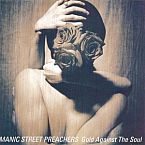
Album: Gold Against The Soul (1993)
Charted: 22
Play Video

Songfacts®:

  • Manics guitarist Richey James Edwards explained in Melody Maker, June 19, 1993: "We took the title from a book on Van Gogh, although the song's got nothing to do with Van Gogh. It means something like 'the sadness goes on,' and it's about the way life doesn't get any better as you get older. It's always a beautiful image every year when the war veterans turn out at the Cenotaph, and everyone pretends to care about them - but then they're shuffled off again and forgotten. I'm much more sympathetic towards older people than towards my generation - I think they have a lot more dignity, and seem to be able to take care of their problems themselves. People of my generation seems to be so selfish. I'm no exception, because you can't escape from the culture that surrounds you. A phrase like 'Trade Unionism,' and the idea of caring about the community you come from, is now seen as laughable - and of course, that's a product of the political culture over the last 15 years."
  • "La Tristesse Durera (Scream to a Sigh)" was written from the viewpoint of a war veteran, focusing on how public reverence fades once the ceremony is over. Lines like "wheeled out once a year, a cenotaph souvenir" underline the tokenistic nature of remembrance, while the song follows the bleak afterlife of a war medal as it drifts from honor to commodity.

    It sells at market stalls
    Parades Milan catwalks
  • Nicky Wire wrote much of the song and came up with its French title, which translates as "sadness will last forever." Edwards also contributed the recurring "scream to a sigh" refrain.

    "I wanted to do something non-trendy," Wire told Louder, "and that was to write about war heroes in a sympathetic way."
  • According to 168 Songs of Hatred and Failure: A History of Manic Street Preachers by Keith Cameron, "La Tristesse Durera" is the only documented instance of Richey Edwards playing guitar on a Manic Street Preachers recording. His contribution amounts to "a single sustained barre chord, after the first chorus." Edwards openly acknowledged his lack of technical ability on the instrument.
  • Drummer Sean Moore told Louder that the song was built around a groove inspired by Arrested Development. Moore recalled initially programming a beat on a computer, then translating it into a live drum performance to "mix it up a bit." He also cited his growing interest in hip-hop at the time, particularly Public Enemy's Fear of a Black Planet album, which he said, "really blew me away."
  • Andrew "Shovell" Lovell of pop-dance hitmakers M People contributed percussion to the track.
  • The Manics revisited war and its impact on those who fight on "If You Tolerate This Your Children Will Be Next," but from a different historical angle than "La Tristesse Durera."

    Where "La Tristesse Durera" focuses on the personal aftermath of conflict, seen through the life of a neglected war veteran, "If You Tolerate This..." expands the lens to consider collective memory and moral responsibility. Drawing on the legacy of the Spanish Civil War and the slogan associated with anti-fascist resistance, the song asks what happens when societies accept injustice and violence as normal.

Comments

Be the first to comment...

Editor's Picks

Francesca Battistelli

Francesca BattistelliSongwriter Interviews

The 2011 Artist of the Year at the Dove Awards isn't your typical gospel diva, and she thinks that's a good thing.

Johnette Napolitano of Concrete Blonde

Johnette Napolitano of Concrete BlondeSongwriter Interviews

The singer/bassist for Concrete Blonde talks about how her songs come from clairvoyance, and takes us through the making of their hit "Joey."

Danny Clinch: The Art of Rock Photography

Danny Clinch: The Art of Rock PhotographySong Writing

One of rock's top photographers talks about artistry in photography, raising funds for a documentary, and enjoying a County Fair with Tom Waits.

Richie Wise (Kiss producer, Dust)

Richie Wise (Kiss producer, Dust)Songwriter Interviews

Richie talks about producing the first two Kiss albums, recording "Brother Louie," and the newfound appreciation of his rock band, Dust.

Rob Halford of Judas Priest

Rob Halford of Judas PriestSongwriter Interviews

Rob Halford dives into some of his Judas Priest lyrics, talking about his most personal songs and the message behind "You've Got Another Thing Comin'."

Gavin Rossdale of Bush

Gavin Rossdale of BushSongwriter Interviews

On the "schizoid element" of his lyrics, and a famous line from "Everything Zen."