
Screaming Suicide

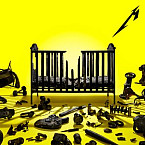
Album: 72 Seasons (2023)
Play Video

Songfacts®:

  • Here, Metallica frontman James Hetfield addresses suicide. In the first verse he discusses how negative thoughts result in low self-esteem.

    Then my voice appears
    Teaching you of fears
    Are you good enough?


    The interior voice adds more details, blackening his mind. Hetfield doesn't recognize they're all lies and succumbs to a harrowing depression where he's ready to give up.

    In the second verse, the internal voice suggests a way of escaping the all-consuming darkness.

    Then a voice appears
    Whisper in your ears
    "You are good enough"
    Throwing down a rope
    A lifeline of hope


    Thinking about committing suicide gives Hetfield hope. It is a temptation, but what this devil on the shoulder doesn't tell him is he'll die in sadness and leave his loved ones traumatized.
  • During, the chorus, Hetfield talks about suicide being a taboo word and how the topic is frowned upon.

    Don't ever speak my name
    Remember you're to blame
    Keep me inside
    Keep me inside
    My name is suicide


    Hetfield ends the final chorus with "screaming suicide" rather than "my name is suicide." Then on the outro, his suicidal thoughts begin to disappear after he opens up to somebody.
  • Hetfield and his bandmates Lars Ulrich and Robert Trujillo wrote the reflective and heartfelt song to reference the ubiquity of suicidal thoughts. "The intention is to communicate about the darkness we feel inside," Hetfield shared. "It's ridiculous to think we should deny that we have these thoughts. At one point or another, I believe most people have thought about it. To face it is to speak the unspoken."

    "If it's a human experience, we should be able to talk about it," he added. "You are not alone."
  • Metallica previously dealt with the topic of suicidal thoughts on 1984's "Fade To Black." That song explores being in the depths of despair and wishing to be dead.

    Hetfield also sung from the perspective of thoughts on "Sad But True." The 1991 track is a monologue where his mind justifies his darker side taking control.
  • Metallica released "Screaming Suicide" as the second single from 72 Seasons. Greg Fidelman produced the album with James Hetfield and Lars Ulrich. Fidelman also co-produced their collaborative album with Lou Reed, 2011's Lulu and 2016's Hardwired... to Self-Destruct.

    This raw and intense track embodies the concept of 72 Seasons, the idea that the emotions and experiences of our formative years linger with us throughout our lives.
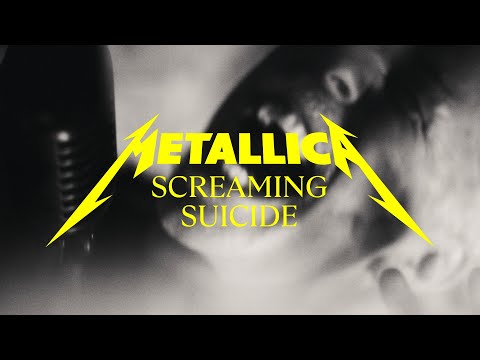
  • Tim Saccenti directed the video after impressing the band with his work on their previous clip for "Lux Aeterna."
  • "Screaming Suicide" delves deep into the tumultuous psyche of Hetfield. In a dark and brooding dialogue with his inner demons, the singer battles against the temptation of self-destruction.

    "One thing that James is really good at is reiterating that you're not alone," said Ulrich to the BBC. "All of us deal with darker issues at different levels of intensity - and often getting it out of your system and into a conversation can really help."
  • Metallica gave a live debut to "Screaming Suicide" on April 27, 2023 at the Johan Cruijff Arena in Amsterdam. It was the first show of their global M72 tour in support of 72 Seasons.

Comments

Be the first to comment...

Editor's Picks

Maria Muldaur

Maria MuldaurSongwriter Interviews

The "Midnight At The Oasis" singer is an Old Time gal. She talks about her jug band beginnings and shares a Dylan story.

Mike Love of The Beach Boys

Mike Love of The Beach BoysSongwriter Interviews

The lead singer/lyricist of The Beach Boys talks about coming up with the words for "Good Vibrations," "Fun, Fun, Fun," "Kokomo" and other classic songs.

Classic Metal

Classic MetalFact or Fiction

Ozzy, Guns N' Roses, Judas Priest and even Michael Bolton show up in this Classic Metal quiz.
Jon Oliva of Trans-Siberian Orchestra

Jon Oliva of Trans-Siberian OrchestraSongwriter Interviews

Writing great prog metal isn't easy, especially when it's for 60 musicians.
Timothy B. Schmit

Timothy B. SchmitSongwriter Interviews

The longtime Eagle talks about soaring back to his solo career, and what he learned about songwriting in the group.

David Sancious

David SanciousSongwriter Interviews

Keyboard great David Sancious talks about his work with Sting, Seal, Springsteen, Clapton and Aretha, and explains what quantum physics has to do with making music.