
The End of the Line

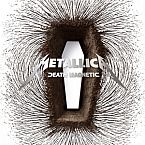
Album: Death Magnetic (2008)
Play Video

Songfacts®:

  • This song is about a self-destructive, drug-addicted star. Metallica had plenty of experience with "battle scars" and "chemical affinity," as did many of the musicians who came into their orbit (they did tour with Guns N' Roses).
  • The song's main riff here was salvaged from "The New Song," which Metallica debuted live during 2006. Lars Ulrich told Rolling Stone. "We were writing and played two different new songs over the course of that summer, and none of them made the record (Death Magnetic). One was called 'New Song 1' – going out on a creative limb, here – and the other was called 'New Song 2.' That's how deep we went."

    He added: "There was a couple of pieces in 'New Song 1,' some of the middle bit ended up in 'All Nightmare Long,' and the intro bit ended up in 'The End of the Line.' That's how we work; stuff just gets changed around, moved over and this goes over there and the rest of that gets sacked and that ends up in the intro in song five." [Laughs]

Comments: 5

  • Jorge from Lenoirthe part near the end where it says "the slave becomes the master" the melody in the back had a very faint Darth Vader's imperial march sound to it and the scene i would always think about is when Vader turns on Palpatine in Return of the Jedi when Palpatine electrocuted Luke, hence the part "the slave becomes the master"
  • S From Sydney from Australia I always thought this is about modern day corporate employees... everyone is overworked “burn your gasoline” like a slave till then end of the line (death)! and the masters are the top managers who need more and more and those promoted are those who demand even more “the slave becomes the master, need more and more right now and never after”!
  • Zero from Nowhere, NjI think it's kind of a downer ending; the addict has overdosed and died and the bridge is his funeral, "As we gather here today, we bid farewell." Though I can't make sense of the slave becoming the master if the person died. (although we bid farewell could be farewell to the drug and the slave from the drug has become the master I can kinda see what you mean eric)
  • Eric from Duluth, MnI love this song. I think it's a part two of Master Of Puppets, and the addict has overcome his addiction. The title references a cocaine line, and that it is behind them. the lines "we bid farewell... the slave becomes the master" and "Never mind... You've reached the end of the line" sound like they are throwing away their past life and starting new, similar to James' detox time.
  • Nick from Cairns, AustraliaOne of my favourite new songs from metallica, it seems Metallica can still keep me interested and entertained even though the've reached their 40's. Anyway the album was intended to reach a sound more related to the Justice album and the Black album. This was in an interview with Kirk Hammett in the July 2008 issue of Metal Hammer magazine. Though I think its just like the Justice Album, since it has a 10 minute instrumental ("Suicide and Redemption" is pretty similar to "To Live is To Die"), most songs range from 5 to 8 minutes as well and follow the same song structure.
see more comments

Editor's Picks

Amy Lee of Evanescence

Amy Lee of EvanescenceSongwriter Interviews

The Evanescence frontwoman on the songs that have shifted meaning and her foray into kids' music.

Lajon Witherspoon of Sevendust

Lajon Witherspoon of SevendustSongwriter Interviews

The Sevendust frontman talks about the group's songwriting process, and how trips to the Murder Bar helped forge their latest album.

American Hits With Foreign Titles

American Hits With Foreign TitlesSong Writing

What are the biggest US hits with French, Spanish (not "Rico Suave"), Italian, Scottish, Greek, and Japanese titles?

Crystal Waters

Crystal WatersSongwriter Interviews

Waters tells the "Gypsy Woman" story, shares some of her songwriting insights, and explains how Dennis Rodman ended up on one of her songs.

Booker T. Jones

Booker T. JonesSongwriter Interviews

The Stax legend on how he cooked up "Green Onions," the first time he and Otis Redding saw hippies, and if he'll ever play a digital organ.

How The Beatles Crafted Killer Choruses

How The Beatles Crafted Killer ChorusesSong Writing

The author of Help! 100 Songwriting, Recording And Career Tips Used By The Beatles, explains how the group crafted their choruses so effectively.