
Depression Blues

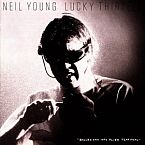
Album: Lucky Thirteen (1993)
Play Video

Songfacts®:

  • Though it sat on the shelf for a decade before being recorded, "Depression Blues" is considered by many Young aficionados to be among the Canadian's better songs.

    It was originally recorded in 1983 for the first iteration of Young's country album Old Ways. That album was made in a strange ecosystem, as Geffen Records was suing Young for not producing Rock and Roll content they believed was marketable. Young resisted, of course, and vowed that the more the label pushed, the more country music he'd make.

    By the time Old Ways was actually recorded two years after its initial inception (the version Young refers to as Old Ways II, with I being that first, never-released version), "Depression Blues" for some reason was cut.

    The song was then almost released on a Farm Aid EP, but that whole project got scrapped. Young had been a shaping force in Farm Aid, the annual music festival that started raising money for American independent farmers in 1985.

    "Depression Blues" finally saw the light of day when it ended up being one of four previously unreleased tracks included on the compilation album Lucky Thirteen.
  • The title "Depression Blues" makes it easy to interpret the song as being during the Great Depression of 1930s America, and Johnny Rogan, for one, did exactly this in The Complete Guide to the Music of Neil Young.

    Looked at as a song originally intended for Old Ways, however, and looking closely at the lyrics, it seems more likely that the song is about rural life in the 1980s time period when it was written. Much of Old Ways is concerned with the death of small-town America, particularly farm country. In the 1980s, independent farmers were having an increasingly difficult time keeping their family farms afloat. One verse, in particular, lends credence to this interpretation:

    Goin' back to school
    Savin' up my tuition
    Gonna rewrite all the rules
    On the old blackboard


    Going back to school for a new education sounds more like something from the 1980s than the Great Depression of the 1930s, when formal education was out of reach for most of the working class.

    Also, the buying up of real estate by "somebody nobody knows" implies faceless out-of-town corporate entities, which were also a subject of growing cultural concern in the 1980s.
  • In describing "Depression Blues," Jimmy McDonough, author of the Young biography titled Shakey, writes, "Young's lonesome harmonica and even lonesomer vocal evoke a dusty nowheresville where the jobs have vanished and the funky downtown movie theater has been replaced by a faceless shopping-mall megaplex."

Comments

Be the first to comment...

Editor's Picks

Rush: Album by Album - A Conversation With Martin Popoff

Rush: Album by Album - A Conversation With Martin PopoffSong Writing

A talk with Martin Popoff about his latest book on Rush and how he assessed the thousands of albums he reviewed.

Who Wrote That Song?

Who Wrote That Song?Music Quiz

Do you know who wrote Patti Smith's biggest hit? How about the Grease theme song? See if you can match the song to the writer.

Kerry Livgren of Kansas

Kerry Livgren of KansasSongwriter Interviews

In this talk from the '80s, the Kansas frontman talks turning to God and writing "Dust In The Wind."

Taylor Dayne

Taylor DayneSongwriter Interviews

Taylor talks about "The Machine" - the hits, the videos and Clive Davis.

Tim McIlrath of Rise Against

Tim McIlrath of Rise AgainstSongwriter Interviews

Rise Against frontman Tim McIlrath explains the meanings behind some of their biggest songs and names the sci-fi books that have influenced him.

Chris Frantz - "Genius of Love"

Chris Frantz - "Genius of Love"They're Playing My Song

Chris and his wife Tina were the rhythm section for Talking Heads when they formed The Tom Tom Club. "Genius of Love" was their blockbuster, but David Byrne only mentioned it once.