Here We Are In The Years

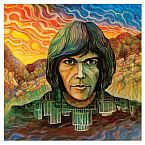
Album: Neil Young (1969)
Play Video

Songfacts®:

  • A track from his first album, "Here We Are In The Years" is both a celebration of country life and a criticism of mainstream American culture, two concepts that have been a major part of Young's music for the entirety of his career. Released in early 1969, the song also acts as an interesting artifact of its time, representing as it does the "back-to-the-land movement."
  • "Here We Are In The Years" is a soft, piano-driven song. At casual listen it sounds idyllic, a sweet ode to domestic bliss. In Young's characteristic fashion, however, this seeming sweetness hides a melancholic, scathing core.

    The song's paradox is revealed with its very first verse, which cryptically says:

    Now the holidays have come
    They can relax and watch the sun
    Rise above all the beautiful things they've done


    The last line raises the question of why one would have to rise above the beautiful things they've done. Beautiful things are usually cherished. It's either a slip of phrase or it's intended to question the notion that the "beautiful things" were actually beautiful at all. The rest of the song confirms the latter.
  • Go to the country take the dog
    Look at the sky without the smog
    See the world laugh at the farmers feeding hogs
    Eat hot dogs


    This, the second verse, mocks the pretenses of city folk. The first three lines describe a visit to the country, which includes making fun of farmers. Yet, those same people who do the mocking will later eat the hot dogs that the farmers produce. They rely upon them for their very sustenance. The verse is a dig at elitist snobbery, and it sets the stage for what's to come.
  • In a style that would make literary satirist Kurt Vonnegut proud, this song points out the absurd contradictions of modern humanity. Young describes people "planning trips to stars," all while allowing the blissful country lane right outside their door to be destroyed. "Time itself is bought and sold" by people who fear growing old yet spend all their time playing "a thousand foolish games."
  • The final verse is probably the most interesting.

    Lives become careers
    Children cry in fear
    Let us out of here!


    This summarizes the '60s hippie rebellion. Young and his peers were reacting to the perceived dreariness of their parents' culture, which they also blamed for the Vietnam War. They didn't want any part in that version of the American Dream. This is also where the song becomes interesting as a landmark of its era.

    Only two months earlier, Canned Heat had released "Going Up The Country." Shortly before that, the first issue of the Whole Earth Catalog was published. Both these items, along with "Here We Are In The Years," expressed an increasingly popular (counter)cultural shift going on at the time.

    The hippie movement had mostly started in urban areas such as San Francisco, Los Angeles, and Berkley. By the late '60s, however, it began to move into the country. The people felt that they'd lost a vital connection to the land and sought to change that. They imagined changing the world would be easier out there.

    Young was very much part of that whole scene, but where he was different from most of the others in the counterculture was that those "return to the land" sentiments never died for him. After the main thrust of the hippie movement petered out in late 1969 and people returned to their normal lives, Young kept going. Many years later, in the song "Big Time" (1996), he was still singing:

    I'm still living the dream we had
    For me it's not over


    Young has been a committed environmentalist throughout his life. He's also preferred country life over the city. He was living on his ranch in 1974 when he met wife Pegi, the woman who inspired "Unknown Legend" and many other Young tunes.

    Whereas "Here We Are In The Years" is in some ways a footnote in one of the most illustrious careers in popular music history, it reveals quite a lot about its writer, and about the time he lived in.

    Young has continued to play "Here We Are In The Years" regularly over the many decades since its release.

Comments

Be the first to comment...

Editor's Picks

Christmas Songs

Christmas SongsFact or Fiction

Rudolf, Bob Dylan and the Singing Dogs all show up in this Fact or Fiction for seasonal favorites.
Annie Haslam of Renaissance

Annie Haslam of RenaissanceSongwriter Interviews

The 5-octave voice of the classical rock band Renaissance, Annie is big on creative expression. In this talk, she covers Roy Wood, the history of the band, and where all the money went in the '70s.
Does Jimmy Page Worship The Devil? A Look at Satanism in Rock

Does Jimmy Page Worship The Devil? A Look at Satanism in RockSong Writing

We ring the Hell's Bells to see what songs and rockers are sincere in their Satanism, and how much of it is an act.
Millie Jackson

Millie JacksonSongwriter Interviews

Outrageously gifted and just plain outrageous, Millie is an R&B and Rap innovator.
Steve Cropper (Booker T & the MG's, Blues Brothers)

Steve Cropper (Booker T & the MG's, Blues Brothers)Songwriter Interviews

Steve Cropper on the making of "In the Midnight Hour," the chicken-wire scene in The Blues Brothers, and his 2021 album, Fire It Up.
Matthew Wilder - "Break My Stride"

Matthew Wilder - "Break My Stride"They're Playing My Song

Wilder's hit "Break My Stride" had an unlikely inspiration: a famous record mogul who rejected it.