
Music Arcade

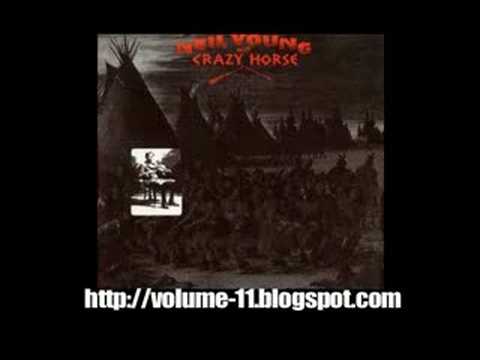
Album: Broken Arrow (1996)
Play Video

Songfacts®:

  • "Music Arcade" is a slow, contemplative song that talks about the mundane details of a day spent in the shadow of some big event. We're never told exactly what that event is, but it's left singer Neil Young feeling lost, alone, and "found out."

    There's a twist in the song, though, as Young also talks about feeling so good that he's dancing down Main Street "dodging traffic with flying feet" and winning at the music arcade while some nameless band plays. Musically, the feel stays quietly somber throughout the song, but Young spends more time talking about how happy he was than how sad or lost.

    The whole thing is ambiguous, but we do know that Young made Broken Arrow with the November 1995 death of record producer David Briggs heavy on his heart. Briggs was Young's close friend, and producer of his albums Neil Young, Everybody Knows This is Nowhere and After the Gold Rush.
  • One of the lyrics goes, "There's a comet in the sky tonight." Comet Hyakutake was discovered on January 31, 1996, months before the album was recorded. Scientists calculated it would pass very close to Earth during that March. When it did draw near it was brightly visible around the world. It's possible Young was singing about this in the song.
  • "Music Arcade" is the penultimate song on the Broken Arrow album, which Young produced himself. It's also the last newly composed song on the set, leading into Jimmy Reed's "Baby What You Want Me to Do."
  • As with the whole album, "Music Arcade" was recorded with Young's (in)famous band Crazy Horse. Frank "Poncho" Sampedro played guitar, Billy Talbot played bass and tambourine, Ralph Molina added percussion.

Comments: 2

  • Dharma Ray from UsaPrior commenter questioned whether lyrics to Music Arcade referenced some form of abuse Young experienced by an older man, or possibly a misreading of the lyrics. For international readers outside USA... It is quite common in larger cities for homeless people to gather where vehicles are stopped in traffic (a queue in UK?), such as at traffic lights, and without permission approach and begin cleaning your windshield. After which they approach a vehicle occupant to ask for cash, even though the service was never requested. Whether this activity referenced in the song, or simply general panhandling pedestrians, is what Young was referencing when singing "Have you even been singled out by a hungry man." This interpretation is entirely consistent with the theme and other lyrics in the song, as well as Young's general societal views and highlighting of those less fortunate.
  • Ray Nolan from Manchester, EnglandIt looks from this that young endured abuse by an older man: "Have you ever been singled out by a hungry man?”. Or perhaps i am misreading this.
see more comments

Editor's Picks

Carl Sturken

Carl SturkenSongwriter Interviews

Hitmaker Carl Sturken on writing and producing for Rihanna, 'N Sync, Christina Aguilera, Kelly Clarkson, Donny Osmond, Shakira and Karyn White.

Kim Thayil of Soundgarden

Kim Thayil of SoundgardenSongwriter Interviews

Their frontman (Chris Cornell) started out as their drummer, so Soundgarden takes a linear approach when it comes to songwriting. Kim explains how they do it.

Jonathan Edwards - "Sunshine"

Jonathan Edwards - "Sunshine"They're Playing My Song

"How much does it cost? I'll buy it?" Another songwriter told Jonathan to change these lyrics. Good thing he ignored this advice.

Lajon Witherspoon of Sevendust

Lajon Witherspoon of SevendustSongwriter Interviews

The Sevendust frontman talks about the group's songwriting process, and how trips to the Murder Bar helped forge their latest album.

Spooner Oldham

Spooner OldhamSongwriter Interviews

His keyboard work helped define the Muscle Shoals sound and make him an integral part of many Neil Young recordings. Spooner is also an accomplished songwriter, whose hits include "I'm Your Puppet" and "Cry Like A Baby."

Colin Hay

Colin HaySongwriter Interviews

Established as a redoubtable singer-songwriter, the Men At Work frontman explains how religion, sobriety and Jack Nicholson play into his songwriting.