The Riverboat Song

Album: Moseley Shoals (1996)
Charted: 15
Play Video

Songfacts®:

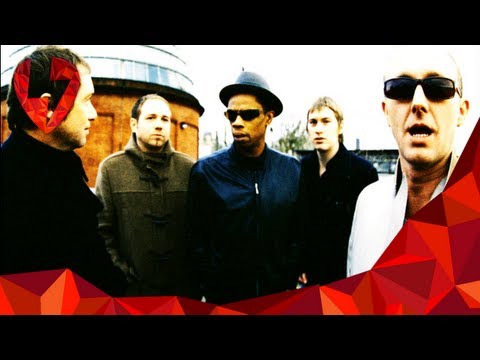
  • "The Riverboat Song" originated during a jam back in 1994 when Ocean Colour Scene guitarist Steve Cradock hit upon a three-note riff that was so simple it almost felt like a practical joke.

    "It's just three notes – a child could have written it, and maybe that's the appeal," Cradock told The Guardian. He likened it to Booker T. & the M.G.'s "Green Onions," and you can hear shades of Ray Charles' "What'd I Say" lurking in its DNA.

    To give the riff somewhere to go, the chorus was lifted from a demo by bassist Damon Minchella, using the same chord sequence as "The House Of The Rising Sun."
  • Rhythmically, the song borrows its swagger from Led Zeppelin's "Four Sticks," sharing the same lolloping 6/8 time signature and some of its phrasing. The riff reminded singer Simon Fowler of the playground taunt "nur-nur-nur-nur-nur" and his lyric took its cue from Francis Ford Coppola's Apocalypse Now, visualizing the river journey sequence and the boat coming under attack. "There's a war-like edge to the song," he said.
  • Paul Weller played the organ. Already working with Cradock in his touring band, Weller resisted the urge to turn it into full-blown Zeppelin worship. Instead, his contribution nods toward the jazzy, Hammond-heavy lineage of Brian Auger and Graham Bond.
  • True to Ocean Colour Scene's democratic ethos, the songwriting credit went to the whole band, even though the song clearly pivots on Cradock's riff and Fowler's vocal and lyric.
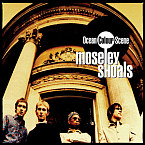
  • "The Riverboat Song" was released on February 5, 1996, as the opening track and lead single from the album Moseley Shoals, a bold move for something that behaved very much like an "anti-hit."

    And yet, it became one, thanks largely to an immensely powerful enthusiast. Radio 1 DJ Chris Evans made "The Riverboat Song" his Single of the Week and then adopted it as the walk-on music for his TFI Friday TV show. The song climbed to #15 on the UK Singles Chart and went Gold, selling over 400,000 copies despite its unusual waltz-blues rhythm and stubborn refusal to behave like conventional Britpop.
  • The song's success pulled Moseley Shoals up with it. The album reached #2 on the UK Albums Chart and stayed there for six months, setting the stage for later singles like "You've Got It Bad," "The Day We Caught the Train," and "The Circle." Internationally, the song made polite but modest appearances: #40 on the Eurochart Hot 100, #37 in New Zealand, and #13 in Scotland.
  • Looking back, Cradock described the recording as almost suspiciously effortless. "The whole thing was instinctive – we only did a couple of takes," he said, later adding octave guitar parts to give it an early Fleetwood Mac flavor. To him, "Riverboat" sounded like an underground blues instrumental, the kind you'd dance to at a sweaty Birmingham club while a DJ layered a Malcolm X speech over the top.

    "It's an anti-hit, really," Cradock admitted. "A 6/8 blues waltz. We kept thinking people wouldn't be able to dance to it."

    They might not have, if Chris Evans hadn't decided otherwise.

Comments

Be the first to comment...

Editor's Picks

Max Cavalera of Soulfly (ex-Sepultura)

Max Cavalera of Soulfly (ex-Sepultura)Songwriter Interviews

The Brazilian rocker sees pictures in his riffs. When he came up with one of his gnarliest songs, there was a riot going on.

History Of Rock

History Of RockSong Writing

An interview with Dr. John Covach, music professor at the University of Rochester whose free online courses have become wildly popular.

Martyn Ware of Heaven 17

Martyn Ware of Heaven 17Songwriter Interviews

Martyn talks about producing Tina Turner, some Heaven 17 hits, and his work with the British Electric Foundation.

Michael W. Smith

Michael W. SmithSongwriter Interviews

Smith breaks down some of his worship tracks as well as his mainstream hits, including "I Will Be Here For You" and "A Place In This World."

British Invasion

British InvasionFact or Fiction

Go beyond The Beatles to see what you know about the British Invasion.

Jethro Tull

Jethro TullFact or Fiction

Stage urinals, flute devices, and the real Aqualung in this Fact or Fiction.