Indigo

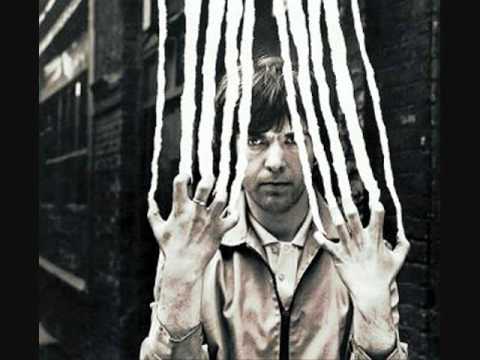
Album: Peter Gabriel (second, scratch) (1978)
Play Video

Songfacts®:

  • In this rather evocative song, Peter Gabriel sings from the perspective of a man on his deathbed. He's comforted by his child, who makes him feel warm in the eye of the storm as he nears the end.

    Early in the song, the man talks about how his body is breaking down, making almost jovial references to how his model is out of date and he's full of spare parts. As the song goes on, he gets more serene and spiritual, with talk of crossing "the dark dark river." At the end of the song, we hear him drift off.
  • Explaining what motivated him to write this song, Gabriel said, "I had the mood of 'Old Man River' in my head at the time."
  • This evolved out of an instrumental Gabriel performed on his 1977 tour that he called "A Song Without Words."
  • Indigo is a deep blue color that in this song represents the transition to total darkness, meaning death. The most famous use of the color in a song title is Duke Ellington's "Mood Indigo."
  • Peter Gabriel used a lot synthesizers in his solo work (he left Genesis in 1975), but on "Indigo," he kept it organic. The song features a recorder, which was played by George Marge and arranged by Gabriel's bass player, Tony Levin.
  • This is part of Gabriel's second solo album, which was produced by Robert Fripp of King Crimson. Musically, the album succeeded, but it didn't have any hits, which Gabriel's record company didn't appreciate. His next album was produced by Steve Lillywhite and fared far better commercially.

Comments: 3

  • Rob Arthur from Richmond, VaWhat a joy, hearing a song like this at rock concerts in the 70's.
    Not in agreement, though, that "had Ol' Man River in my head"
    correlates with your death-bed interpretation, or any element of physical deterioration or ageing,
    not during this era. Transformation of constellations of formations, maybe,-
    Washing of the Water-like,- but not ageing.
  • Stone from Finger LakesGosh that hits hard now that I understand what it means. He did a GREAT job with performing that for us.
  • Peter from Glen, NjWhen Peter performed this on his first solo tour in 1977, it was called "A Song Without Words". His synth player, Larry Fast, put the vocals through a frequency shifter which made him sound chimpmunk-like. This was mixed with his normal pitched vocals so it sounded as if he was dueting with himself. At the shows Peter told the audience it was his "small friend" or a transmission of the concert from a parallel universe.
see more comments

Editor's Picks

Jesus In Pop Hits: The Gospel Songs That Went Mainstream

Jesus In Pop Hits: The Gospel Songs That Went MainstreamSong Writing

These overtly religious songs crossed over to the pop charts, despite resistance from fans, and in many cases, churches.
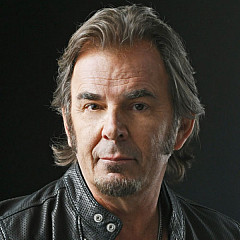
Jonathan Cain of Journey

Jonathan Cain of JourneySongwriter Interviews

Cain talks about the divine inspirations for "Don't Stop Believin'" and "Faithfully."

Vanessa Carlton

Vanessa CarltonSongwriter Interviews

The "A Thousand Miles" singer on what she thinks of her song being used in White Chicks and how she captured a song from a dream.
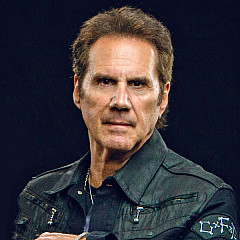
Kelly Keagy of Night Ranger

Kelly Keagy of Night RangerSongwriter Interviews

Kelly Keagy of Night Ranger tells the "Sister Christian" story and explains why he started sweating when he saw it in Boogie Nights.
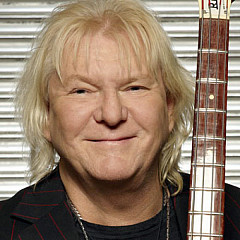
Chris Squire of Yes

Chris Squire of YesSongwriter Interviews

One of the most dynamic bass player/songwriters of his time, Chris is the only member of Yes who has been with the band since they formed in 1968.
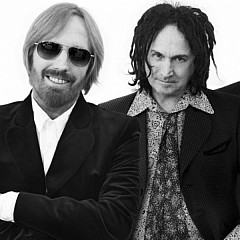
Mike Campbell

Mike CampbellSongwriter Interviews

Mike is lead guitarist with Tom Petty & the Heartbreakers, and co-writer of classic songs like "Boys Of Summer," "Refugee" and "The Heart Of The Matter."