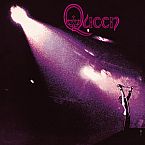

Keep Yourself Alive

Album: Queen (1973)
Charted: 89
Play Video

Songfacts®:

  • This is a song about simply staying alive. The message of the song: Staying alive is more important than being rich or famous. It boils down to "being yourself" instead of what everyone else wants you to be.
  • Queen guitarist Brian May wrote the words and music for this song, which was Queen's first single. It highlighted what would become a common facet of Queen's studio work: May's perfectionism. He noted in a 1983 interview with BBC Radio 1: "The first recording of it ever was in De Lane Lea when we did it ourselves and I've still got that recording and I think it's very good and has something which the single never had. But THEY pressurized us very strongly to redo all the tracks and we redid 'Keep Yourself Alive' with Roy and it was pretty awful, actually. I thought it was terrible and I was very unhappy about it and I thought the De Lane Lea one was better and I eventually managed to persuade Roy that it was better as well. So, we went back in and did it again in a way that was a bit more true to the original. But there is no way that you can ever really repeat something. I have this great belief that the magic of the moment can never be recaptured and, although we ended up with something that was technically in the playing and perhaps even in the recording a bit better than the De Lane Lea thing. I still think that the De Lane Lea one had that certain sort of magic, so I was never really happy. As it turned out no one else was ever really happy either and we kept remixing it. We thought that it's the mix that's wrong, we kept remixing and there must have been, at least, seven or eight different mixes by different groups of people. Eventually we went in and did a mix with Mike Stone, our engineer, and that's the one that we were in the end happiest with. That's the one we put out.

    But, to my mind 'Keep Yourself Alive' was never really satisfactory. Never had that magic that it should have had."

    It also showed a glimpse of May's desire to experiment with guitar recording techniques. Talking to On The Record in 1982, he discussed the techniques behind the opening heavily strummed guitar riff. "That was real tape phasing. This was in the days when you took the tape off the synch head, put it though a couple of other tape delays, and then brought it back with the play head. There is no processing whatsoever on the solo in that tune, as far as I remember. I used John Deacon's small amplifier and the Vox AC-30 to do those little three-part chorus thing behind, as well as the fingerboard pickup on the guitar. There is a bit more tape phasing on the end of that track."
  • Queen's first single, this has many familiar elements: the stacked guitars, the big harmonies. Brian May recalled to Mojo magazine: "Unfortunately, apart from a few places like Japan, it didn't get much airplay. We were told 'it takes too long to happen, boys. It's more than half a minute before you get to the first vocal.' So when we made the second album, we felt right we'll show them."

    On the second single, "Seven Seas of Rhye," everything deliberately happens in the first 10 seconds: guitars, harmonies, vocals. It worked - radio picked the song up and it became Queen's first hit.

Comments: 10

  • Deethewriter from Saint Petersburg, Russia FederationAn original Portuguese first edition vinyl single of Queen's "Keep Yourself Alive" sold for $1,540 during an eBay auction on Monday, October 31st, 2011 A.D. The ultra-rare, seven-inch, 45 rpm copy of the legendary British group's very first single from 1973 came with a picture sleeve and was rated in excellent condition. The song itself was first conceived in 1970 during a practice session at Imperial College before bassist John Deacon joined the band and ended up as the opening track on the group's self-titled 1973 debut.
  • Jared from Sikeston, MoI always thought it sounded like it was about just being normal instead of trying to be famous, because it's harder to get famous than it looks (in music business for Queen anyways) and how Queen worked extremely hard to become famous, not wasting away any time.
  • Lindsay from Coweta, OkThis song reminds me of my friends!!
  • Charles from Glenside, PaWell, I've always wondered whether or not somebody liked this song. Thanks to all who have endeavored to let folks know.
  • Matthew from Milford, MaIf only people followed this song's message... *sigh*
  • Matthew from Milford, MaMan, I love this song...
  • Becky from Locust Grove, GaI agree, this has to be among my top five favorites.
  • Aaron from Canfield, OhThis song is great. It's definitely the most overlooked queen song. Queen is one of my favorite bands and this is one of my favorite songs by Queen
  • Ralph from Newton, MaMe too Johnny but I do think it's the best Queen song there is. Certainly among my top 2-3.
  • Johnny from Los Angeles, Canot the best of queen but I do like the song
see more comments

Editor's Picks

Women Who Rock

Women Who RockSong Writing

Evelyn McDonnell, editor of the book Women Who Rock, on why the Supremes are just as important as Bob Dylan.

JJ Burnel of The Stranglers

JJ Burnel of The StranglersSongwriter Interviews

JJ talks about The Stranglers' signature sound - keyboard and bass - which isn't your typical strain of punk rock.

Roger McGuinn of The Byrds

Roger McGuinn of The ByrdsSongwriter Interviews

Roger reveals the songwriting formula Clive Davis told him, and if "Eight Miles High" is really about drugs.

Chris Isaak

Chris IsaakSongwriter Interviews

Chris tells the story of "Wicked Game," talks milkshakes and moonpies at Sun Records, and explains why women always get their way.

Mike Scott of The Waterboys - "Fisherman's Blues"

Mike Scott of The Waterboys - "Fisherman's Blues"They're Playing My Song

Armed with a childhood spent devouring books, Mike Scott's heart was stolen by the punk rock scene of 1977. Not surprisingly, he would go on to become the most literate of rockers.

Kerry Livgren of Kansas

Kerry Livgren of KansasSongwriter Interviews

In this talk from the '80s, the Kansas frontman talks turning to God and writing "Dust In The Wind."