
Finest Worksong

Album: Document (1988)
Charted: 50
Play Video

Songfacts®:

  • "Finest Worksong" may seem like a protest anthem championing the working class, but the band doesn't see it that way. R.E.M. never really wanted to be known as protest singers: They were conscious of the dangers of taking on such a role and actively worked to avoid it. As Peter Buck said, "I don't like sloganeering, especially when it gets to something like The Clash who don't know what they're talking about. They're f--king boneheads. People think that's revolutionary and it's garbage!"

    Yet, despite their misgivings, R.E.M. ended up finding themselves as one of America's most prominent "political" bands (they certainly didn't help themselves when they told the crowd at Nottingham's Rock City on November 21, 1984 that they were "not proud" of Ronald Reagan and were "sorry").

    Still, the "protest band" label never sat well with them. Michael Stipe showed this loud and clear to a protester who tried to provoke him into speaking out against the Gulf War by shouting out the "Finest Worksong" line, "The time to rise has been engaged."

    Stipe responded with another of his own lyrics, this one from "Talk About the Passion." "Not everyone can carry the weight of the world," he said. "I'm going to breakfast. See you later."
  • This was the third single from R.E.M.'s fifth album. Though it wasn't a hit on the US pop charts, it did peak at #28 on the Mainstream Rock chart.
  • Peter Buck wrote in Part Lies, Part Heart, Part Truth, Part Garbage: "It's a great intro although it's just me hitting a b-string, and Mike has that great bass line. When I brought it in, I felt like I knew what I wanted to and kind of vaguely knew what the guys should do, but we played it once and it just kind of came out of nowhere. Mike and Bill have always been particularly good at coming up with stuff off the tops of their heads that's kind of amazing. It sounded great, but I was afraid that Michael might have trouble writing to it just because it's a B note. That whole song is in B except for the chorus. It reminded me of touring with the Gang of Four. It kind of had that vibe to it."
  • Frontman Michael Stipe references 19th-century poet Henry David Thoreau in the lyrics ("To throw Thoreau and rearrange"), completely by accident. He wrote: "My friend Chris told me that I was our generation's Whitman, I think because I was an ecstatic, and I liked men and women, and I was a poet in his eyes, even though I hated the word poet. Anyway I meant to write Whitman into the song, but I got mixed up and wrote Thoreau in instead."
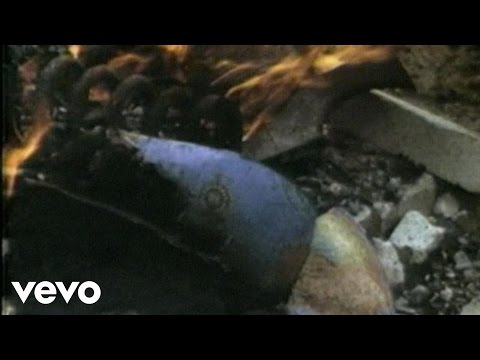
  • The music video, directed by Stipe, shows workers throwing, smashing and burning a globe, among other things.

Comments

Be the first to comment...

Editor's Picks

Jim Adkins of Jimmy Eat World

Jim Adkins of Jimmy Eat WorldSongwriter Interviews

Jim talks about the impact of "The Middle" and uses a tree metaphor to describe his songwriting philosophy.

Mick Jones of Foreigner

Mick Jones of ForeignerSongwriter Interviews

Foreigner's songwriter/guitarist tells the stories behind the songs "Juke Box Hero," "I Want To Know What Love Is," and many more.

16 Songs With a Heartbeat

16 Songs With a HeartbeatSong Writing

We've heard of artists putting their hearts into their music, but some take it literally.

Early Days of MTV

Early Days of MTVFact or Fiction

If you can recall the days when MTV played videos, you know that there are lots of stories to tell. See if you can spot the real ones.

Adele

AdeleFact or Fiction

Despite her reticent personality, Adele's life and music are filled with intrigue. See if you can spot the true tales.

Graduation Songs

Graduation SongsFact or Fiction

Have you got the smarts to know which of these graduation song stories are real?