The Gospel According To Luke

Album: Greatest Hits (1991)
Play Video

Songfacts®:

  • As the songwriters Skip Ewing and Don Sampson sat at a table in the Daylight Café one morning, a simple everyday event occurred that compelled them to write this song: they watched a man cross the street in front of the café.

    His appearance was unremarkable, and the pair didn't know him, nor even talk to him. But, recalls Skip, "even the way he walked was something that impressed something upon us." So they brought out their pens and began writing right there next to their breakfast plates.

    It was Sampson's idea "to speak from the Gospel according to Luke, and Luke being a person, being this guy, Luke, who we hadn't identified, being his philosophy, his way of looking at the gospel. Like his own truth, whether it was biblical or not," explains Skip.

    Nearly a year in the writing, Skip and Don had gotten together a number of times before they knew what they wanted to say with this song. "We went, 'We have to somewhat make him a bit of a hero,'" says Skip. "'He's got to kind of practice what he preaches. That's the thing. He's got to give to his own brothers, even from his limited means.' And that was that. We knew where to go. And Don Sampson just, in who he is, is a blessing. He's just a for-real guy. And writing songs like that with him was always a practice in understanding ourselves and other people more deeply. I have met a few genuine hearts, really genuine hearts, in the writers that I've written with. And Don is two of them." (laughs)
  • Part of the experience of writing this song was the chill bumps Skip got at the very start. No longer there, the Daylight Café was on 8th Avenue at the time, near the original home of Acuff-Rose Records, which has since moved to Music Row.

    "Acuff-Rose is the publishing company for which Hank Williams wrote all of his catalogue," says Skip. On the morning they began writing this song, he says, they walked back to Acuff-Rose. It was early morning, and the studio had just opened. So "we sat in the writer's room there, and we worked on this song, on the chorus and the first two verses. We didn't finish the song. The last verse, the one about 'a week ago Wednesday,' when he talks about what he does with that, we didn't know quite what to do. We looked at it, we thought, Gosh, we know where we want to go, we know how we feel about this guy, and it's such a powerful thing, he was offering us a powerful understanding. But what in the world do I have him say? What do we have him say?"

    "And then we realized while we were sitting in there that all of Hank Williams' catalogue, everything he'd recorded in the gospel music category, he'd recorded as Luke the Drifter. We were sitting in the Acuff-Rose building where his whole catalogue was written, and it just struck us. And Don looked at me, kind of had that weird look in his eyes, and I went, 'We're done writing today, aren't we?'"
  • Skip is a believer in "showing up" for your life, and that all that it offers is a gift. In his words, "I think that we never know what's going to be offered us. And my own personal philosophy is that we often get out of life and love and our own pursuits what we're willing to put in them. And that also has to do with love and understanding. If we spend time understanding ourselves and other people, we are sometimes offered a kind of understanding we would never have if we didn't aspire to have it. So I think by sitting and looking at something when we write songs or whatever, if we weren't looking out the window, that wouldn't have happened. If we weren't sitting in that Daylight Café, it wouldn't have happened quite that way. The idea would have still been there. But I think that we would have used whatever we were offered to look into that idea. But what a gift it seems now to look back and see that someone else's difficulty and the way they were handling it inspired us to hopefully be better people ourselves."
  • In the process of recording his version of the collection of hit songs he's written, Skip has included this song on Volume I. And on the album itself, in the intro to this song, he says, "I actually told a bit of the story. On this album, on the Hits Volume I that we just recorded, while we were recording the record, one of the engineers I was working with, while the harmonica was playing 'Amazing Grace,' he asked me a question on the talkback, which means while I have my headphones on he can talk to me while it's coming up. He said, 'Hey, was this a real story?' And I explained to him what had happened very briefly. And what I said to him we actually kept put on the record. Wasn't our original intention, and we just thought, Well, that's kind of cool. So there's a really brief 4-5 line explanation of the fact that something did happen. And there really was a place called the Daylight Café." (Read more in our full Skip Ewing interview.)

Comments

Be the first to comment...

Editor's Picks

Stephen Christian of Anberlin

Stephen Christian of AnberlinSongwriter Interviews

The lead singer/lyricist for Anberlin breaks down "Impossible" and covers some tracks from their 2012 album Vital.
Terry Jacks ("Seasons in the Sun")

Terry Jacks ("Seasons in the Sun")Songwriter Interviews

Inspired by his dear friend, "Seasons in the Sun" paid for Terry's boat, which led him away from music and into a battle with Canadian paper mills.
When Rock Belonged To Michelob

When Rock Belonged To MichelobSong Writing

Michelob commercials generated hits for Eric Clapton, Genesis and Steve Winwood in the '80s, even as some of these rockers were fighting alcoholism.

Gary Brooker of Procol Harum

Gary Brooker of Procol HarumSongwriter Interviews

The lead singer and pianist for Procol Harum, Gary talks about finding the musical ideas to match the words.
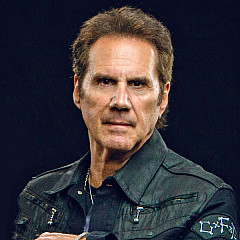
Kelly Keagy of Night Ranger

Kelly Keagy of Night RangerSongwriter Interviews

Kelly Keagy of Night Ranger tells the "Sister Christian" story and explains why he started sweating when he saw it in Boogie Nights.
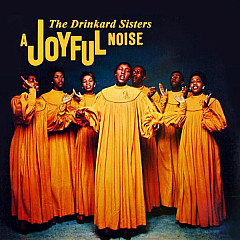
What Musicians Are Related to Other Musicians?

What Musicians Are Related to Other Musicians?Song Writing

A big list of musical marriages and family relations ranging from the simple to the truly dysfunctional.